J-20 Mighty Dragon

🇨🇳China
Chengdu Aerospace Corporation
2017 – Present
Spotlight

China's first stealth fighter family: from 2011 prototype to a 300-plus fleet

J-20 fighter jets formation flight at Zhuhai Airshow 2024 (Chinese Forces)

Watch on YouTube
Overview
J-20 Mighty Dragon - Image 1
J-20 Mighty Dragon - Image 2
J-20 Mighty Dragon - Image 3
J-20 Mighty Dragon - Image 4
J-20 Mighty Dragon - Image 5
J-20 Mighty Dragon - Image 6
J-20 Mighty Dragon - Image 7
J-20 Mighty Dragon - Image 8
J-20 Mighty Dragon - Image 9
J-20 Mighty Dragon - Image 10
J-20 Mighty Dragon - Image 11
J-20 Mighty Dragon - Image 12
J-20 Mighty Dragon - Image 13
J-20 Mighty Dragon - Image 14
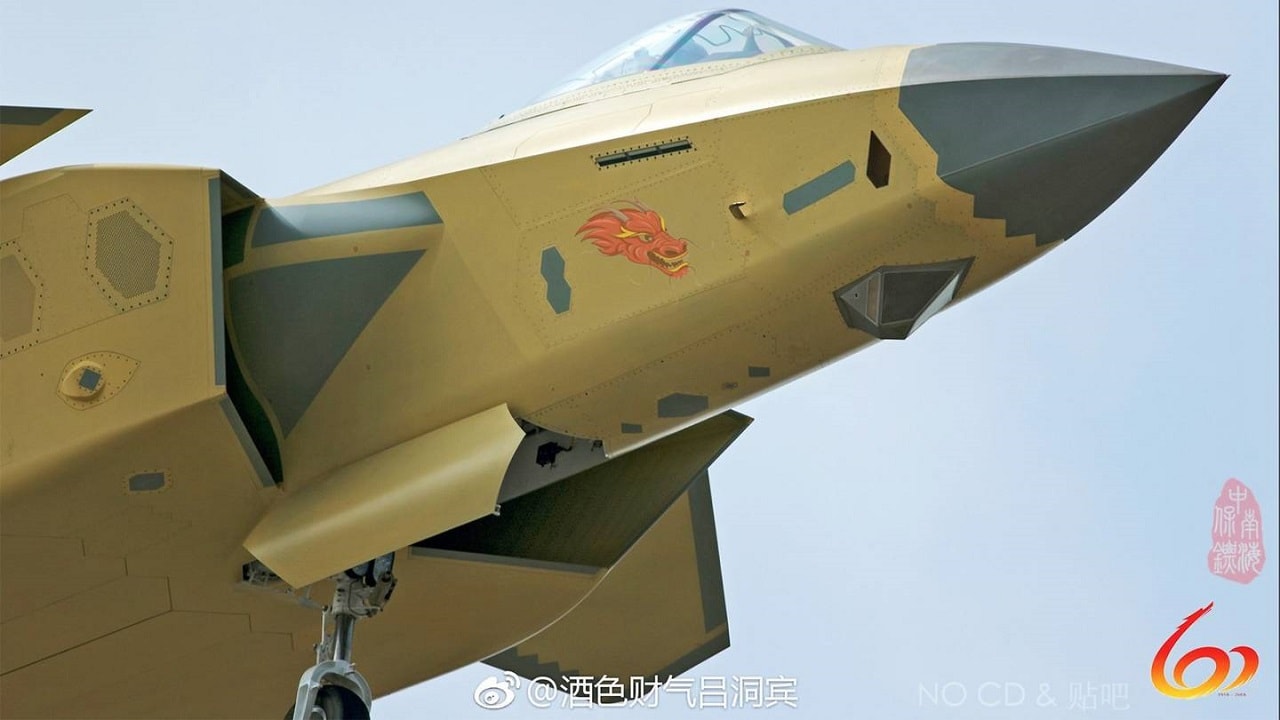
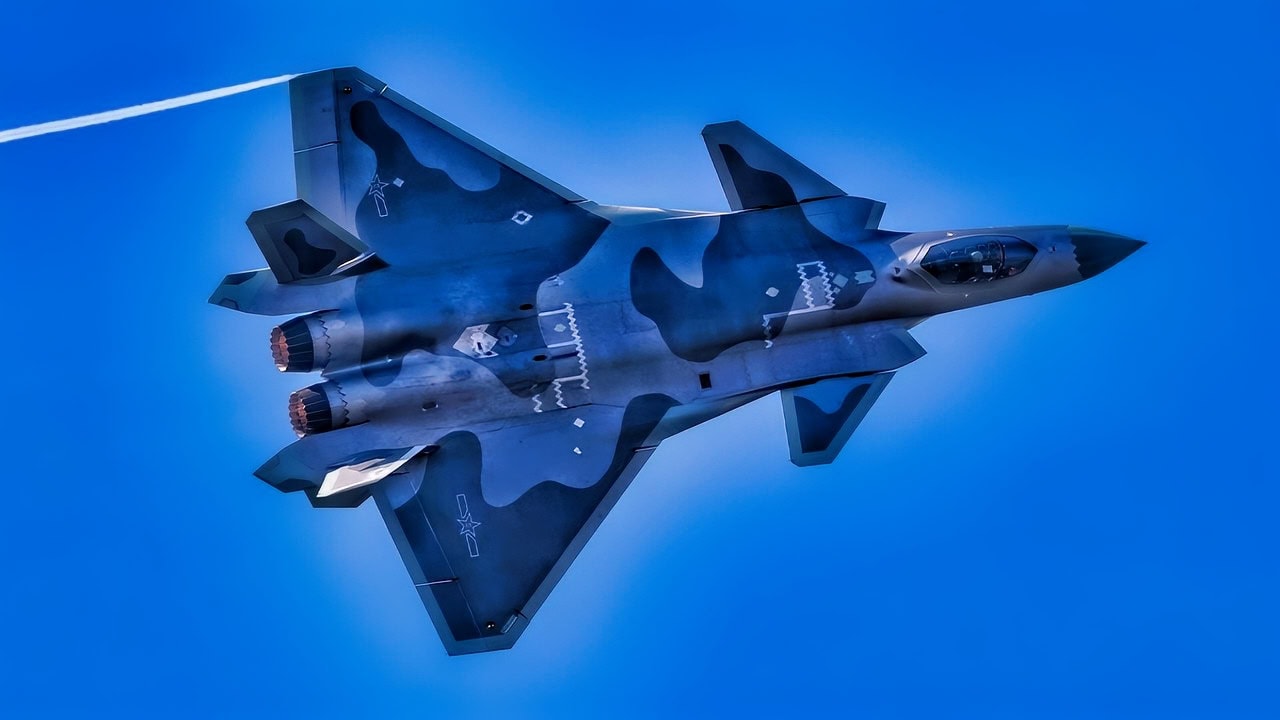
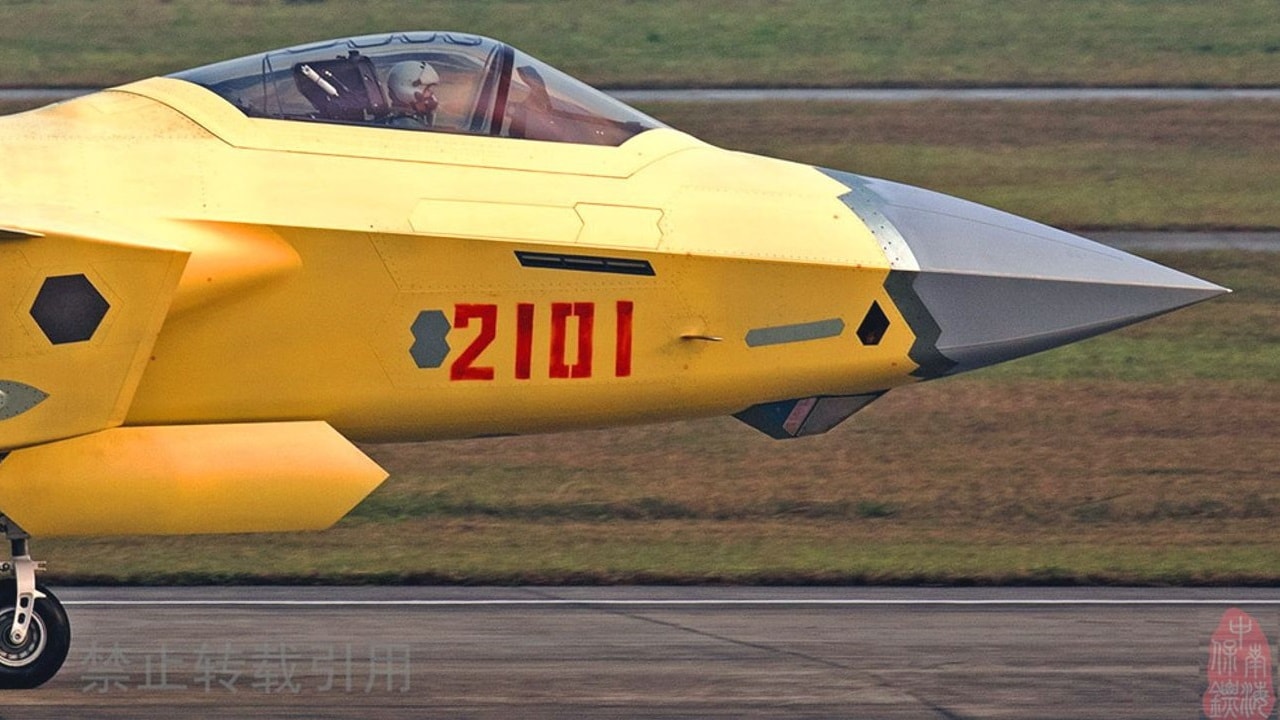
The Chengdu J-20, also known as Mighty Dragon, is a single-seat, twinjet, all-weather, stealth fifth-generation fighter aircraft developed for the People's Liberation Army Air Force (PLAAF).
Specifications

General

Crew1
RadarAESA
Engines2
StealthYes
Thrust Kn147 kN
Hardpoints4
Ferry Range Km5,500 km
Max Speed Mach2 Mach
Combat Radius Km2,000 km
Service Ceiling M20,000 m
Generation5th
Max Speed Kmh2,450 km/h

Other

Height~4.7 m (est.)
Length~21.2 m (est.)
Wingspan~13.0 m (est.)
Fleet Size~300+ airframes (est., 2025)
Powerplant2× WS-10C turbofan; WS-15 on new-build J-20A (reported)
First Flight2011-01-11
Primary ArmamentPL-10 and PL-15 AAMs in internal bays
Max Takeoff Weight~37,000 kg (est.)
Latest Developments
Oct 15, 2026strong signal
The US Air Force F-35 Has a J-20 Stealth Fighter Math Problem It Might Not Be Able to Solve

Expert Harrison Kass reports estimates of about 520 Chengdu J-20 Mighty Dragons in PLAAF service.

Sep 15, 2026strong signal
China’s J-20 Was Not Built to Fight the US Air Force F-22 Raptor. Its Job Is to Kill the Tankers and Radar Planes Behind It and to Hit U.S. Bases in the Pacific.

The J-20 was designed primarily for long-range BVR combat, with its main mission to engage strategic aircraft such as AWACS and aerial refuelers.

Sep 6, 2026strong signal
The US Air Force’s F-22 Raptor Fighter Is Getting So Many Big Upgrades It Will Now Fly Until 2060

The People’s Liberation Army Air Force operates roughly 300 J-20 stealth fighters.

Sep 4, 2026strong signal
Forget the F-22 and F-35: China’s J-20 and J-35 Stealth Fighters Have Long-Range Missiles the US Air Force Can’t Easily Match

the development of the Chengdu J-20 'Mighty Dragon' fifth-generation air superiority stealth warplane and the Shenyang J-35 series of fifth-generation multirole stealth warplanes.

Aug 27, 2026strong signal
China’s ‘Dummy’ J-20 Mighty Dragon Stealth Fighter Air Force Just Broke Cover

These strange aircraft frames, which looked vaguely like China’s fifth-generation stealth air-superiority warplane, the Chengdu J-20 'Mighty Dragon,' puzzled observers spying on the Chinese airfields.

Aug 25, 2026strong signal
The Math Isn’t Kind to the F-47 NGAD Stealth Fighter the US Air Force Wants for a Fight with Russia, China or Even Iran

China already possesses well over 300 fifth-generation Chengdu J-20 Mighty Dragon air-superiority warplanes, and that number is growing each year.

Featured Coverage
Research Notes

China's premier operational stealth fighter family

high

J-20 is central to China's fifth-generation fighter force and to regional planning around stealth, long-range missiles, and sensor networks.

J-20 Mighty Dragon is China's premier operational stealth fighter family. CSIS describes the J-20 as China's first operational stealth fighter, while the U.S. Department of Defense places advanced aircraft like the J-20 inside the broader modernization of the PLA Air Force.

The aircraft matters because it changes the assumptions surrounding regional air combat. Stealth, sensors, long-range air-to-air weapons, data links, and airborne early warning support can complicate how opponents protect tankers, early-warning aircraft, bases, and strike packages.

For HiWars, the J-20 main page should function as the parent analysis entry for related variants such as J-20A. It should explain the fighter family, not only list basic parameters.

Stealth is only one part of the combat system

high

J-20 effectiveness depends on sensors, weapons, engines, pilot training, data links, and force-level integration.

J-20 discussion often focuses on stealth shaping, but stealth is only one piece of the system. The aircraft's real value depends on radar and infrared sensors, electronic warfare, weapons integration, mission data, engine performance, pilot training, and links to other PLA assets.

That is why direct aircraft-to-aircraft comparisons can mislead readers. A fighter's impact depends on the wider force: air-defense networks, tankers, airborne early warning, ground control, cyber and electronic warfare, and missile inventories.

A strong J-20 page should explain these dependencies. The aircraft's role is best understood as part of China's attempt to build information-centered air combat power.

Western Pacific planning problem

high

J-20 affects regional planning because stealth fighters can threaten support aircraft and complicate air-defense geometry.

In the Western Pacific, J-20's significance is tied to distance, bases, support aircraft, and missile ranges. A stealthy long-range fighter can pressure tankers, command aircraft, reconnaissance aircraft, and other high-value assets that make coalition air operations possible.

This does not mean J-20 automatically dominates the region. Its effect depends on sortie generation, maintenance, weapons, pilot experience, command networks, and how opposing forces adapt.

For HiWars, the page should link J-20 to Taiwan contingency planning, Western Pacific air defense, PLA Air Force modernization, and the interaction between stealth fighters and long-range missile systems.

Key parameters at a glance

medium

Program-level figures for the J-20 family; headline numbers are open-source estimates unless stated.

Role
Fifth-generation stealth air-superiority fighter family
Manufacturer
Chengdu Aircraft Corporation (AVIC)
First flight
11 January 2011
Service entry
2017 (PLAAF)
Fleet size
~300+airframes (est., 2025)
Engine evolution
AL-31F → WS-10C → WS-15 (reported)
Length
~21.2m (est.)
Max takeoff weight
~37,000kg (est.)
Main variants
J-20, J-20A (WS-15), J-20S (twin-seat)
Primary armament
PL-10 / PL-15 missiles in internal bays

Program milestones

medium

Publicly reported milestones of the J-20 program.

2011-01First flight

Prototype '2001' makes its maiden flight at Chengdu on Russian AL-31F-series engines, coinciding with a visit by US Defense Secretary Robert Gates.

2016-11Public debut at Zhuhai

Two J-20s make the type's first public appearance with a brief flypast at Airshow China in Zhuhai.

2017-09Officially in service

China's Ministry of National Defense confirms the J-20 has been commissioned into PLAAF service; the first combat unit forms in early 2018.

2021Indigenous WS-10C standard

Serial production shifts to the domestic WS-10C engine, ending reliance on Russian powerplants; a twin-seat J-20S prototype flies the same year (reported).

2023-06WS-15 flight testing

A J-20 reportedly flies for the first time with two WS-15 engines, the definitive powerplant intended to enable supercruise.

2024-11Zhuhai 2024 mass displays

Multi-ship J-20 formations headline Airshow China 2024 as the upgraded single-seat J-20A emerges in clearer imagery with WS-15 nozzles.

2025-09Parade debut of new variants

J-20A and twin-seat J-20S appear in the Beijing V-Day parade flypast; open-source counts put the family fleet above roughly 300 airframes (est.).

Strategic significance

medium

The J-20 is the first operational fifth-generation fighter fielded outside the United States, and the program's trajectory matters as much as any single airframe. In under a decade the type moved from a 2011 prototype to frontline PLAAF brigades across every theater command, and open-source estimates now place the fleet above roughly 300 aircraft — the largest stealth fighter force other than the combined American F-22/F-35 inventory. Annual output estimates vary widely, but most analysts agree production has accelerated rather than plateaued.

The program's defining internal story is propulsion. Early aircraft flew on Russian AL-31F-series engines, an acknowledged compromise; serial jets then standardized on the domestic WS-10C, and the WS-15 — reportedly offering thrust in the class of the F-22's F119 — is now flying on the upgraded J-20A. If the WS-15 matures as reported, it would close the J-20's most frequently cited performance deficit and give China a fully indigenous high-thrust fighter engine, a capability very few nations possess.

Assessments of the J-20's combat value against the F-22 and F-35 remain contested, since sensor fusion, low-observable maintenance discipline, and pilot training are difficult to judge from open sources. What is less contested is the family's role in the regional balance: paired with the PL-15 long-range missile and supporting airborne early-warning aircraft, a large J-20 fleet complicates allied air operations across the First Island Chain, while the twin-seat J-20S points toward manned-unmanned teaming roles that no Western fifth-generation type yet fields in a two-seat configuration.

Videos

J-20 makes public debut at Zhuhai Airshow 2016 (CGTN)

Watch on YouTube

CCTV feature on fighter units of the 2025 V-Day parade, incl. J-20A/J-20S (4K)

Watch on Bilibili

J-20 display flight at Zhuhai Airshow 2024 (Guofang Shibao TV)

Watch on Bilibili
Variants (2)
Service YearName
2025 –J-20A
2025 –J-20S
Sources & References
Related Discussions

No discussions about J-20 Mighty Dragon yet

Start the first discussion