The J-15T's importance lies in a narrow set of structural changes rather than in a new airframe. The baseline J-15 is a large, heavy Flanker derivative launched off a ski jump, which forces a trade between fuel and weapons on every sortie and caps useful radius from Liaoning and Shandong. Adding a strengthened twin-wheel nose gear with a launch bar, reinforcing the airframe for catapult loads, and moving to domestic WS-10B engines removes the launch-energy constraint when the aircraft operates from Fujian's electromagnetic catapults. The gain is in what the aircraft can carry off the deck, not in kinematic performance, which remains that of a 1980s-generation Flanker.
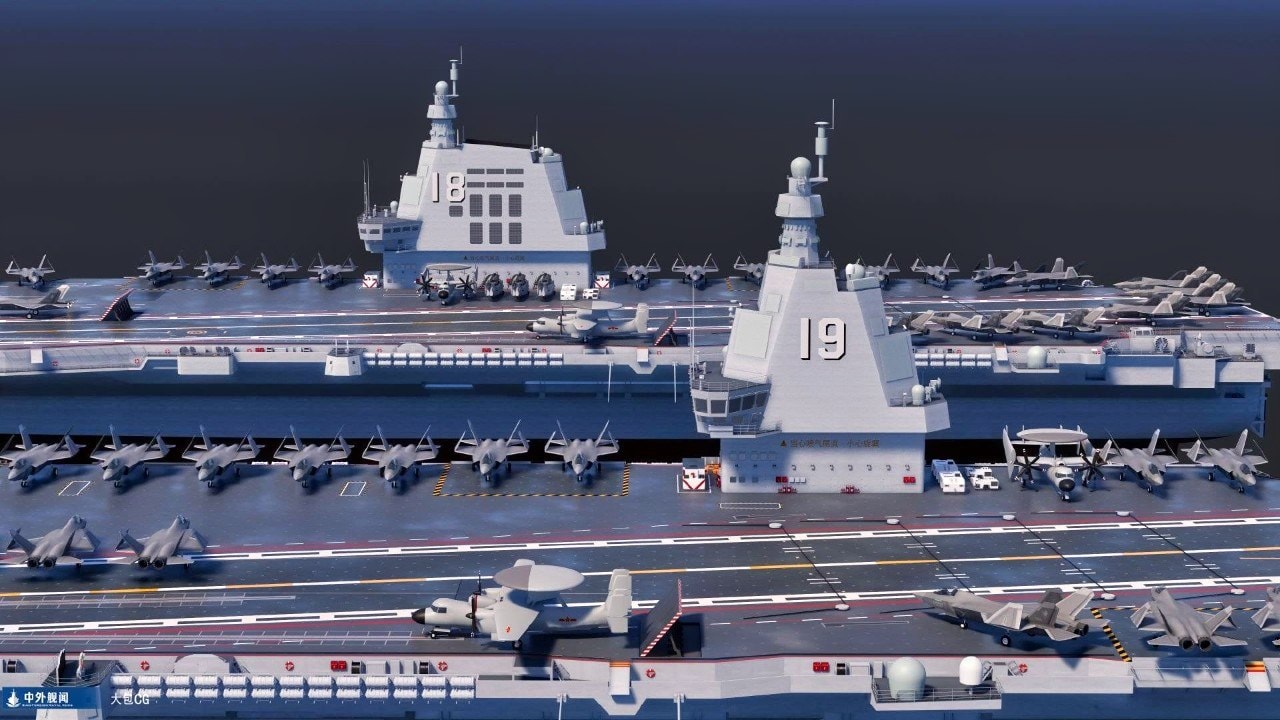
Equally significant is what the variant does not depend on. The switch from Russian AL-31F to WS-10B removes a supply-chain dependency that had constrained J-15 production for a decade, and the new AESA radar unlocks the PL-15, giving the carrier air wing a beyond-visual-range weapon comparable in class to those on land-based PLAAF fighters. Because the J-15T retains ski-jump compatibility, the PLAN can operate a single fighter type across all three carriers rather than maintaining separate STOBAR and CATOBAR fleets, which simplifies training and logistics during the transition period.
The limits should be read carefully. The J-15T is a fourth-generation-plus aircraft with no low-observable design intent; on Fujian it is expected to serve as the heavy strike and fleet-defence complement to the stealthy J-35 rather than as the primary penetrating platform. Its catapult credentials were demonstrated publicly only in 2025, and sortie generation rates, deck-cycle proficiency and sustained air wing integration on a CATOBAR deck take years to mature — the US Navy's own experience is the usual benchmark. Fleet size is reported at roughly 50 or more J-15Ts as of 2026, but no official figure has been published, and the aircraft's real operational ceiling will only become visible once Fujian completes a full deployment cycle.