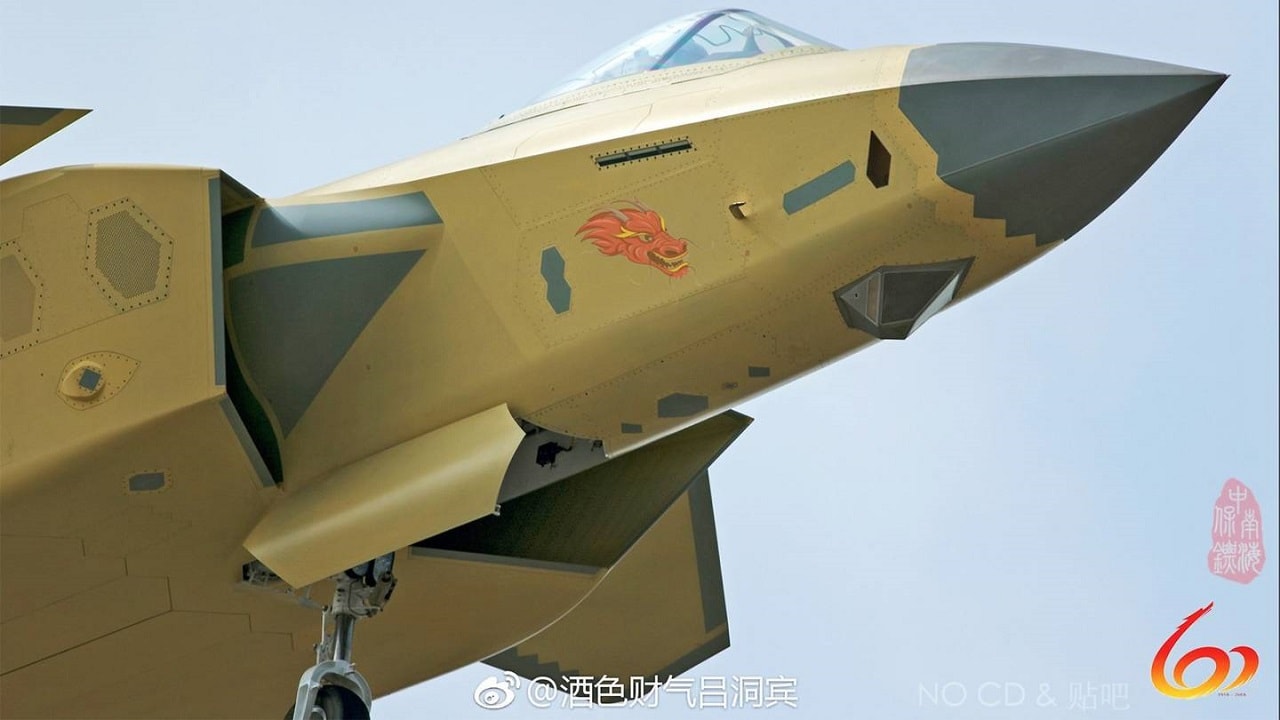
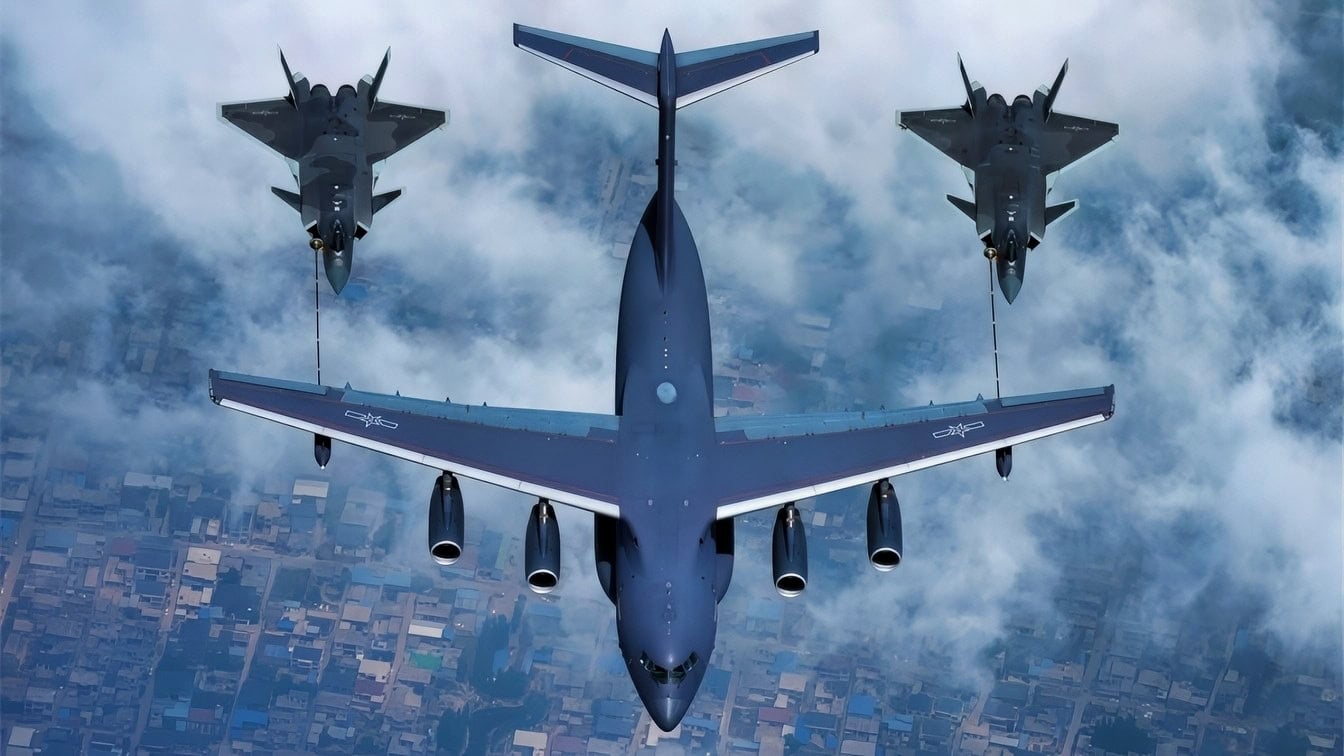
The J-20S is the world's first two-seat stealth fighter to fly and enter service, a configuration no other fifth-generation program has fielded. Rather than a trainer, the second seat is consistently described by Chinese state media and outside analysts as a mission station: the rear-seat weapon systems officer handles sensor fusion, electronic warfare and battle-management tasks, freeing the pilot to fly and fight. This positions the J-20S less as a faster or stealthier J-20 and more as a low-observable tactical command node.
The variant's most watched role is manned-unmanned teaming. Reporting around the type's 2024 unveiling and 2025 service entry indicates the back-seater is intended to direct loyal-wingman drones such as the GJ-11 flying wing for reconnaissance, jamming and strike, with the J-20S acting as the forward controller of a distributed package. If realized at scale, this would give the PLAAF a survivable command element inside contested airspace — a capability the United States is pursuing through its Collaborative Combat Aircraft program but has not yet paired with a two-seat stealth platform.
Significant uncertainties remain. China has published no official performance figures, the engine fit (WS-10C versus the newer WS-15) has varied across airframes, and the maturity of the drone-control architecture is unverified in open sources. The J-20S's actual impact will depend on datalink robustness, the number of teamed drones fielded, and how quickly the 172nd Air Brigade and follow-on units develop tactics for a crewed-uncrewed force mix that no air arm has yet employed in combat.