
China's Liaoning and a US Carrier Test the 2026 Philippine Sea
 Marcus Chen
China's Liaoning and a US Carrier Test the 2026 Philippine Sea
The important number is not the number of fighters on a carrier deck. It is the number of days each carrier can keep aircraft, escorts, fuel, and spare parts inside the same operating area. Reports that China's Liaoning and a U.S. aircraft carrier could operate in the Philippine Sea at the same time therefore deserve more attention than another round of carrier photographs. The test is whether Beijing can turn a regional deployment into a repeatable operating pattern, and whether Washington can keep a carrier strike group useful without exposing it to an increasingly dense missile and surveillance network.
The reported encounter is a positioning problem
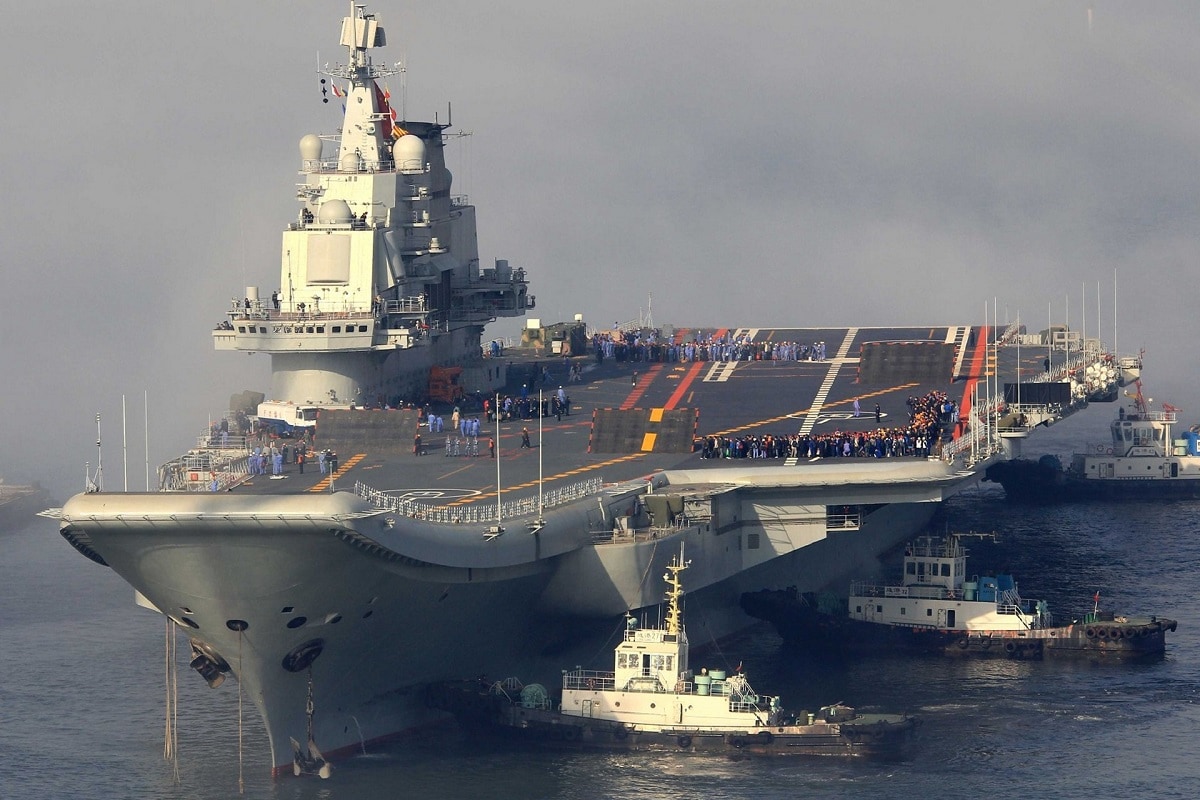
South China Morning Post reported on October 25 that the Liaoning and a U.S. carrier may sail in the Philippine Sea at the same time. The wording matters: this is a report of a possible overlap, not evidence of a planned duel or a confirmed close encounter. Around the same period, Japanese and U.S. forces were conducting Keen Sword 27, the largest annual bilateral exercise near Taiwan, according to DD News. Even without a face-to-face incident, the geometry is consequential. The Philippine Sea is the maneuver space between the first island chain and the approaches to Guam. A carrier operating there is signaling that it can move beyond the immediate Taiwan Strait while still influencing the fight around Taiwan.
Beijing is also surrounding the carrier story with a broader narrative. Global Times said China's 48th naval escort formation completed a record Gulf of Aden mission, presenting distant operations as routine rather than exceptional. That does not prove the People's Liberation Army Navy can sustain a wartime carrier campaign across the Western Pacific. It does show the political message Beijing wants regional governments to absorb: Chinese naval presence is no longer confined to coastal waters.
Liaoning is not a Nimitz or Ford
The Liaoning is a Type 001 STOBAR carrier, derived from the Soviet Kuznetsov design. It displaces roughly 60,000 tons and uses a ski-jump bow instead of catapults. Its air wing is built around the J-15 family, a heavy carrier fighter with a meaningful weapons load but less launch flexibility than aircraft operating from a catapult-equipped deck. The ski-jump limits takeoff weight and complicates the launch of heavily loaded aircraft, especially when the carrier needs fuel and weapons rather than a clean training configuration.
A U.S. Nimitz- or Ford-class carrier carries a much larger and more flexible air wing, supported by catapults, arresting gear, organic tanking, electronic warfare aircraft, and a mature replenishment system. That is a real advantage, but it is not an automatic victory. A carrier strike group must operate under the assumption that Chinese shore-based missiles, submarines, aircraft, and long-range sensors are working together. The question is not whether the U.S. deck can launch more sorties in a day. The question is whether those sorties can find targets, survive the approach, and return to a ship that remains inside the fight.
The real contest is the kill chain
For China, the Liaoning's value may be less about matching a U.S. carrier sortie for sortie than about complicating American planning. A carrier operating east of Taiwan can provide air defense, maritime surveillance, and limited strike capacity. It can also force U.S. commanders to spend aircraft and submarines tracking it. Every American sensor assigned to the Liaoning is a sensor not assigned to Chinese surface groups, amphibious shipping, or the larger missile campaign.
For the United States, the carrier's advantage is reach and integration. The strike group combines the carrier air wing with Aegis destroyers, submarines, maritime patrol aircraft, space-based surveillance, and allied access. But the Philippine Sea is wide enough to dilute that advantage. Aircraft need tankers. Ships need fuel. Weapons stocks need resupply. A carrier that launches 100 sorties on day one but cannot maintain the tempo on day ten is a demonstration, not sea control.
That is why the Keen Sword exercise matters. Japan's southwestern islands sit across the routes that connect the East China Sea to the Philippine Sea. Exercises that move aircraft, ships, and command networks through that geography rehearse the practical problem of keeping the first island chain connected. Taiwan's own shift toward unscripted readiness training, reported by Focus Taiwan, points to the same issue at a different level: plans that work only when the enemy follows the script are not plans.
What this means for Washington and Beijing
Washington should resist treating every Chinese carrier sortie as proof that the naval balance has flipped. The Liaoning remains constrained by its launch system, air wing, and support architecture. But dismissing it as a training ship would be just as careless. Repeated deployments build crews, procedures, escort experience, and intelligence about the operating environment. Those are cumulative gains.
Beijing, meanwhile, should not confuse presence with control. A carrier in the Philippine Sea is vulnerable if it lacks reliable airborne early warning, undersea protection, and a replenishment chain that can survive wartime attack. The Gulf of Aden escort mission demonstrates endurance and diplomacy; it does not replicate a contested carrier operation against U.S. submarines and aircraft.
The first conclusion is straightforward. The reported Liaoning–U.S. carrier overlap is not a verdict on who owns the Philippine Sea. It is a stress test of who can keep a kill chain functioning after the first exchange of missiles. The United States still has the stronger carrier system. China is steadily improving the system designed to make that advantage expensive to use. In a Taiwan crisis, the side that can sustain sensors, fuel, escorts, and weapons for two weeks will matter more than the side that wins the first carrier photograph.
Sources
- South China Morning Post, “China’s Liaoning and US aircraft carrier may sail in Philippine Sea at same time,” October 25, 2026.
- DD News, “Keen Sword 27: China shadows biggest Japan–US military drills near Taiwan,” October 25, 2026.
- USNI News, “Western Pacific Pulse,” October 23, 2026.
- Focus Taiwan, “Taiwan adopting ‘unscripted’ training format to boost combat readiness,” October 25, 2026.
- Global Times, “China’s 48th naval escort formation completes record Gulf of Aden mission,” October 25, 2026.
China's Liaoning and a U.S. aircraft carrier may operate simultaneously in the Philippine Sea, testing their operational capabilities. This situation arises amid the Keen Sword 27 exercise conducted by Japanese and U.S. forces near Taiwan. The Liaoning, a Type 001 carrier, faces limitations compared to U.S. carriers, highlighting the strategic implications of naval presence in the region.
- China's Liaoning and a U.S. aircraft carrier may operate in the Philippine Sea at the same time.
- The Liaoning is a Type 001 STOBAR carrier with limitations compared to U.S. carriers.
- Japan and U.S. forces conducted the Keen Sword 27 exercise near Taiwan around the same time.
- China's naval presence is expanding beyond coastal waters, as indicated by recent missions.
- The operational overlap tests the ability to sustain military operations in a contested environment.