

Fighter jets aren’t supposed to kill submarines. That’s what makes the newest piece of nose art on a Navy F/A-18F Super Hornet so interesting. As Task & Purpose reported, a two-seat Super Hornet from Strike Fighter Squadron 41 (VFA-41), the “Black Aces,” returned to Naval Air Station Lemoore, California, on Oct. 1 wearing a broken submarine silhouette under the cockpit, stamped with the words “Sub Buster.”
It sits above rows of bomb icons the jet racked up during Operation Epic Fury, the US air campaign against Iran.
The jet, Number 168491, flew from the USS Abraham Lincoln, which headed home to San Diego earlier this month after nearly a year deployed.
Photographer Jeff Rojas captured it on the way in after hours of waiting in near-100-degree heat outside the base. Not many people showed up to watch—their loss.
A Strike Fighter With A Sub On Its Nose
Here’s why the marking raised eyebrows.
The F/A-18F Super Hornet is a strike fighter. It carries no sonobuoys, dipping sonar, or magnetic anomaly detector.
Hunting submarines, especially submerged ones, is the job of the P-8A Poseidon and the MH-60R Seahawk.
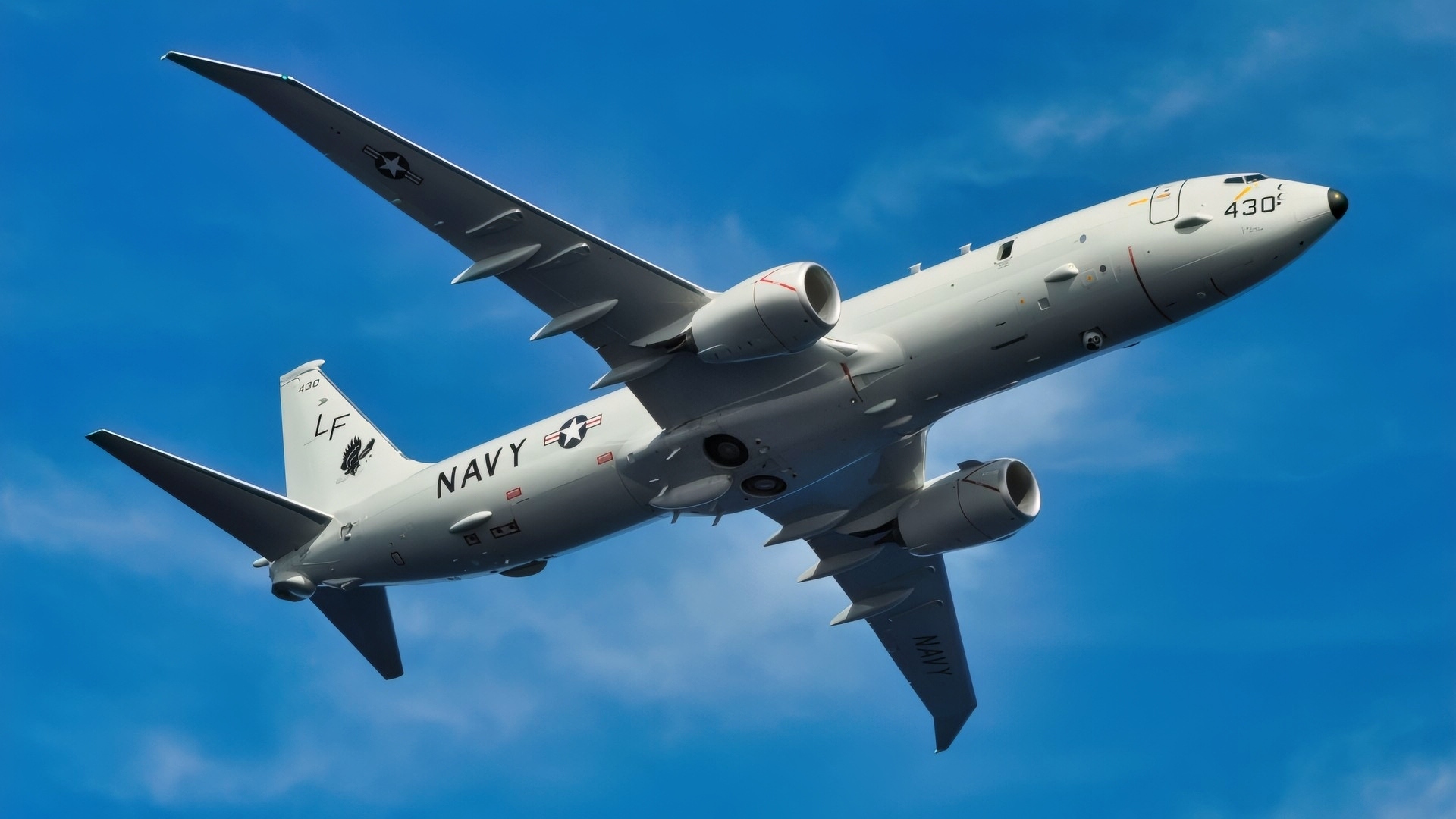
A P-8A Poseidon assigned to Patrol Squadron (VP) 16 is seen in flight over Jacksonville, Fla. (U.S. Navy photo by Personnel Specialist 1st Class Anthony Petry)
However, a submarine sitting pierside is a different, and vulnerable target.
Tied up at a pier or propped up in a dry dock, it’s just another surface target, and a big, slow one.
Rojas told Task & Purpose he believed that the boat was in dry dock when the crew put a laser-guided bomb on it.
US missiles destroyed several Iranian submarines docked in port during the early bombing.
However, neither the Navy nor US Central Command has said whether a Super Hornet was involved. But the aircraft’s markings have answered any questions, at least it would seem.
Which Boat Was It?
The Aviationist, which first highlighted the marking, believes this is the first time a Super Hornet has ever worn a submarine kill.
Sub kills are rare even in open warfare.
Few nations operate submarines, and even fewer lose them to carrier aircraft.
The silhouette most closely resembles a Kilo-class boat.
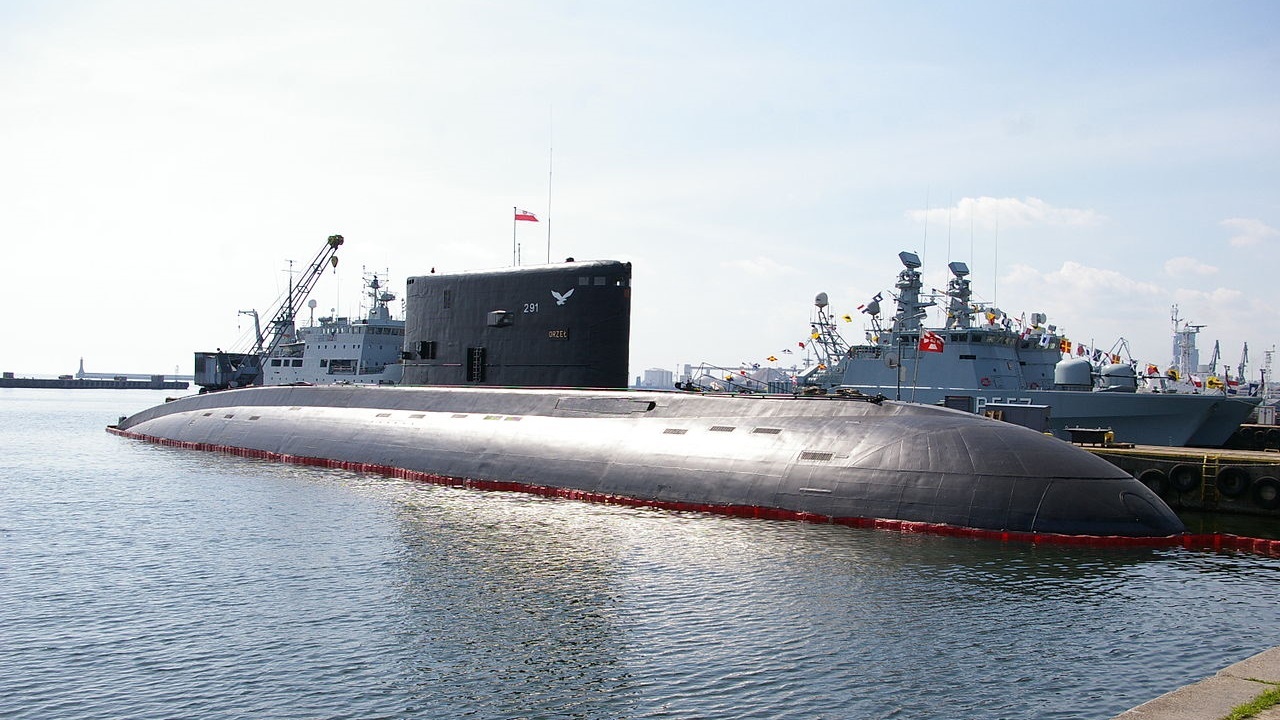
Polish Navy submarine, Kilo-Class.
Iran took delivery of three Russian-built, diesel-electric Kilos in the 1990s, and they were by far the most capable submarines in its fleet.
CENTCOM confirmed that one of them, the Taregh, was destroyed in port.
The other two are believed to have been out of action for years because of Iran’s long track record of poor maintenance.
If either was hit and tied up, it still counts as a kill.
The fact that the sub was tied up on the dock is beside the point.
Two or three Kilos with competent crews could have been a serious headache in and around the Strait of Hormuz, laying mines and stalking tankers and warships.
Taking them off the board before they ever left the pier is exactly how you handle that threat.
The Black Aces weren’t the only ones keeping score, either.
A Marine Corps F-35C from VMFA-314, flying off the same carrier as part of Carrier Air Wing 9, was photographed with markings for three submarines, an oil tanker, and a surface combatant.
The Black Aces Dropped A Variety Of Munitions
Rojas also photographed what appears to be a squadron scoreboard, and TWZ broke down the weapons list.
VFA-41 expended 426 munitions during Epic Fury: 173 GBU-38s, 52 GBU-31(V)4s, 48 GBU-54s, 41 AGM-154 Joint Standoff Weapons, 30 GBU-31(V)2s, 27 GBU-32s, 10 AGM-84K SLAM-ERs, and a single GBU-12.
The tally also includes 44 air-to-air missiles, 38 AIM-9X Sidewinders and six AIM-120 AMRAAMs. Rojas said some of the returning jets carried drone kill markings, which tells you where many of those Sidewinders went.
Several weapons on that list, including the SLAM-ER, the JSOW, and the laser- and GPS-guided GBU-54, can hit targets at sea or in port.
While the exact breakdown isn’t known, it shows that the Super Hornet squadron was doing a little bit of everything.
Deep strikes. Maritime targets. Drone defense.
And apparently, a submarine.
That versatility shouldn’t surprise anyone. Earlier in the conflict, a Navy F/A-18 took off a ship in the Gulf of Oman with its 20mm cannon. Old school stuff that a F-4U Corsair pilot would love to hear.
Kill Markings Are History You Can Touch
Some people dislike nose art. I’ve never been one of them. Markings like these are a unit’s history painted right on the airframe, and they stay with the jet long after the crews rotate out.
The VFA-87 Super Hornet that shot down a Syrian Su-22 back in 2017 still carried its victory marking years later, even after the pilot had moved on.
A destroyed submarine on the nose of a Super Hornet does the same thing. Somebody fresh out of the training pipeline will climb into 168491 years from now and ask what that sub is about. Somebody will have a story.
Until the Navy or CENTCOM says more, the details stay murky. What we do know is that Iran’s most capable submarine never got the chance to threaten the fleet.
Fighter jets aren’t supposed to kill submarines. This one apparently didn’t get the memo.
About the Author: Steve Balestrieri
Steve Balestrieri is a National Security Columnist. He served as a US Army Special Forces NCO and Warrant Officer. In addition to writing on defense, he covers the NFL for PatsFans.com and is a member of the Pro Football Writers of America (PFWA). His work was regularly featured in many military publications.