
5707 Drones and 52 Attacks near Pokrovsk — Russian Depletion Tactics in October 2026
 Dmitri Volkov
5707 drones and 52 attacks near Pokrovsk — Russian exhaustion tactics in October 2026
The figure of 5707 looks like a summary of the saturation of the front with drones. In reality, it is an indicator of the industrial and organizational restructuring of the war. This is the number of strike drones that Russian forces used in a single day by October 25, 2026, according to the Ukrainian General Staff. At the same time, there were 141 combat engagements along the entire front line, with 52 attacks in the Pokrovsk direction. Moscow did not achieve a quick breakthrough but is systematically converting the expenditure of cheap platforms, aerial bombs, and personnel into a method of pressure on the Ukrainian defense.
The scale of fire does not equal operational success
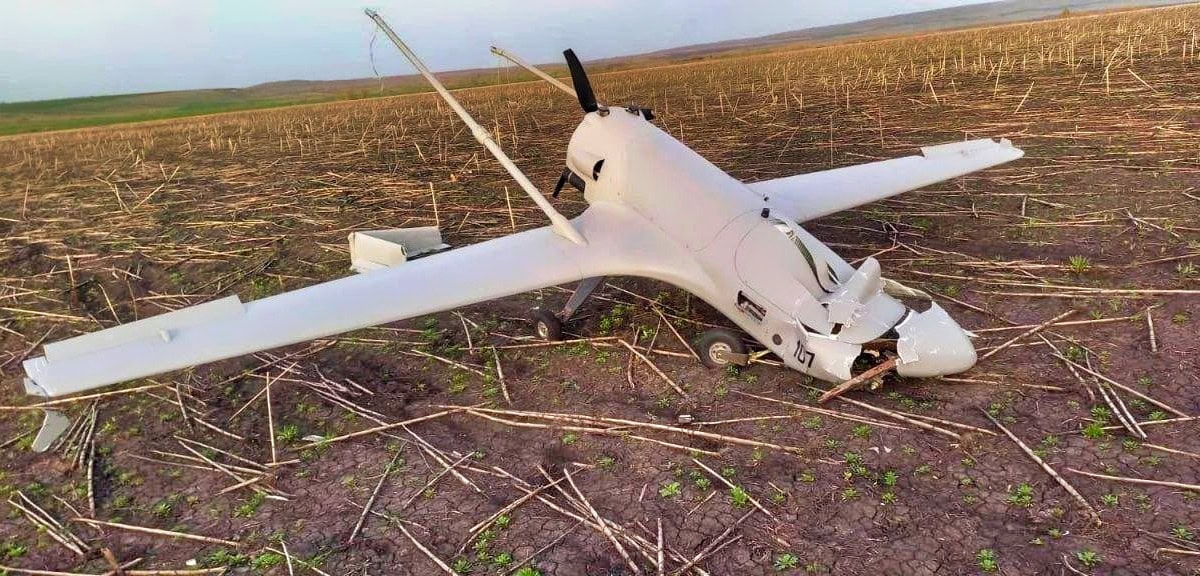
A summary from the Ukrainian General Staff published by RBC Ukraine on October 25 also indicates 67 airstrikes, 141 guided aerial bombs, 4534 shellings, and 74 uses of multiple launch rocket systems. This is not a singular attempt at an assault but a multilayered system: drones search for and overload defenses, artillery fixes fire positions, aviation destroys fortifications, and assault groups check areas where breaches have occurred.
However, intensity should not automatically be translated into the term "offensive success." Russia is capable of maintaining a high rate of fire but is currently forced to pay for advances with numerous small attacks. In the Pokrovsk sector, 52 assaults in a day indicate not only the importance of the direction but also the difficulty of achieving operational effect with a single strike. The front is fragmented into dozens of local tasks, reminiscent of late Soviet logic of fire exhaustion, but without the previous guarantee of superiority in command and reconnaissance.
Why the drone has become the main expendable resource
The drone has changed the economics of the Russian offensive. A tank requires a crew, fuel, a repair base, and a route that is increasingly visible from the air. A small strike aircraft requires fewer material resources and can be deployed in series, forcing the Ukrainian side to expend air defense munitions, engage in electronic warfare, and reveal positions. Even a downed drone sometimes fulfills part of the task if it forces the defense to cease operations or change communication channels.
But this model has its limits. The number of launches does not indicate the number of hits, and the word "used" does not mean that all 5707 devices reached their targets. Drones depend on navigation, radio channels, weather, operator quality, and the ability of units to quickly analyze results. Therefore, the official figures from both sides should be viewed as a top layer of information rather than a ready measure of combat effectiveness.
Russian depth against Ukrainian adaptation
An analysis of the military balance for October, published by Pamphlets Military Analysis on October 21, describes a broader contradiction. Russia maintains an advantage in aviation, missile stocks, and human resources, while Ukraine compensates with drone density, engineering obstacles, and rapid tactical changes. As a result, Russian firepower inflicts serious damage but does not necessarily translate into territorial capture.
The industrial aspect of the issue is particularly important. According to the same review, Reuters on October 15 detected satellite signs of a new facility in the Rostov region, presumably intended for rocket variants of "Geran." The authors emphasize that the proposed launch platforms do not yet prove the actual capacity of the enterprise. Nevertheless, the very speed of the facility's creation shows that the Russian defense industry is trying to transition from mass production of relatively slow devices to a more complex threat that reduces air defense reaction time.
For Ukraine, this means the necessity to simultaneously hold the front line and protect the rear. The Ukrainian General Staff reported 359 destroyed operational-tactical UAVs in the previous day, but such figures cannot be mechanically compared with the number of launches: they refer to different time slices and counting methodologies. More important is the trend — air defense has become an expendable resource in itself. If every night there is a choice between protecting energy infrastructure, command posts, and troops, the Russian side achieves an effect even without deep penetration.
What losses say about the cost of operations
The Ukrainian Ministry of Defense on October 25 estimated total Russian losses since February 2022 at 1,578,450 servicemen, adding 1850 people for the previous day. The same summary lists 49 destroyed artillery systems and 417 units of automotive equipment in a day. These figures are estimates from one side of the conflict and require caution, but together with 141 combat engagements, they illustrate the nature of the operation: Russia retains the ability to replenish expenditures, but replenishment does not make it cheap.
This raises an uncomfortable question for Russian military doctrine. If the task is to gradually destroy Ukrainian defenses, the current scheme is rational: it uses numerical superiority and forces Kyiv to distribute limited resources. However, if the goal is a rapid collapse of the front, then multiple attacks in one direction indicate a problem in transitioning from tactical pressure to operational maneuver. A military system can be very strong in producing pressure while simultaneously weak in converting that pressure into a solution.
Forecast without victorious rhetoric
In the coming weeks, Russia is likely to continue combining mass drone launches, guided aerial bombs, and a series of assaults near Pokrovsk and in neighboring directions. Ukraine will try to maintain a "wall" of reconnaissance and strike UAVs, but its resilience will depend on air defense stocks, communication, and trained operators. Neither side currently has a permanent monopoly on adaptation.
The dry conclusion is this: 5707 drones are not proof of an inevitable Russian breakthrough, but neither are they empty statistics. This is the price Moscow is willing to pay to deprive the Ukrainian army of time, communication, and freedom of maneuver. The Russian defense industry and command are likely to sustain this pace longer than the Ukrainian General Staff would like; however, without improving the reconnaissance-fire cycle, massing will remain an expensive way to slowly shift the front line.
Sources
Russian forces conducted 52 attacks in the Pokrovsk direction on October 25, 2026, deploying 5707 drones and engaging in 141 combat encounters across the front. The strategy focuses on attrition, utilizing drones and artillery to pressure Ukrainian defenses without achieving rapid breakthroughs. Ukrainian forces reported significant air and artillery activity in response.
- 5707 drones were deployed by Russian forces on October 25, 2026.
- 52 attacks occurred in the Pokrovsk direction on the same day.
- 141 combat engagements were reported along the entire front line.
- Ukrainian General Staff reported 67 airstrikes and 4534 artillery shellings.
- Russian forces are employing a strategy of attrition using drones and artillery.