
Saudi Arabia intercepts Houthi missiles in 2026 and reopens Riyadh airport, but Gulf deterrence remains fragile.
 Ahmed Al-Rashid
Saudi Arabia intercepts Houthi missiles in 2026 and reopens Riyadh airport, but Gulf deterrence remains fragile
On October 25, 2026, the Saudi-led coalition announced the interception of a ballistic missile launched towards Riyadh, just one day after intercepting other missiles and drones in the kingdom's airspace, while authorities were preparing to resume operations at Riyadh airport after a two-week closure. At the same time, Yemeni authorities reported that Aden airport was attacked by two ballistic missiles, marking the fourth such attack this month. These are not a series of isolated incidents; they are a clear Houthi attempt to shift the war from the Yemeni frontlines to the network of movement and energy that underpins the Saudi state.
What happened in the last hours
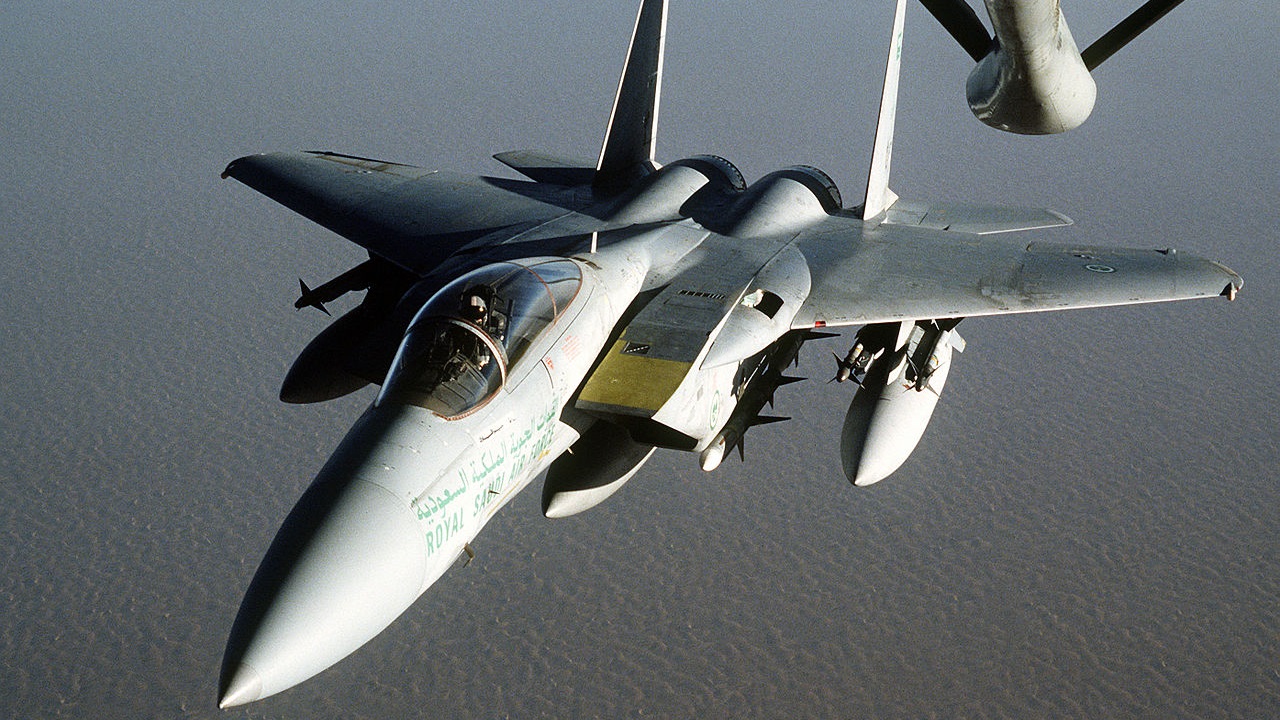
According to Al Jazeera, coalition forces stated that air defenses intercepted a ballistic missile heading towards the capital, while Saudi civil authorities announced the previous day the interception of two missiles launched towards Mecca and Medina, with debris falling after the interception. The Houthis denied targeting the two holy cities, claiming their targets were airports, oil facilities, and an airbase. Each field report cannot be independently verified, and thus it is necessary to distinguish between what has been officially announced and what has been visually or navigationally confirmed.
Most significant is Riyadh airport. The resumption of flights does not mean that the threat has ended; the Houthi military spokesperson declared that the airport remains a military target, while tracking data showed a flight departing to Jeddah. Practically, Saudi Arabia has managed to restore part of the air traffic, but it has had to accept that the decision to open the airport will remain tied to the rhythm of missiles, not just the flight schedule.
Testing the Saudi triangle of capability
This crisis once again reveals the triangle of capability that is often overlooked in discussions of Gulf armament: equipment, training, and institutions. Saudi Arabia possesses air defense systems, fighter jets, and an advanced warning network, evidenced by the interception of several missiles and drones. However, successful interceptions do not equate to complete protection. A missile that is intercepted over a city still causes alarm, closure, and disruption in air traffic, and may impose economic and political costs even if it does not hit a facility.
As for training, the issue is not just the crew's ability to operate the system, but managing long shifts against diverse targets, distinguishing between a ballistic missile and a low-observable drone, and coordinating decisions between air defense, civil aviation, and security agencies. The institution is usually the weakest link: Can the state maintain the operation of airports and oil facilities under continuous threat? Is there a unified mechanism to inform the public and airlines without amplifying panic or concealing danger? Purchasing a new platform does not answer these questions.
Why the Houthis strike airports and oil facilities
The Houthi objective is not necessarily to destroy Riyadh airport or disrupt oil production for extended periods. It is sufficient to force the kingdom to close an airport, or raise the security level around a facility, or make airlines and travelers reconsider their plans. This is a relatively low-cost war for the attacker and a high-cost one for the defender. A missile or drone does not need to penetrate every defense network; it is enough for the attack to succeed in disrupting a civilian function or creating ongoing doubt about the state's ability to keep the airspace open.
Moreover, expanding the target list to include airports and oil facilities directly links the Yemeni front to international interests. Recent reports indicated that the Houthis announced phases of attacks on airports, pipelines, and oil sites, while other reports linked the continuation of escalation to the U.S. decision to reduce the presence of some of its personnel and their families in the region. For Riyadh, this creates a difficult dilemma: a strong response may increase the risk of war escalation, while a limited response may reinforce in the adversary's mind that pressure on civilian infrastructure yields results.
The Mecca Treaty does not automatically mean defense for Yemen
In the same week, Turkey advanced parliamentary ratification procedures for a defense agreement with Saudi Arabia and Pakistan, but Turkish Defense Minister Yasar Guler stated that Ankara does not expect to engage in confrontation with the Houthis under the agreement. This statement is more significant than the signing photos. It sets practical limits on the meaning of the new guarantees: the agreement may provide political deterrence and cooperation in training or defense industry, but it does not mean that every attack on Saudi Arabia will lead to a Turkish or Pakistani deployment in Yemen.
Here lies the contradiction between Saudi ambitions to diversify partners and the actual reliance on American command, warning, and support systems. Riyadh can purchase aircraft, sign defense agreements, and build a local industry, but the test of independence occurs when airports and facilities are subjected to consecutive attacks in one night. The ally that participates in data is not necessarily the ally that sends a battery of air defense or an early warning aircraft or a maintenance crew.
Gulf deterrence under the test of continuity
What is required from Saudi Arabia now is not to declare victory after every interception, but to prove that the state can continue to operate under pressure. Reopening Riyadh airport is an economically necessary step, but it is also a bet on the ability of air defense and civil institutions to absorb the next blow. If airports continue to open and close, and airlines wait for military data, the Houthis will have achieved part of their goal even without hitting the runway.
The paradox is that the kingdom possesses far greater firepower than its adversary, but the conflict is not resolved solely by the size of the aircraft. The Houthis are testing time, warning, public confidence, and infrastructure resilience. Meanwhile, Riyadh needs to translate equipment superiority into sustainable capability in training and institutions. In my estimation, the equation of Saudi security will remain stuck between indispensable American protection and regional partnerships that do not want to get involved in every front. As any military personnel who has served in the region knows, possessing the shield is one thing, and the ability to keep the country open under fire is another.
Open sources
- Al Jazeera, Houthis launch attacks on Saudi Arabia and Yemen’s Aden, October 24, 2026.
- Reuters, Saudi Arabia intercepts drones and missiles as fighting with Yemen’s Houthis continues, October 24, 2026.
- Reuters, US orders diplomats to depart Saudi Arabia amid Houthi strikes, October 23, 2026.
- Daily Sabah and Middle East Eye, statements by the Turkish Defense Minister regarding the expectation of not fighting the Houthis under the Saudi defense agreement.
Saudi Arabia intercepted Houthi ballistic missiles targeting Riyadh on October 25, 2026, while preparing to reopen the airport after a two-week closure. Houthi forces also launched missiles at Aden, indicating a continued escalation in attacks. The military operations highlight the ongoing conflict and the challenges faced by Saudi air defenses.
- Saudi Arabia intercepted a ballistic missile aimed at Riyadh on October 25, 2026.
- Houthi forces launched missiles at Aden, marking the fourth such attack in a month.
- Saudi Arabia reopened Riyadh airport after a two-week closure due to missile threats.
- Houthi military spokesperson declared Riyadh airport a military target.
- The situation reflects ongoing tensions and military operations between Saudi Arabia and Houthi forces.