
Starlink Dependency 2026 Forces the EU to IRIS² — Europe's Defense Autonomy Remains a Theory for Now
 Dr. Klaus Weber
Starlink Dependency 2026 Forces the EU to IRIS² — Europe's Defense Autonomy Remains a Theory for Now
The crucial number is not found in a defense budget, but in the availability of a signal. When Ukrainian officers warned in October about slowed Starlink services, they described the consequences for drone operations as comparable to a strategic shock. This has shifted the European debate on satellite communication from the realm of infrastructure policy to the core of warfare. The EU can finance weapons, but it still does not reliably control the communication space in which these weapons are deployed.
A Commercial Network as a Military Lifeline
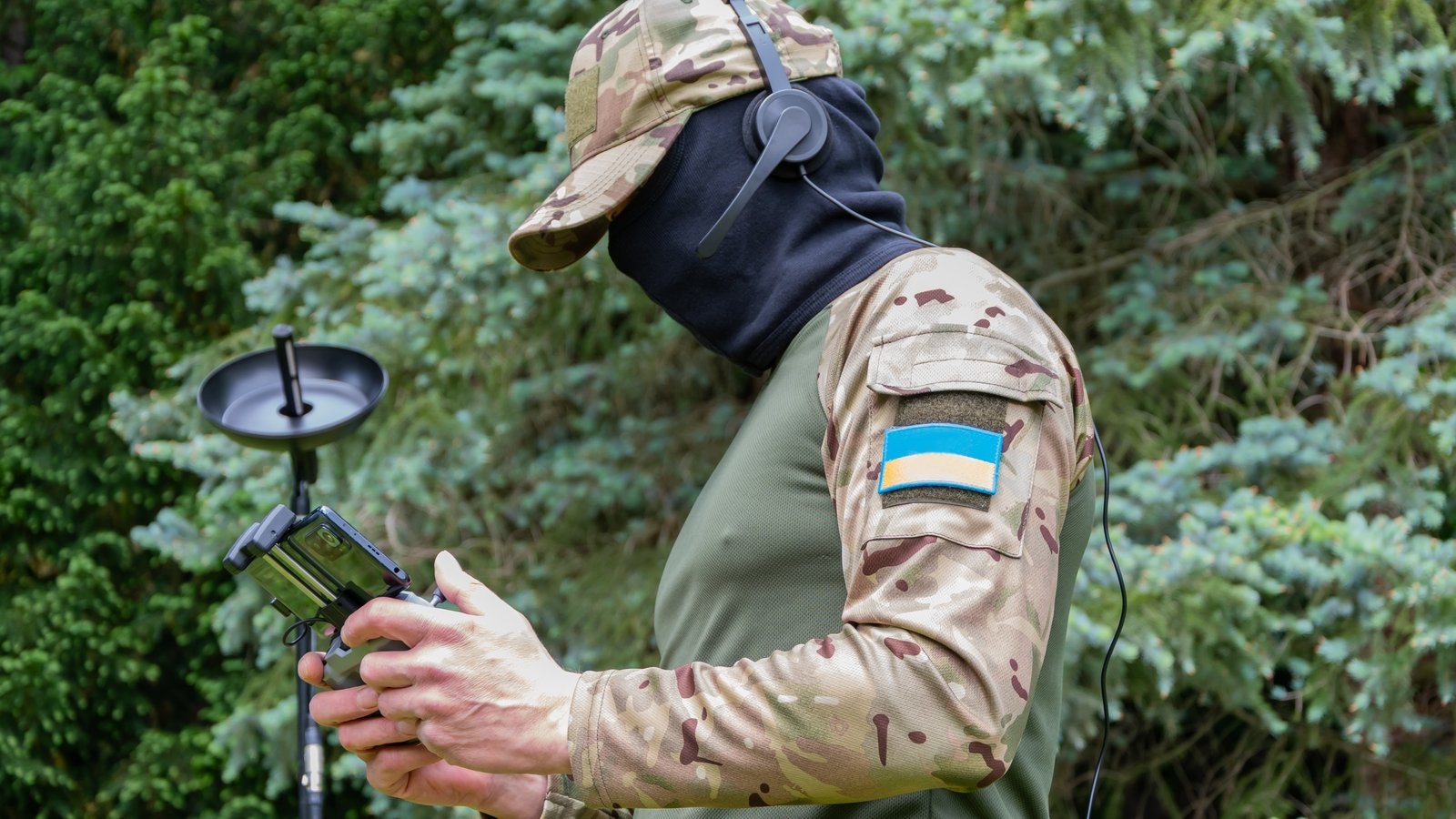
Starlink is not a classic weapon system. Precisely for this reason, it is strategically effective. The system connects numerous satellites in low Earth orbit with compact ground terminals and provides broadband data connections even where terrestrial networks are destroyed or monitored. For Ukraine, this means not just internet access. It means the connection between reconnaissance drones, command posts, artillery, and rear logistics.
The technical strength is simultaneously the political weakness. A state user gains access to a commercial service, the architecture, software updates, terms of use, and prioritization of which are not decided in European capitals. Politico reported in October that service restrictions were affecting Ukrainian drone operations, and pressure is growing in Brussels to reduce dependency through European satellite capacities. This is not a theoretical sovereignty issue. Whoever controls the data channel can alter the operational reach of a partner without deploying a single soldier.
IRIS² is a Project, Not Yet a Capability
The EU refers to IRIS², Galileo, and GOVSATCOM as building blocks of European secure connectivity. These programs are politically important but currently do not replace a deployable, comprehensive equivalent to Starlink. IRIS² aims to connect secure state communication with commercial services; this combination is sensible because Europe alone cannot replicate the industrial scaling or launch capacities of the United States in the short term.
But reason is not yet a capability. A constellation on paper does not provide connectivity in the combat zone. Satellites, launch opportunities, encrypted terminals, ground stations, frequency rights, cyber defense, spare parts, and above all, a procedure that decides on priorities within minutes in a crisis are required. The EU lacks a unified military command structure for this chain. Member states have different security clearances, procurement rules, and national reservations. A European logo does not yet create European resilience.
Ukraine Becomes the Stress Test for European Space Policy
The current pressure is therefore politically valuable. Ukraine demonstrates the demands that modern combat places on satellite communication: high availability, rapid restoration after disruptions, resistance to electronic warfare, and the ability to operate many inexpensive devices simultaneously. This is a different category than a government conference on strategic autonomy.
The EU should not merely promise Kyiv later access to IRIS². It should involve Ukraine as a real user in the development of terminals, encryption procedures, and failure tests. This would solve two problems simultaneously. First, Ukraine would gain an additional communication option, provided it is actually available. Second, European manufacturers would test their systems under wartime conditions instead of certifying them in laboratories for years. The political price would not be small: a European network supporting Ukrainian forces would become part of European deterrence and thus also a potential Russian target.
Autonomy Means Redundancy, Not Isolation
The mistake would be to draw a simple anti-American lesson from the Starlink dependency. Europe still needs American satellites, American launch services, and American intelligence. Strategic autonomy does not mean duplicating every American capability. It means not losing one's military operational capability immediately in the event of a political disagreement.
For this, a three-tiered architecture would be sensible: commercial providers for mass and speed, state European systems for encrypted and prioritized communication, and national and allied fallback networks for crisis situations. What matters is not whether Brussels builds a European Starlink clone. What matters is whether a single entrepreneur, a single corporation, or a single government can shut down or slow down Europe's operational communication.
The Institutional Problem Remains Unresolved
The events surrounding Starlink once again illustrate Europe's familiar pattern. First, an operational dependency arises, then it is recognized as a political risk, and subsequently, a multi-year industrial program is announced. However, the time between announcement and capability is when the adversary acts. The EU has already learned from ammunition, air defense, and drones that funding without production and leadership mechanisms does not create readiness. The same mistake threatens in satellite communication at a higher orbit.
Brussels can therefore celebrate IRIS² as a strategic program. However, for Kyiv, only the functionality of the next terminal matters when the network is disrupted. Europe's dilemma is precise: those who want immediate military effect remain dependent on American commercial systems; those who want true autonomy must invest years without being able to guarantee that the result will be available in time. More space policy does not resolve this contradiction. It merely makes it visible.
Sources
Ukrainian officers warned of the detrimental effects of Starlink service slowdowns on military drone operations in October 2026. The EU faces increasing pressure to develop its own satellite communication capabilities to ensure operational independence. The IRIS² project aims to enhance secure communication but lacks immediate operational capacity. The ongoing conflict in Ukraine highlights the urgent need for reliable satellite communication in modern warfare.
- Ukrainian officers warned of the impact of Starlink service slowdowns on drone operations.
- The EU is under pressure to develop its own satellite communication capabilities to reduce reliance on Starlink.
- IRIS² is a proposed project to enhance secure communication but is not yet operational.
- The current situation in Ukraine serves as a stress test for European satellite communication needs.
- Strategic autonomy for Europe requires redundancy in communication systems, not isolation.