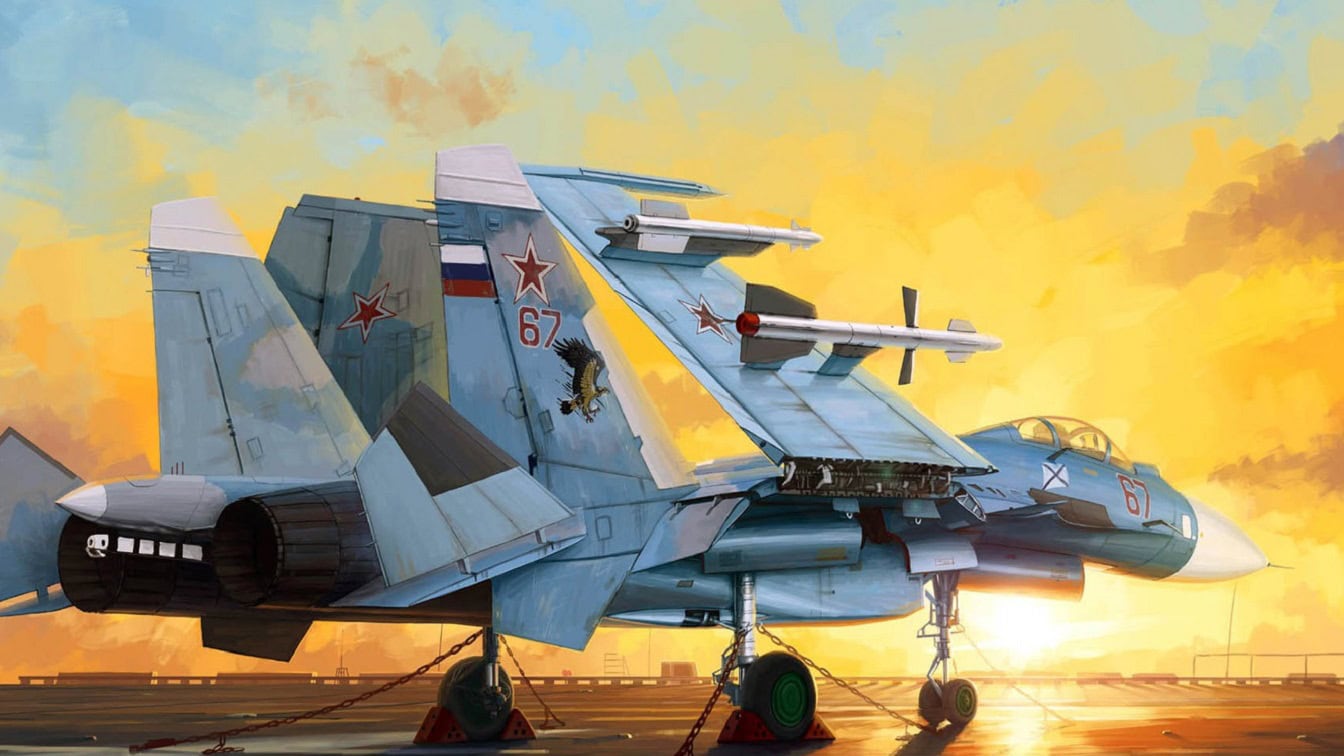
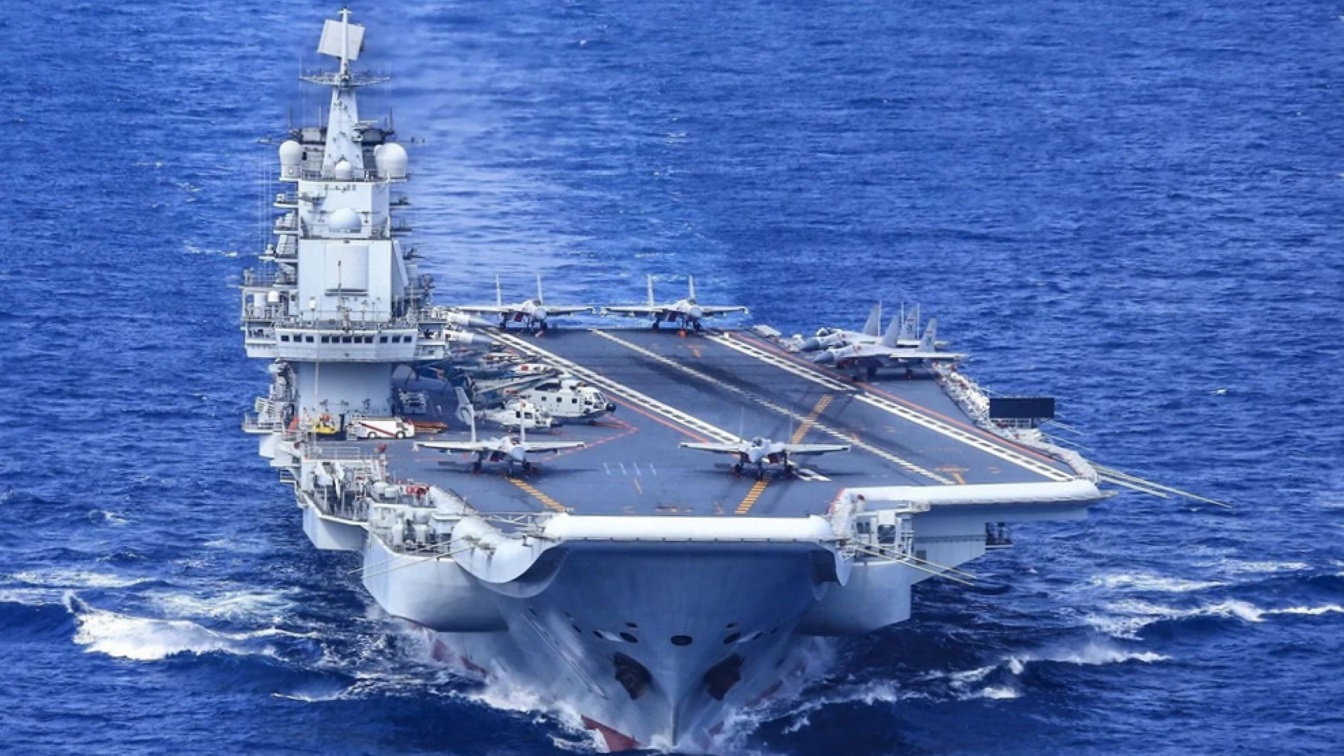
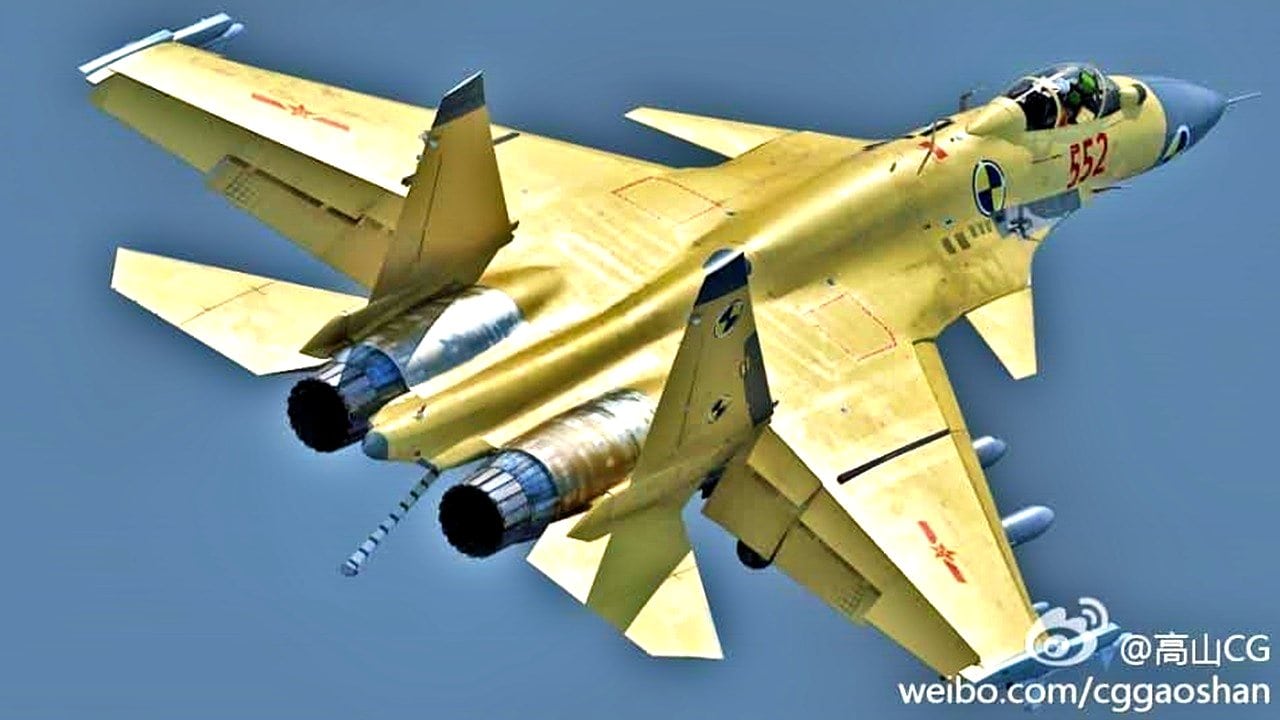
The J-15's most important contribution was institutional rather than technical. When the programme began, the PLA Navy had no fixed-wing carrier aviation of any kind: no deck-qualified pilots, no landing signal officers, no arrested-recovery maintenance practice and no shore-based training pipeline. Building a heavy naval fighter around an existing Flanker airframe was the fastest route to generating that experience, and the 2012 landing aboard Liaoning marked the point at which China began accumulating it. Judged as a machine rather than as a capability-building exercise, the baseline aircraft carries real limits: ski-jump launch from Liaoning and Shandong forces a trade between fuel and ordnance that a catapult removes, and a fighter of roughly 33 tonnes maximum weight pays for that trade more than a lighter type would.
The programme also became a test case for Chinese propulsion independence. The J-15 was the last Flanker derivative still flying on Russian AL-31F engines, largely because carrier recovery is unforgiving of slow throttle response and salt-air corrosion. Confirmation in 2022 that operational aircraft were flying with WS-10 series turbofans removed a supply dependency that would have constrained wartime attrition replacement, and it cleared the way for the catapult-capable J-15T. Reports of airframe fatigue and a shorter-than-expected service life on early batches circulate widely in Chinese and Western commentary, but they rest on inference rather than published data and should be treated cautiously.
With Fujian commissioned in November 2025, the family is splitting into distinct roles. The J-15T and J-15DT are the catapult-era aircraft, paired with the J-35 and the KJ-600; the original ski-jump J-15 is likely to concentrate on the two STOBAR decks and on training the pilot pool that a three-carrier force requires. That leaves the type in a position closer to the F/A-18C in late US Navy service than to a front-line peer of the newest carrier fighters, valuable less for what a single airframe can do than for the trained crews and deck procedures it produced.