
Iran’s Nuclear Offer Meets Trump’s November Decision Window as First Tanker Crewman Dies
 Ahmed Al-Rashid
Iran’s Nuclear Offer Meets Trump’s November Decision Window as First Tanker Crewman Dies
Breaking analysis | 6 November 2026
On 5 November, as Donald Trump met his national-security team, officials reportedly discussed the 9 November new moon as offering favourable operating conditions. By the following day, Tehran had sent a formal nuclear proposal to Washington through Qatar, while the reported missile strike on the empty tanker MT Velos Sapphire produced the first reported seafarer fatality of this phase of the Gulf crisis. These are not three separate headlines. Together they have created a narrow decision window in which military timing, a diplomatic offer and commercial risk are moving faster than public political messaging.
The key word is window, not deadline. A new moon is a familiar planning consideration for military forces. Reduced illumination can affect the balance between visual detection, night aviation, covert maritime activity and force protection. But no serious planner chooses a campaign date on lunar phase alone. Tides, weather, intelligence-surveillance-and-reconnaissance coverage, target development, tanker traffic, air-defence posture, logistics and allied notification all matter. The reported reference to 9 November is therefore evidence of operational planning language, not proof that the United States has selected a strike date.
That distinction is essential. Trump said after the 5 November meeting that he would make a decision and that he would prefer not to destroy what remains of the country, but might have to. On 6 November he told Al Jazeera that the public would know “very soon.” Those public words leave room for escalation and for delay. Reporting carried by Fox News and attributed to Axios says CENTCOM has completed a further large-scale round of preparations without new orders. Preparation is deliberately reversible; once an order is issued, it is not.
What the evidence establishes and what it does not
The public record has sharply different evidentiary grades. Trump’s statements are direct public positions. The preparation reporting rests on unnamed officials in Axios/Fox reporting and should be read accordingly. Qatar’s review of an Iranian formal nuclear proposal is a diplomatic process claim that can be tested by further official confirmation, but the proposal’s detailed contents and Tehran’s bargaining intent remain uncertain.
The maritime picture requires even greater care. Shipping and company reporting says the Greek-managed, Marshall Islands-flagged Velos Sapphire, travelling empty toward Bahrain, was struck in the Persian Gulf on 5 November and one crew member was killed. The missile attribution and the fatality have not been independently confirmed in public reporting at the time of writing. UKMTO’s record of five attacks or incidents in the area since 1 November is the most useful neutral operational indicator, alongside ship-tracking and marine-insurance data. By contrast, the IRGC’s 6 November claim that two further tankers caught fire, and its assertion that the strait is unsafe and closed to vessels not coordinated with Tehran, are single-source and unconfirmed.
Nor should the two blockade narratives be merged. Iran is attempting to impose a de facto denial threat in the Strait of Hormuz: a claim about transit risk and compliance. CENTCOM says it is tightening a blockade of Iranian ports: a distinct coercive effort against Iranian maritime commerce. Neither statement by itself proves a legally or physically total closure of the strait. In practical maritime terms, however, ships, charterers and crews can react to danger long before any authority declares a formal closure.
Why Tehran sent a formal nuclear proposal now
Tehran’s choice of Qatar as channel is unsurprising. Doha retains access in Washington and working ties with Iran, while its credibility rests on keeping the channel confidential enough to be useful. The timing is the real message. A written nuclear proposal is more than a talking point when military preparations are visibly advancing; it is an effort to force Washington to choose between testing terms and accepting responsibility for rejecting them.
That does not make it a genuine concession. Iran has reportedly tied further negotiations to seven demands: war compensation; lifting sanctions and the maritime blockade; unfreezing assets; a reduced US military presence; an end to regional hostilities including Lebanon and Gaza; and a permanent end to the war rather than a temporary ceasefire. The list contains matters that are political, military and regional, not merely nuclear. Its two central structural barriers are the demand to end the blockade and the demand for a permanent end to the war. Both collide directly with Washington’s public position that pressure, including the port blockade, will not be lifted first.
It may be a delaying instrument designed to buy time through Qatari review, particularly if Tehran believes the United States is politically reluctant to launch another major round. It may also reflect real economic pressure as restrictions on ports, finance and shipping compound. The two explanations can coexist. Negotiators often use a serious offer to obtain time, and they often seek time because pressure is serious. The test is not the word “formal,” but whether Iran offers verifiable nuclear constraints before receiving the irreversible relief it seeks.
Three paths from the decision window
1. Limited military action
A limited option would likely concentrate on assets directly connected to maritime coercion and retaliation: coastal missile or drone launch infrastructure, command-and-control nodes, mobile surveillance systems, mine-related facilities, or selected air-defence radars. It would seek to avoid a broad attack on civilian infrastructure, national leadership targets or facilities whose destruction would make post-strike diplomacy impossible. The military logic would be punishment and temporary degradation, not regime change.
Iran’s likely answer would not need to mirror the targets. It could combine harassment of commercial shipping, missile or drone launches, cyber pressure, proxy threats and renewed ambiguity around mines. The observable signs would be unusual allied force-protection notices, final target-area aviation warnings, movement of mine-countermeasure forces, evacuation or dispersal measures at Iranian coastal sites, and a sudden fall in commercial traffic near particular Gulf approaches. A public US strike authorization would be a late indicator, not an early one.
2. Strike pressure alongside negotiations
The more dangerous middle path is to negotiate through Qatar while retaining, or even conducting, calibrated strikes. Washington could calculate that talks work only if Tehran believes further costs are imminent; Tehran could calculate that negotiations limit the scale of American action while it preserves leverage at sea. This is coercive diplomacy, but it is vulnerable to accidents because each side interprets restraint as weakness and preparation as imminent attack.
Signs would include Qatari shuttle activity, narrowly defined technical discussion of nuclear verification, temporary humanitarian or financial arrangements without formal sanctions relief, and unusually precise public language about “reversible” steps. At the same time, a continued US refusal to lift the port blockade would show that talks are being used to test Iran’s floor, not to accept Tehran’s seven conditions. Oman can reinforce this track because it has long been a discreet Iran-US interlocutor, but neither Muscat nor Doha can erase the contradiction between Tehran’s demand for a permanent settlement and Washington’s desire to retain coercive leverage.
3. Continued blockade and sanctions pressure
The third path is lower-intensity attrition: tightening the Iranian-port blockade, enforcing sanctions, escorting selected traffic and avoiding a conspicuous new bombing campaign. It is politically attractive because it preserves options. It is also not cost-free. The reported crewman’s death changes risk pricing. Underwriters will reassess war-risk premiums; owners will weigh rerouting, delay and contractual exposure; and qualified crews may become harder and more expensive to place on Gulf-bound vessels. A de facto reduction in sailings can impose an economic shock without a formal strait closure.
The indicators are commercial as much as military: insurance circulars, cancellations or substitutions of Gulf calls, widening freight spreads, crew advisories, port-call data and sustained Brent strength. Brent was about $99.90 in early 6 November trading after closing at $98.29 on 5 November, up 3.88%. That is a market measure of uncertainty, not proof of a physical supply loss. Rapidan Energy Group’s Bob McNally has put the probability of a resumption of major fighting at 80%; it is an informed analytical estimate, not an official forecast.
Political constraints are part of the operating environment
The military calendar is now constrained by politics in Washington and Jerusalem. An Associated Press exclusive on 2 November reported Israeli pressure for a post-election resumption of attacks; Israel denied the account. That claim therefore remains contested. Still, the underlying divergence is visible: Israel has strong incentives to prevent Iran from using negotiations to recover military space, while Trump’s public “no rush” posture gives him room to demand more evidence, more preparation or a better diplomatic return before acting.
US domestic politics complicate that calculus. Democrats’ congressional gains and intra-party arguments that the war contributed to electoral losses narrow tolerance for an open-ended escalation, even if they do not prevent a limited operation framed as protection of shipping or forces. They can also encourage the White House to prefer coercion that appears bounded. The reported difference in US fatality figures matters in this atmosphere: the Pentagon’s public count is 23 KIA, while Trump has cited 18. Neither should be silently substituted for the other; the discrepancy itself is politically consequential until reconciled.
China, Qatar and Oman have leverage, but not command. Beijing’s value is greatest where Iranian economic calculation meets Chinese energy and commercial interests; it cannot compel Washington to accept Tehran’s regional demands. Qatar can carry a proposal and help define a face-saving sequence, but cannot make the blockade disappear. Oman can provide trusted quiet contact, but cannot manufacture agreement on permanence. Diplomacy can lengthen the window. It cannot by itself close the gap.
The decision is becoming more expensive to postpone
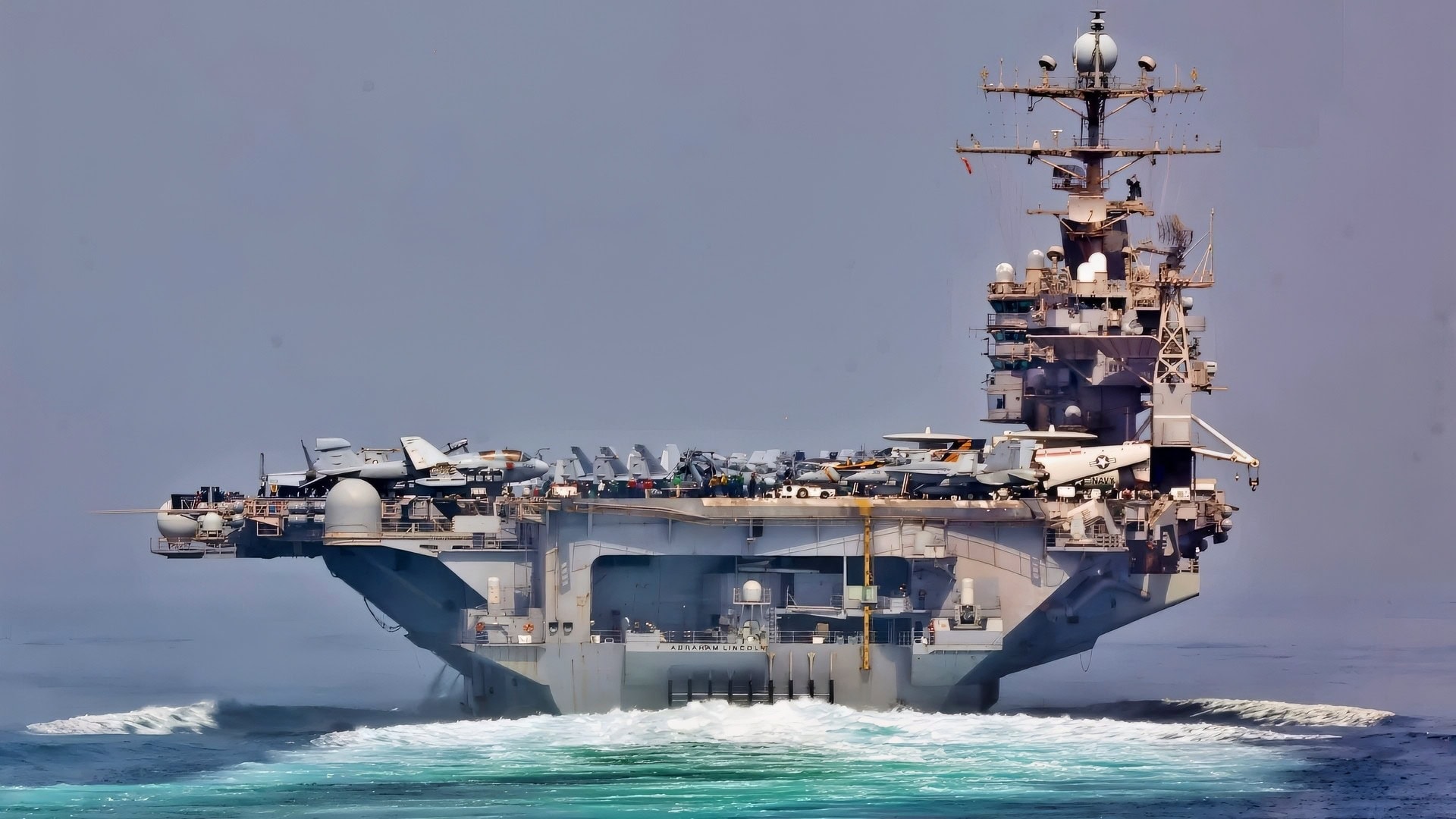
The USS Theodore Roosevelt strike group’s 6 November stop in Singapore means it is not expected to enter CENTCOM’s area before at least mid-November, when it would join the George H. W. Bush and George Washington. That is background, not a trigger. It does, however, reinforce the value of delay to a White House that wants more conventional deterrent weight before taking an irreversible step.
For now, the decisive facts are simpler. Washington has an operationally meaningful but non-binding lunar window; Tehran has placed a formal proposal on a channel that cannot easily be ignored; and commercial crews now face a risk environment made more real by a reported first death. The next several days will show whether the United States uses force to narrow Iran’s choices, uses the threat of force to test the proposal, or lets the blockade do the work. The structural problem is that each option increases pressure while reducing the room for the other side to retreat without appearing to lose.
Source assessment
- Direct public statements by President Trump, including remarks on 5 November and to Al Jazeera on 6 November.
- Axios reporting cited by Fox News for unnamed-official accounts of planning and the new-moon discussion.
- Qatari-channel reporting on the Iranian proposal; details and intent remain unverified pending official disclosure.
- UKMTO incident reporting and ship-tracking data for maritime incidents; tanker attribution, the reported death and IRGC claims remain unconfirmed where not independently corroborated.
- CENTCOM public position on the Iranian-port blockade; IRGC statements are treated as single-source claims.
- AP reporting of 2 November on alleged Israeli pressure, denied by Israel; Brent pricing data; and Rapidan analysis.
On 5 November 2026, Iran sent a formal nuclear proposal to Washington via Qatar amid ongoing military preparations. A missile strike on the empty tanker MT Velos Sapphire in the Persian Gulf resulted in the death of one crew member. U.S. officials discussed military options and the implications of the new moon on operational planning, while Iran's demands for negotiations include lifting sanctions and ending the maritime blockade.
- Iran sent a formal nuclear proposal to Washington through Qatar.
- A missile strike on the tanker MT Velos Sapphire resulted in the death of one crew member.
- Discussions among U.S. officials included military actions in response to Iranian activities.
- Iran's demands in negotiations include lifting sanctions and ending the maritime blockade.
- The U.S. is considering various military options while engaging in diplomatic talks.