

XB-70 Valkyrie by the Numbers: $2 Billion, Mach 3.08, and Zero Weapons Carried – North American Aviation built two XB-70A Valkyries at Air Force Plant 42 in Palmdale, California. A historical Air and Space Forces account placed the program at $1.48 billion, while a later Air Force data sheet rounded the total to about $2 billion in 1960s dollars. The first aircraft rolled out on May 11, 1964, and flew on September 21.
The U.S. Air Force wanted a replacement for the B-52 that combined the B-52’s intercontinental range and heavy payload with the B-58 Hustler’s speed. Strategic Air Command expected the bomber to cross Soviet defenses above 70,000 feet at Mach 3, deliver nuclear weapons, and leave before interceptors could reach it.
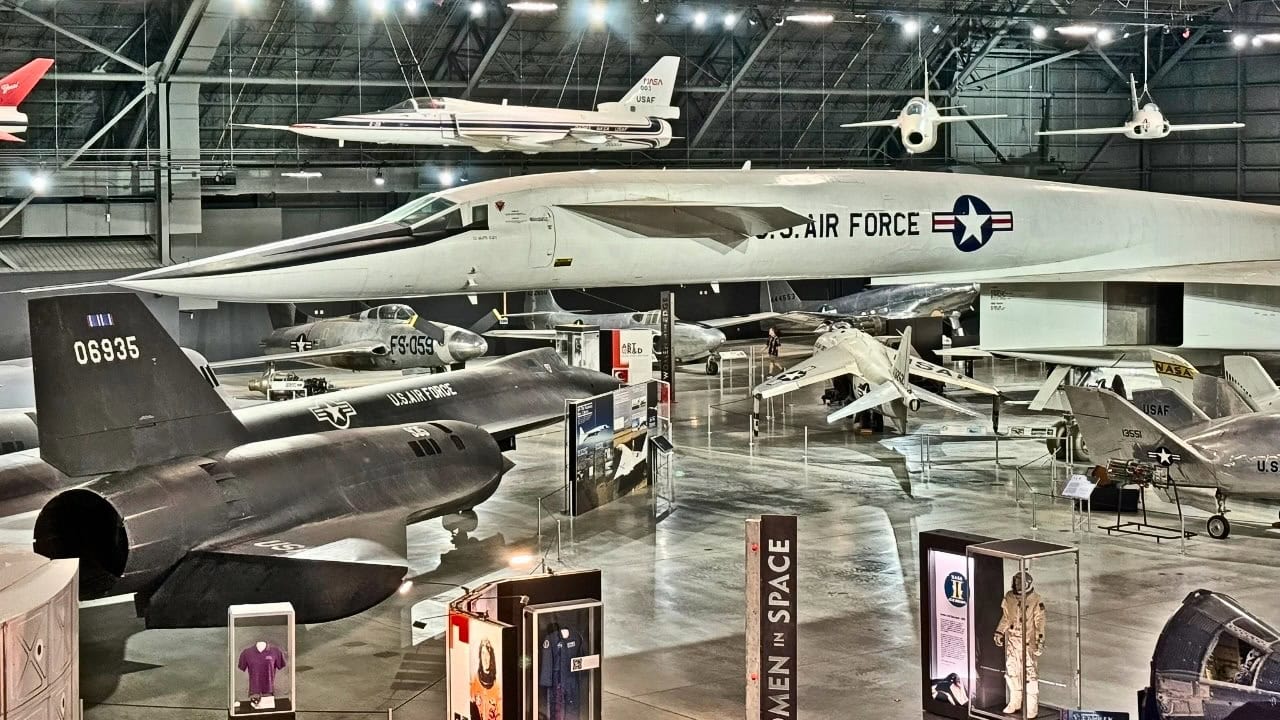
XB-70 photo taken at U.S. Air Force Museum by 19FortyFive in 2025.
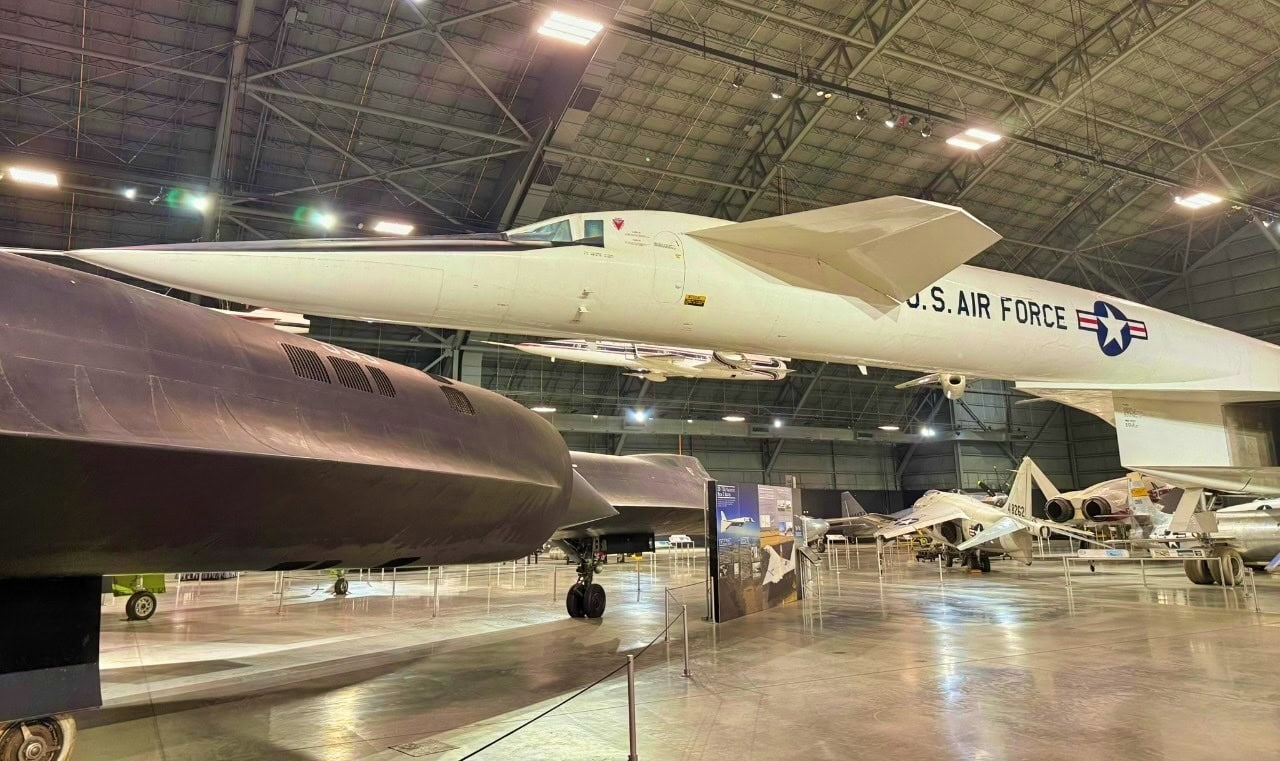
XB-70 photo taken at U.S. Air Force Museum by 19FortyFive in 2025.
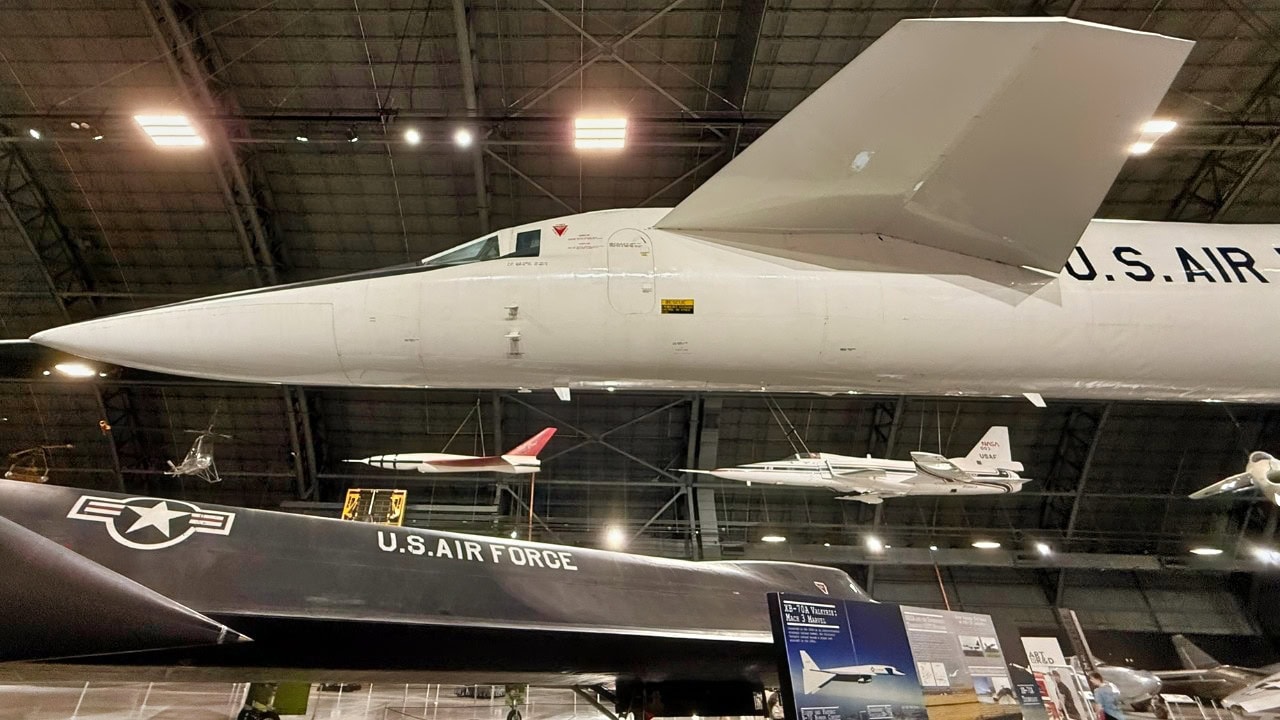
XB-70 photo taken at U.S. Air Force Museum by 19FortyFive in 2025.
The test aircraft measured 185 feet 10 inches and weighed 534,700 pounds loaded. Six General Electric YJ93 turbojets produced up to 180,000 pounds of combined afterburning thrust. The Valkyrie reached Mach 3.08, more than 2,000 mph, with a published test-aircraft ceiling of 77,350 feet.
How many weapons would it have carried? Well, the weapon number requires care. The earliest WS-110A contract called for a 20,000-pound load of high-yield nuclear weapons. The mature design requirement grew to 50,000 pounds. The two XB-70A research aircraft carried no bombs, missiles, bombsight, or operational electronic-countermeasures system, so no final bomb count was ever certified.
The Air Force Wanted to Replace the B-52 With Speed and Altitude
Strategic Air Command began pursuing the bomber in 1955. Soviet interceptors had limited speed, while anti-aircraft guns could not reach an aircraft cruising near 70,000 feet. A bomber traveling at three times the speed of sound would spend less time in defended airspace and give enemy controllers little time to organize an interception.
Boeing and North American received study contracts in November 1955. Their first proposals used jettisonable fuel tanks and a short supersonic dash. The Air Force rejected both as too complicated, pushing the companies toward aircraft designed to cruise at Mach 3.
North American won on December 23, 1957. Its design used a compression lift mechanism that captured pressure from the aircraft’s shock wave beneath the delta wing. The outer wing panels folded downward at high speed to improve stability.
North American Built the Valkyrie at Palmdale
The first XB-70 was completed in May 1964. The second was completed later that year and first flew on July 17, 1965. A third airframe was started but canceled before completion.
Mach 3 imposed demands far beyond ordinary aluminum construction. Friction heated parts of the skin to 600 degrees Fahrenheit. North American relied on brazed stainless-steel honeycomb panels, titanium, and high-temperature seals.
The aircraft had a 105-foot wingspan and stood more than 30 feet high. The Air Force museum lists a range of 4,288 miles for the test aircraft. The projected operational bomber was expected to fly farther, with later design work pushing the planned range beyond 6,500 miles.
The 50,000-Pound Requirement Never Became an Operational Load
The B-70 was intended to carry nuclear or conventional weapons inside the fuselage. Internal carriage protected the aircraft’s aerodynamics at Mach 3 and kept weapons away from severe external heating. The number aboard would have depended on weapon size, target set, and fuel configuration.
The requirements changed repeatedly. The initial development contract described 20,000 pounds of high-yield nuclear weapons. Later design material used a 50,000-pound payload figure. Engineers added a second weapons bay, then altered the internal volume as fuel and range requirements changed.
No production B-70 entered weapons testing. The experimental aircraft used two crew members rather than the larger operational crew expected to handle navigation, bombing, and defensive systems. Any claim that the Valkyrie carried a fixed number of nuclear weapons describes a paper configuration, not a tested loadout.
The Cost Grew While the Mission Disappeared
The $1.48 billion and $2 billion totals reflect different accounting scopes. Neither should be divided by two and presented as a normal unit price. The program paid for engines, materials, tooling, facilities, and test work for an aircraft that never entered production.
By December 1959, the government had spent about $360 million when the Eisenhower administration canceled the full bomber program. The Air Force revived plans in August 1960 for one prototype and 11 YB-70 test aircraft, but that production path lasted less than a year. President John F. Kennedy’s administration reduced the effort to three prototypes, then two.
A final proposal appeared in 1962 for 210 RS-70 reconnaissance-strike aircraft at $10 billion. Defense Secretary Robert McNamara rejected it. He also opposed spending another $180 million Congress had added for the B-70, arguing that the United States had no established need for another expensive long-range bomber force.
Surface-to-Air Missiles and ICBMs Killed the Bomber
The Valkyrie was overtaken by technologies that matured faster than the aircraft. Soviet surface-to-air missiles challenged the assumption that altitude offered sanctuary. The 1960 shootdown of Francis Gary Powers in a U-2 showed that a high-flying aircraft was no longer beyond reach.
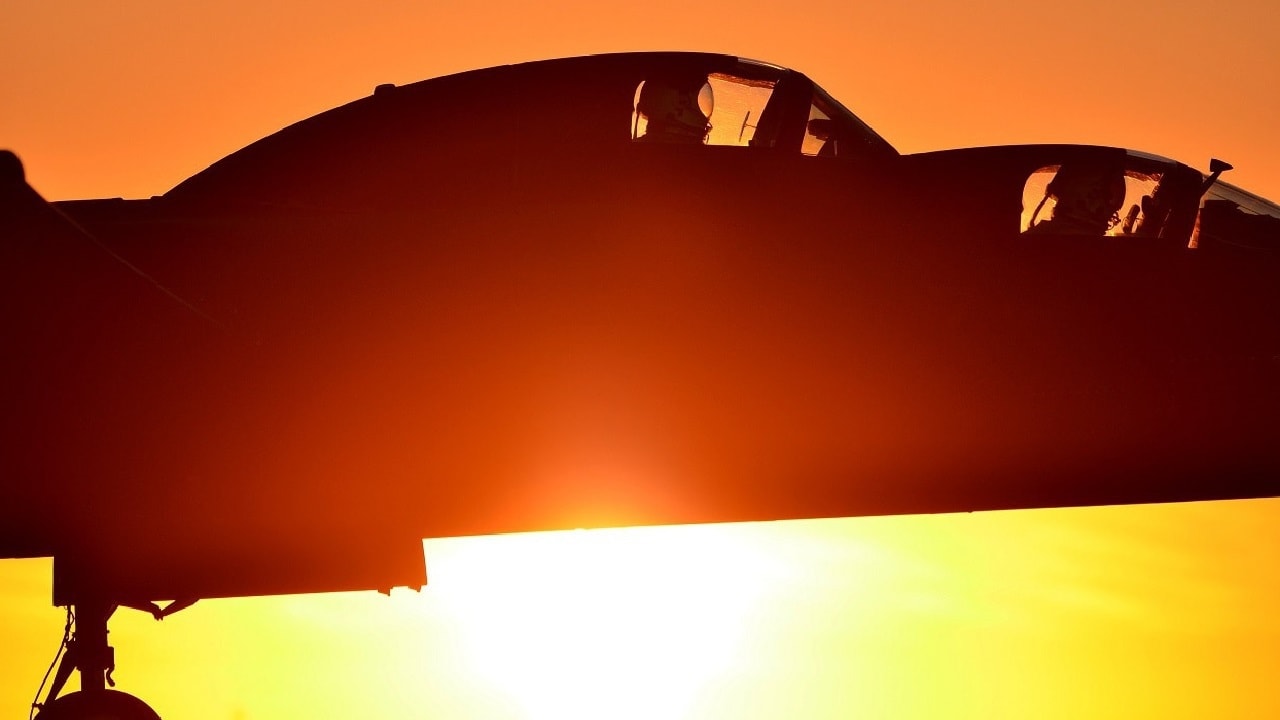
U-2 Spy Plane. Image Credit: Creative Commons.
Intercontinental ballistic missiles reached targets faster, required no aircrew and did not have to penetrate defenses twice. Polaris submarines added a survivable sea-based force. The same history sits behind assessments of why the Air Force declined to produce the Valkyrie.
The Air Force also moved toward low-altitude penetration, where terrain masked aircraft from radar. The XB-70’s huge delta wing and Mach 3 structure were optimized for thin air at high altitude. Converting it into a low-level bomber would have sacrificed range and speed while placing severe stress on the airframe.
Flight Testing Proved Mach 3 Was Possible
The first flight from Palmdale to Edwards Air Force Base immediately exposed the aircraft’s complexity. One engine had to be shut down, the landing gear malfunctioned, and the left main wheels locked during landing. The Valkyrie still went supersonic on its third flight.
AV-1 reached Mach 3.02 on October 14, 1965. Damage to its honeycomb panels later produced a Mach 2.5 limit. AV-2 incorporated improved systems, reached Mach 3.05 in January 1966, and remained at Mach 3 for 32 minutes during a May flight.
The program record was Mach 3.08, more than 35 miles per minute. The achievement remains central to the XB-70’s place in Air Force history, even though it never performed its intended mission.
The Second Valkyrie Was Lost During a Photo Flight
On June 8, 1966, AV-2 joined an F-104N, F-5A, F-4B, and T-38A for a formation photo mission involving aircraft powered by General Electric engines. NASA pilot Joe Walker’s F-104 contacted the Valkyrie’s right wingtip, rolled across the bomber, and tore away most of its vertical stabilizers.
The XB-70 flew straight for several seconds before rolling out of control. North American pilot Al White escaped in the encapsulated ejection system and survived with serious injuries. Copilot Maj. Carl Cross could not eject and died. Walker also died.
The bomber had already lost its operational future. The crash destroyed the advanced research aircraft and curtailed NASA’s planned supersonic transport program.
NASA Used the Survivor Until 1969
AV-1 returned to flight in November 1966. The Air Force and NASA used it to study sonic booms, high-speed handling, structural loads, and the operating problems of a large supersonic transport. The two Valkyries completed 129 flights and accumulated 252 hours and 38 minutes in the air.
The research advanced high-temperature materials and sustained Mach 3 operations without modern digital flight controls. That record is why comparisons between the XB-70 and later advanced bombers require a distinction between program failure and engineering achievement.
AV-1 made its final flight on February 4, 1969, landing at Wright-Patterson Air Force Base. The only surviving Valkyrie remains in the Research and Development Gallery at the National Museum of the U.S. Air Force near Dayton, Ohio. In fact, many of the pictures in this article are from a visit this publication made to the aircraft last year.
About the Author: Harry J. Kazianis
Harry J. Kazianis (@Grecianformula) was the former Senior Director of National Security Affairs at the Center for the National Interest (CFTNI), a foreign policy think tank founded by Richard Nixon based in Washington, DC. Harry has over a decade of experience in think tanks and national security publishing. His ideas have been published in the NY Times, The Washington Post, The Wall Street Journal, CNN, and many other outlets worldwide. He has held positions at CSIS, the Heritage Foundation, the University of Nottingham, and several other institutions related to national security research and studies. He is the former Executive Editor of the National Interest and the Diplomat. He holds a Master’s degree focusing on international affairs from Harvard University.