
Sweden's 110 Leopard 2 will be upgraded to Stridsvagn 123A by 2030
 Dr. Klaus Weber
Sweden's 110 Leopard 2 will be upgraded to Stridsvagn 123A by 2030
110 Swedish Leopard 2 main battle tanks are to be upgraded to the Stridsvagn 123A standard by 2030. The first modernized tank was handed over to the Swedish procurement authority FMV in Munich on June 22. This sounds like a national modernization announcement. In fact, it is a rather precise test case for Europe's land forces: a common chassis does not create a common capability.
What Sweden is actually getting
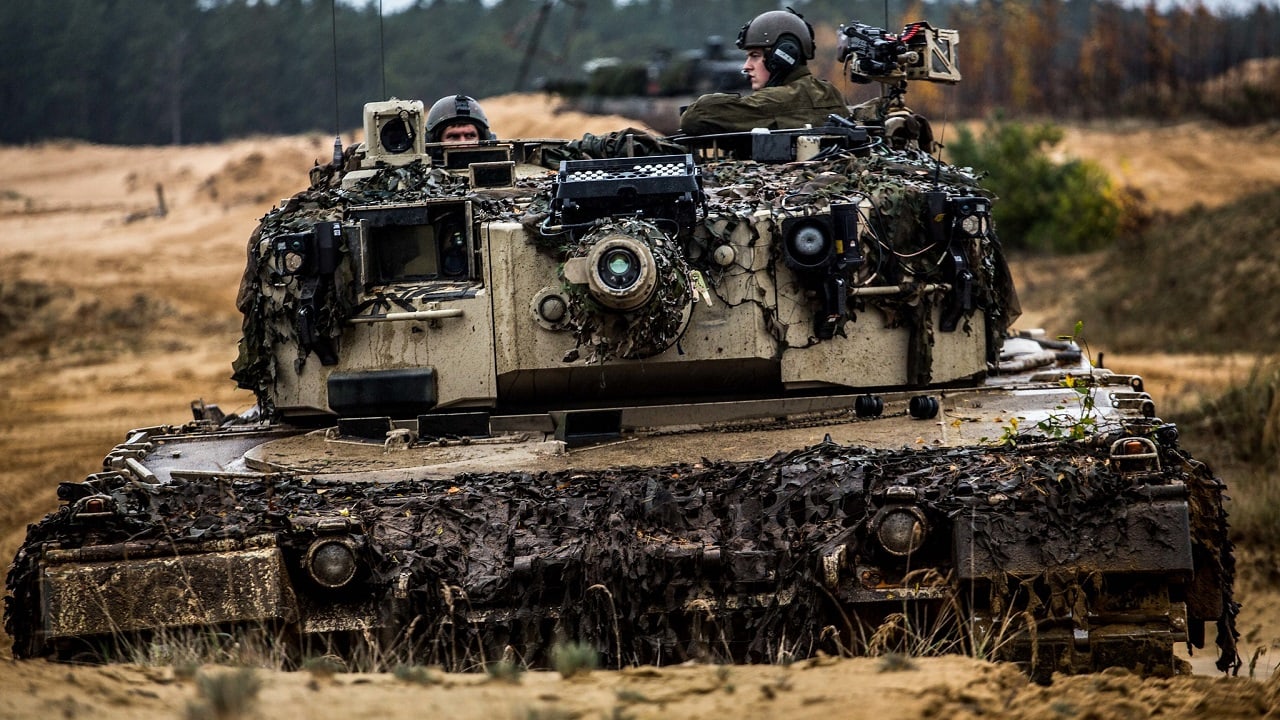
According to KNDS, the Swedish REMO program, which stands for Renovation Modernization, encompasses all Swedish Leopard 2 systems. The Stridsvagn 123A will receive a new L55A1 gun, digital workplaces, increased connectivity, improved protection, and a logistics package. The Swedish Army is expected to begin training the first soldiers on the modernized system in the fall of 2026, with completion scheduled for 2030 (KNDS/EDR, June 22, 2026).
The technical list is not insignificant. The L55A1 increases range and firepower. The digital workplaces are a prerequisite for the tank to function not just as a single weapon platform but to be integrated into command, sensor, and fire control networks. This is precisely where the difference between modernization and mere life extension lies. An old Leopard 2 with new optics remains an old tank. A Leopard 2 with digital architecture can become part of a network.
- Scope: 110 Swedish Leopard 2
- New standard: Stridsvagn 123A, also Leopard 2 SWE
- Industry partner: KNDS Germany
- Core elements: L55A1 gun, protection package, digitization, logistics
- Timeline: Training starting in fall 2026, completion by 2030
The Swedish case is bigger than Sweden
Since Sweden's NATO accession in 2024, the Swedish Army's contribution is no longer just national territorial defense. It is part of the Nordic and Baltic deterrence architecture. In this architecture, not only brigade numbers count, but also deployability, ammunition, maintenance, and interoperability. The Stridsvagn 123A is therefore politically important because it integrates Sweden's land forces into a NATO planning framework that still heavily relies on American strategic depth.
One should read the numbers soberly. 110 modernized main battle tanks represent a serious capability for a country with Sweden's population and geography. However, they do not serve as a European reserve. They do not replace German equipment shortfalls, French budget gaps, or Dutch decisions to rebuild tank capacity after years of reduction. The Swedish modernization strengthens the northern flank; it does not solve the European quantity problem.
This is precisely where the institutional lesson lies. Europe likes to talk about common platforms. The Leopard 2 is the best counterexample and at the same time the best argument. It is present in many European armies, from Germany to Poland, Norway, Denmark, Finland, Sweden, Spain, and Greece. Nevertheless, there are different national configurations, upgrade statuses, ammunition stocks, spare parts chains, and training regulations. The name Leopard 2 suggests uniformity. The reality is a logistical mosaic.
Interoperability is not a label
KNDS emphasizes that the Stridsvagn 123A is "fully interoperable" with all Leopard 2 systems. Industrially, this statement is understandable and likely well-founded technically. Militarily, it is not sufficient. Interoperability is not a state declared by a manufacturer. It only arises when national armies use the same data standards, ammunition is available in a timely manner, spare parts can be moved across borders, and maintenance rules do not get stuck on national budget or export regulations in case of emergency.
The European tank alliance rarely fails due to steel. It more often fails due to contracts, spare parts, and software statuses.
This is not a Swedish failure. On the contrary: Sweden acts rationally. It modernizes an existing fleet, adheres to a European system, and binds itself more closely to the Leopard community. The problem is that Europe does not automatically translate these rational national decisions into a collective capability. PESCO, the European Defense Fund, and joint procurement initiatives can help. But they do not replace the hard work of making standards binding.
Why 2030 is politically too late and militarily realistic
The completion by 2030 seems slow in the current threat debate. Russia has been waging an industrial war of attrition against Ukraine for years, while NATO countries are refilling their stocks and rebuilding their armies. However, a four-year window for 110 deeply modernized main battle tanks is not absurd. It rather indicates how tight European industrial capacity has become. Those who order modern optics, fire control systems, protection packages, barrels, electronics, and spare parts chains simultaneously today compete with other European programs for the same industrial bottlenecks.
This reveals the weakness of the European turning point. Governments can increase defense budgets faster than industrial facilities, skilled workers, and supply chains can grow. Money can trigger a contract. However, it cannot immediately produce engineers, production lines, and testing capacities. This is precisely why the Swedish timeline is analytically valuable: it forces a distinction between political will and industrial delivery capability.
For Germany, the announcement is also uncomfortable. KNDS Germany is providing a central capability to Sweden while the Bundeswehr is still struggling with inventory gaps, ammunition issues, and modernization backlogs. This is not a contradiction but the normal picture of an export and alliance industry. However, it intensifies the question of whether Germany, as the industrial core of European land forces, can also present a sufficiently equipped own army. An arsenal for Europe without credible national readiness would be strategically thin.
The real test comes after the handover
The handover of the first Stridsvagn 123A is therefore not the conclusion but the beginning of the relevant test. By 2030, Sweden must turn modernized tanks into deployable units. NATO must integrate these units into regional defense plans. And Europe must make more out of the Leopard 2 community than just a collection of compatible but nationally separated managed fleets.
The Swedish program is good news, especially because it is concrete. It has a number, a timeline, a technical content, and an industrial responsible party. Yet this very concreteness exposes Europe's fundamental problem. If every country modernizes its tanks, Europe becomes stronger. If every country modernizes them differently, maintains them differently, and employs them differently, Europe remains a sum of national partial capabilities. More Leopard 2 do not automatically solve the problem. But without such programs, there would not even be the material basis to seriously discuss integration.
Sweden is modernizing 110 Leopard 2 tanks to the Stridsvagn 123A standard by 2030, with the first tank delivered on June 22, 2026, in Munich. The modernization includes a new L55A1 gun and enhanced digital capabilities, with training for soldiers set to begin in Fall 2026. This effort is part of Sweden's integration into NATO's defense architecture, enhancing its military capabilities in the Nordic and Baltic regions.
- Sweden is modernizing 110 Leopard 2 tanks to Stridsvagn 123A by 2030.
- The first modernized tank was delivered on June 22, 2026.
- The modernization includes a new L55A1 gun and enhanced digital capabilities.
- Training for soldiers on the new system will begin in Fall 2026.
- The modernization is part of Sweden's integration into NATO's defense architecture.