

Summary and Key Points: Switzerland is poised to become one of the newest operators of the American F-35 stealth fighter, but Bern’s decision sparked controversy. The crux of the issue is an unexpected cost increase that will almost certainly result in a much smaller fleet than originally envisioned. The first Swiss F-35A has entered main assembly, and training in the United States is slated for next year, with initial jets expected to be in-country in 2028. But the Swiss government now expects to buy roughly 30 F-35As rather than the 36 it originally agreed to, because inflation and contract complications pushed the program above its original price ceiling.
What Switzerland Bought: the F-35A
The F-35A is an American aerospace prime, Lockheed Martin’s single-seat, single-engine stealth fighter, designed for air defense, strike missions, intelligence gathering, and electronic warfare.
Its sensor suite, datalinks, and low observability — stealth — allow the jet to operate as a node in a wider network of aircraft and in tandem with ground systems and command centers.
Switzerland chose the F-35A in 2021 for its Air2030 program, and in that competition the F-35A beat out the Eurofighter Typhoon, the Dassault Rafale, and Boeing’s Super Hornet after an extensive evaluation by the Swiss.
That close inspection of the aforementioned aircraft found that the F-35A offered the best overall capability at the lowest assessed cost on a 30-year timeline.
The jet will replace the Swiss Air Force’s aging F-5E/F Tiger II fighters and, eventually,y its F/A-18C/D Hornets. The F-5s have long been limited largely to air policing and training, while the Hornets remain more capable but are nonetheless older aircraft and increasingly expensive to sustain.
The F-35 is therefore intended to consolidate multiple aircraft and their missions into one.
In parallel, Switzerland plans to develop a new ground-based air defense system around the Patriot system.
What Will Change
Perhaps the most significant change the Swiss anticipate with the F-35A is its stealth capability.
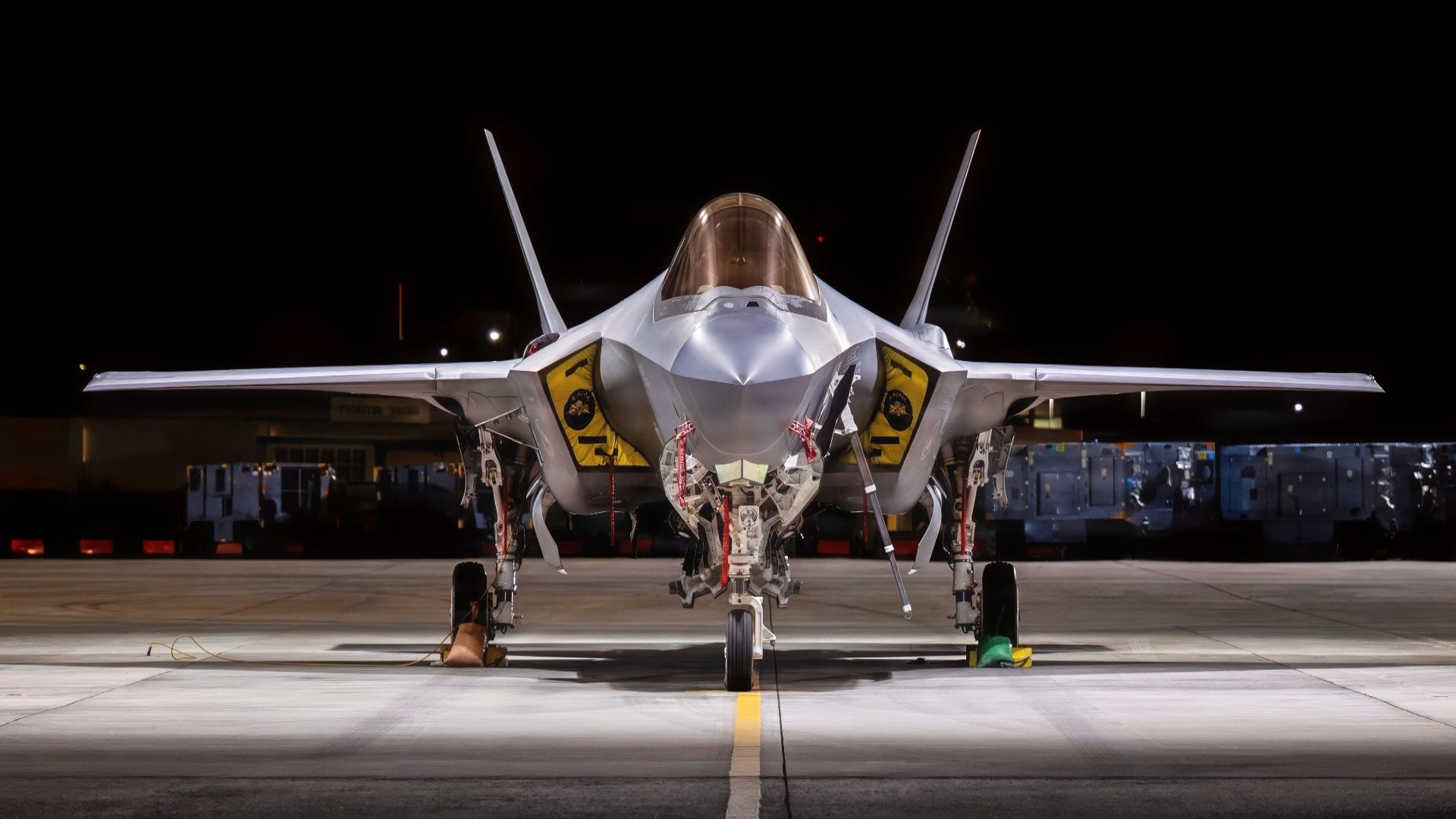
An F-35A Lightning II assigned to the 4th Expeditionary Fighter Squadron, deployed to Kadena Air Base, sit on the flight line during base-wide operational readiness exercise BH 26-1 at Kadena Air Base, Japan, Nov. 3, 2025. Kadena serves as a critical element in deterring potential adversaries through its demonstrated strength and commitment to regional security. (U.S. Air Force photos by Senior Airman Jonathan Sifuentes)
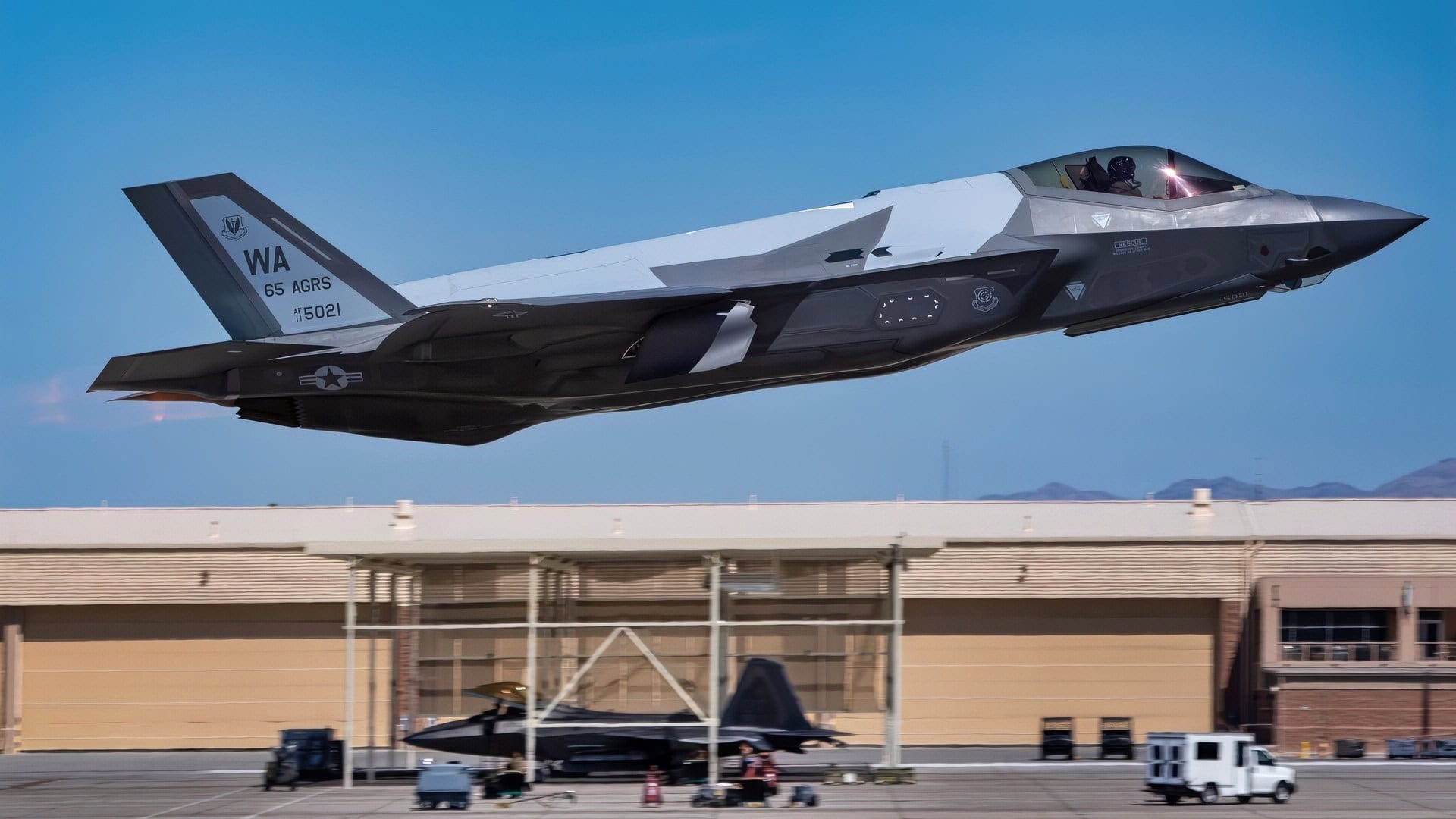
An F-35A Lightning II flown by a 65th Aggressor Squadron (AGRS) pilot takes off for its first flight with a new paint scheme at Nellis Air Force Base, Nevada, May 26, 2022. The mission of the 65 AGRS is to know, teach and replicate fifth-generation air adversaries tactics. (U.S. Air Force photo by Airman 1st Class Josey Blades)
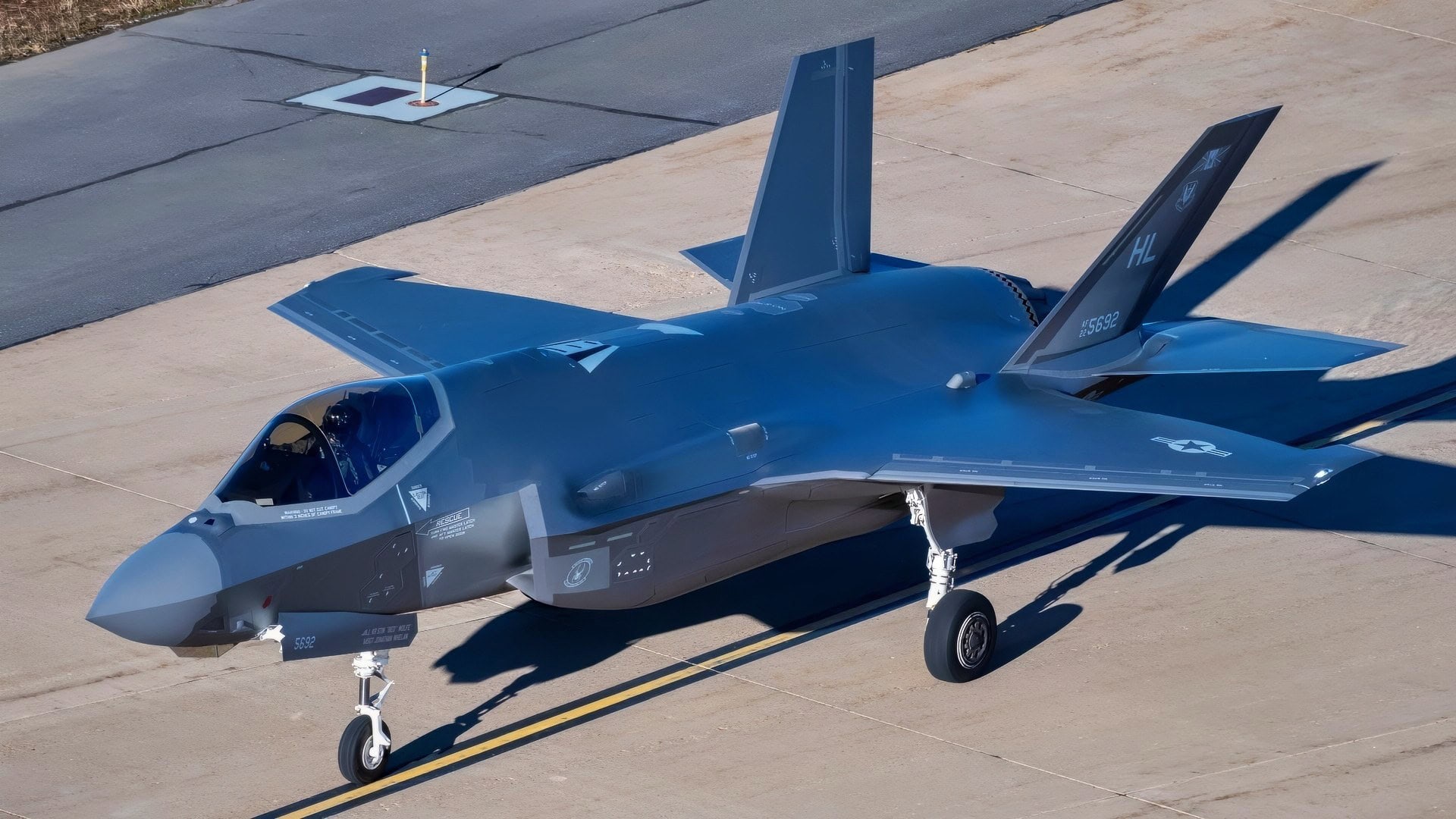
Maj. Kristin “BEO” Wolfe demonstrates the capabilities of the F-35A Lighting II, a single seat, single engine, all-weather stealth multirole fighter aircraft, during a practice flight with the F-35 Demonstration Team at Hill Air Force Base, Utah, Dec. 13, 2023. (U.S. Air Force photo by Senior Airman Jack Rodgers)
All three F-35 variants are designed to be extremely difficult for adversary radar to detect and lock onto.
But connectivity is also a significant factor for the platform.
The jet can share situational awareness and targeting data with other F-35 fighters, giving them a degree of coordination not possible with the country’s current crop of older, Cold War-era technology.
For a small, natural country like Switzerland with a relatively small air force, that networked approach matters more than simply overall fleet numbers.
Several of Switzerland’s neighbors also fly the F-35, including Italy and Germany. Common air fleets can support training exchanges, maintenance know-how, and interoperability in air exercises.
But that said, Switzerland is not part of a military alliance with its partners.
More important for Bern is its reliance on an American-controlled program, which carries significant potential vulnerabilities.
Cost and Fleet Controversy
The F-35A purchase was sold to Swiss voters as a fixed-price deal — 36 F-35As for about 6.035 billion Swiss Francs.
But the Swiss National Council’s management committee concluded in September that Switzerland never received a binding fixed price from the United States, fueling accusations that ministers overstated the certainty of the deal.
The financial implications are now clearer, however.
Keeping the purchase to 36 F-35A jets would require an additional 1.1 billion Francs.
Instead, Bern will seek an additional 394 million Francs and aim for a smaller 30-strong F-35A fleet.
Critics of the program argue that a smaller F-35A fleet jeopardizes the air policing and readiness mission that originally justified the purchase.
Supporters argue that 30 fifth-generation stealth aircraft deliver more capability than the mixed F-5 and F/A-18 fleet they replace, thanks in part to the F-35’s sensors and networked operations.
Switzerland’s use of the American Foreign Military Sales system to facilitate arms purchases between the United States and foreign governments leaves Bern with limited contractual leverage.
However, there is no realistic alternative to purchasing directly from defense manufacturers.
Moving Ahead
For now, the Swiss F-35A program is moving ahead.
The unresolved question, however, is the ultimate size of the Swiss F-35A fleet.
Bern must finalize how many aircraft it can secure for the money it has allocated to the project while also managing the political fallout of the adjusted fleet size.
The F-35A is all but guaranteed to enter Swiss service—the question now of whether it will be a smaller, but still capable, fighter force.
About the Author: Caleb Larson
Caleb Larson is an American multiformat journalist based in Berlin, Germany. His work covers the intersection of conflict and society, focusing on American foreign policy and European security. He has reported from Germany, Russia, and the United States. Most recently, he covered the war in Ukraine, reporting extensively on the shifting battle lines in Donbas and the war’s civilian and humanitarian toll. Previously, he worked as a Defense Reporter for POLITICO Europe. You can follow his latest work on X.