
Taiwan Fixes the Altius-600 Charger Problem Before It Becomes a Combat Failure
 Marcus Chen
Taiwan Fixes the Altius-600 Charger Problem Before It Becomes a Combat Failure
Taiwan is buying 2,032 Anduril loitering-munition and reconnaissance systems for NT$26.9 billion, or roughly US$850 million. The more revealing number is zero: the original U.S. offer apparently provided no acceptable charger for some Altius-600 batteries because Chinese components were inside the charging system. Taiwan and the United States now say they have built a non-China supply chain. That is a procurement repair, but it is also a warning about what happens when an asymmetric weapon is treated as a software-and-airframe purchase instead of a complete combat system.
The Hardware Is Only Half the Weapon
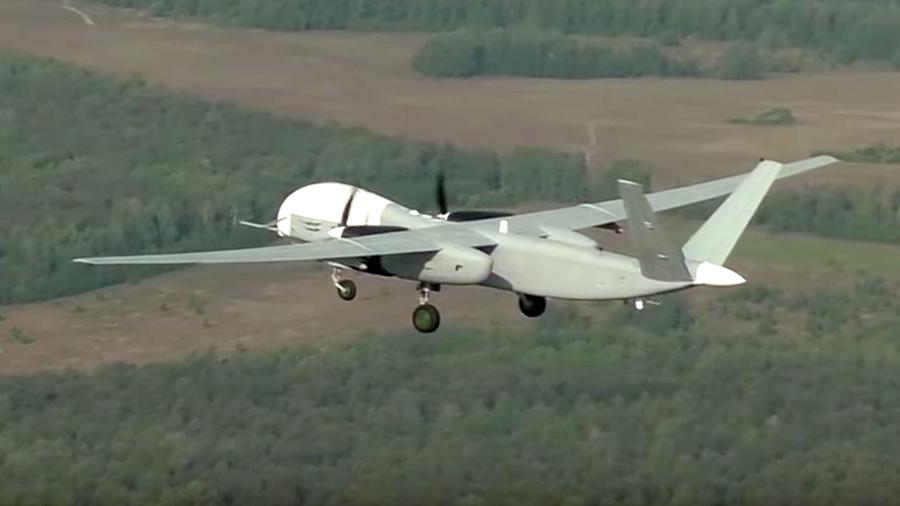
Taiwan’s Ministry of National Defense awarded the contract in late August. Public reporting puts the package at 1,554 Altius-700M anti-armor attack drones and 478 Altius-600 ISR systems. The 700M is the strike component: a loitering munition intended to find and attack armored vehicles, landing craft, or other high-value targets. The 600 ISR is the scout, extending the sensor picture and helping ground units identify targets before an amphibious force reaches the beach.
The smaller Altius-600 family aircraft has a reported endurance of about four hours and carries an electro-optical/infrared payload. Exact performance varies by configuration, and Anduril has not published a full public specification for every Taiwanese variant. The operational logic is straightforward, however. A scout sees the force. A strike drone attacks it. Neither is useful at scale if its battery cannot be recharged, replaced, or safely stored.
That is why the battery dispute matters more than the embarrassing headline about “drones without chargers.” Taiwan News reported that the first batch arrived with charged batteries, while Taiwan’s army said each Altius-600M is supplied with one installed battery and one spare. That solves the first sortie. It does not solve a week of dispersed operations under missile attack.
Taiwan’s Supply-Chain Fix Changes the Equation
According to Taiwan News and Taipei Times, a Taiwanese manufacturer has received technology transfer and begun producing batteries. A non-China charging system is also being developed for delivery under the procurement schedule. The original charger was excluded from the U.S. Letter of Offer and Acceptance because some components were made in China; as of April, no substitute had reportedly been ready, and U.S. technical representatives had to help charge the aircraft.
For a peacetime demonstration, that is a nuisance. In a war, it is a kill chain. A battery problem can ground an entire drone detachment without a single Chinese missile hitting the runway. If the charger depends on a politically restricted component, or if technicians must cross the Pacific to maintain the fleet, Taiwan has purchased inventory rather than capability.
The new arrangement also gives Taiwan something it rarely gets from an urgent foreign purchase: control over a sustainment node. Batteries are consumables. Chargers are not glamorous, but they determine sortie generation. Local production reduces shipping exposure, shortens repair loops, and makes it harder for a blockade or export-control decision to turn a large drone fleet into static equipment.
Numbers Reveal the Intended Fight
The contract’s 1,554-to-478 split favors strike drones by roughly three to one. That is not a balanced air force. It is a magazine. Taiwan is buying enough expendable weapons to threaten the mass and spacing of a People’s Liberation Army landing force rather than trying to win an air-superiority contest with manned fighters.
The concept fits Taiwan’s geography. A Chinese assault would need to move people, vehicles, fuel, and air-defense systems across a constrained maritime corridor, then assemble them under observation. Hundreds of low-cost attack drones could force landing ships and follow-on logistics to disperse. The 600 ISR fleet would provide the reconnaissance layer, but 478 aircraft cannot watch every approach continuously. Taiwan will need shore-based radar, commercial sensors, maritime patrol aircraft, small quadcopters, and allied intelligence to fill the gaps.
Nor does a drone’s advertised range equal usable combat reach. Taiwan must protect launch teams, data links, batteries, replacement airframes, and maintenance vehicles. Chinese electronic attack could break the connection between an operator and a loitering munition. Missile strikes could hit charging sites. A mobile force with several small launch and recharge locations is therefore more valuable than a central warehouse full of drones.
The Industrial Test Starts in 2026
Independent defense reporting says deliveries are due to begin in the fourth quarter of 2026 and extend into 2033. That schedule is sensible for a force intended to be replenished, but it creates a readiness problem. Taiwan cannot wait seven years for the deterrent effect. The first batches must arrive with trained crews, spare batteries, chargers, data-link equipment, and a distribution plan that survives attack.
The domestic battery line could become more important than the airframes. If Taiwan can produce compliant batteries and charging equipment for Anduril’s global customers, it becomes part of the company’s defense-industrial network rather than merely its customer. That would deepen U.S.-Taiwan defense ties in a practical way, while exposing Taiwan’s factories to the same targeting problem as its military bases. Redundancy, concealment, and stockpiles will matter as much as production volume.
There is also a lesson for Washington. Foreign military sales often specify the major end item and leave the support architecture to contract details. That is acceptable for a platform with an established domestic logistics chain. It is dangerous for a new class of expendable weapon whose batteries and chargers determine whether the platform can fly twice.
The Charger Was the Warning Shot
Taiwan’s Altius program is not failing because the original charger was unsuitable. It is becoming more credible because the problem was exposed early enough to fix. The non-China supply chain converts a politically awkward procurement detail into an operational advantage, provided the battery plant and charger deliveries meet the promised schedule.
But the larger test is still ahead. Taiwan must turn 2,032 aircraft into a resilient system of sensors, launchers, operators, power, communications, and replacement stocks. If it does, the Altius fleet can make an amphibious assault more expensive and less predictable. If it does not, Beijing will not need to defeat 2,032 drones. It will only need to wait for the batteries to run down.
Sources
Taiwan has resolved the Altius-600 charger issue and is procuring 2,032 Anduril loitering munitions and reconnaissance systems. The Taiwanese Ministry of National Defense awarded the contract in late August 2026, which includes 1,554 Altius-700M drones and 478 Altius-600 ISR systems. Local production of batteries and a non-China charging system are being developed to ensure operational readiness. Deliveries are expected to begin in late 2026 and extend into 2033.
- Taiwan is purchasing 2,032 Anduril loitering munitions and reconnaissance systems for NT$26.9 billion.
- The original U.S. offer lacked an acceptable charger due to Chinese components.
- Taiwan has begun local production of batteries and is developing a non-China charging system.
- The contract includes 1,554 Altius-700M drones and 478 Altius-600 ISR systems.
- Deliveries are expected to start in the fourth quarter of 2026.