
Taiwan Funds Ching Tien II and 40000 Drones for 2026 War
 S.W
S.WTaiwan Funds Ching Tien II and 40000 Drones for 2026 War
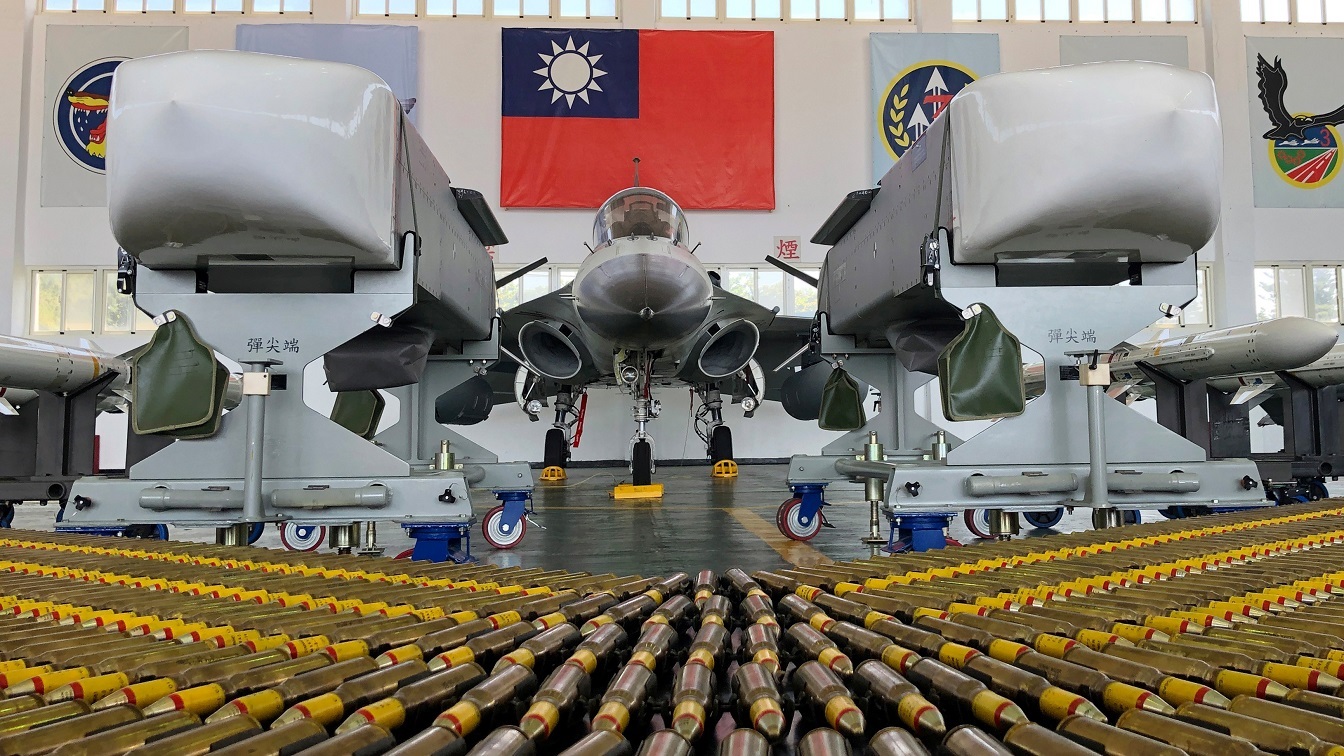
Taiwan is asking its legislature for another NT$145.7 billion, about US$4.6 billion, to build the kind of force that can keep fighting after the opening missile salvo. The headline number matters less than where the money goes: NT$55.9 billion for uncrewed systems, NT$13 billion for seven defense programs including the Chiang Kung missile, NT$7.3 billion to refill low ammunition stocks, and NT$64.5 billion for two classified programs.
That is a wartime problem being treated as an industrial problem. The budget proposal, reported by the American Enterprise Institute and the Institute for the Study of War on September 11, comes after Taiwan enacted a six-year unmanned-systems budget and after political fights stripped domestic and joint US-Taiwan development from the larger special defense budget. Taipei is now trying to restore speed, volume, and local control at the same time.
The Useful Number Is 40000
The proposed package includes more than 600 surveillance and reconnaissance drones, more than 40000 attack drones, and over 100 small suicide drone boats. Those figures are not a substitute for air defense or fighter aircraft. They are a way to complicate the People Liberation Army calculation at every stage of a cross-Strait operation: finding landing ships, tracking logistics, forcing escorts to defend themselves, and attacking exposed concentrations.
But quantity only becomes combat power when Taiwan can replace losses. A fleet of 40000 small attack drones sounds formidable until a blockade cuts imported components or Chinese electronic warfare breaks the control link. The decisive test will be whether Taiwanese factories can produce standardized airframes, batteries, guidance packages, and secure communications faster than the PLA can suppress them.
Ching Tien II Changes the Retaliation Problem
The same budget cycle has exposed a more consequential capability. The Ching Tien I is reportedly in serial production with a maximum range of about 1500 kilometers and a speed near Mach 3. The proposed Ching Tien II would extend range to roughly 2000 kilometers, reach a reported Mach 5, and use road-mobile launchers. Taipei has not announced when the second variant will enter service, so those figures remain reported rather than confirmed.
Even so, the difference between fixed and mobile launchers is operationally important. A fixed missile unit can be targeted in a first strike if its location is known. A road-mobile unit can disperse, hide, move between prepared sites, and force the attacker to spend more weapons on search and suppression. The missile does not need to destroy Beijing to have an effect. It only needs to make Chinese planners less confident that precision strikes can decapitate Taiwan without retaliation.
ISW and AEI assess that Taiwan is likely improving its ability to retaliate against Chinese precision strikes and to conduct a base-denial campaign against the PLA Eastern Theater Command.
That is the uncomfortable logic of a missile force designed for denial. Taiwan is not matching China ship for ship or aircraft for aircraft. It is trying to hold air bases, missile sites, ports, and command nodes at risk while its smaller systems survive long enough to keep firing.
The Ammunition Line Is Still the Weak Point
For anyone who has served on a destroyer, the lesson is familiar: a weapon without a magazine is a single-use capability. Taiwan is therefore right to put NT$7.3 billion into replenishing ammunition. Its existing inventory was built for peacetime readiness and a short crisis, not for weeks of sustained missile defense, coastal combat, and drone operations under blockade conditions.
The problem is timing. New drones can be assembled comparatively quickly; modern cruise missiles, air-defense interceptors, seekers, rocket motors, and propellants cannot. Taiwan can announce a budget in September and still wait years for the industrial base to deliver the inventory that gives the budget military meaning. The Ching Tien II is valuable only if mobile launchers, reloads, targeting data, maintenance crews, and hardened communications arrive with it.
What Washington Should Measure
Washington should read this package as a request for resilience, not simply a request for more American weapons. US support can improve sensors, networking, training, and production tooling, but Taipei needs control over the items most likely to be cut off in a crisis. That means distributed manufacturing, stockpiled components, repair capacity, and exercises that test communications after satellites and fixed headquarters are attacked.
The Philippines experience offers a useful comparison. As Defence Security Asia reported, US and Philippine planners recently used drones to pass targeting data to a simulated BrahMos strike against a formation built around two Chinese Type 052D destroyers, a Type 054A frigate, and a Type 901 support ship. The exercise demonstrated the sensor-to-shooter chain. Taiwan now has to build that chain at much greater scale, while assuming that China will attack the network before it attacks every launcher.
Taiwan is spending to make the first day of a war less decisive. That is the right objective. But the numbers will matter only if production starts before the crisis, ammunition is already dispersed, and mobile missiles can receive a targeting update after the first network goes dark. The budget is a serious step toward denial. It is not yet proof that Taiwan can sustain it.
Sources
Taiwan is requesting NT$145.7 billion to enhance its military capabilities, focusing on 40000 attack drones and the Ching Tien II missile with a range of 2000 kilometers. The budget also allocates funds for replenishing ammunition and developing uncrewed systems. This initiative aims to improve Taiwan's resilience against potential Chinese military actions, ensuring sustained operations during a conflict.
- Taiwan is seeking NT$145.7 billion (US$4.6 billion) for military enhancements.
- The budget includes funding for 40000 attack drones and 600 surveillance drones.
- The Ching Tien II missile is expected to have a range of 2000 kilometers and Mach 5 speed.
- NT$7.3 billion is allocated for replenishing ammunition stocks.
- Taiwan aims to improve its military resilience against potential Chinese attacks.