
Taiwan Tests CM33 and Black Hawk Mobility Against China in 2026 Drills
 Marcus Chen
Taiwan Tests CM33 and Black Hawk Mobility Against China in 2026 Drills
The number that matters from Taiwan this week is not a missile range. It is 20 minutes. According to Focus Taiwan, a UH-60M Black Hawk lifted a 500-gallon fuel bladder into Taoyuan during the July 13-17 Joint Defense Exercises, and ground crews connected the forward refueling system inside a 20-minute window. That is a small event by parade standards. It is a large event if the first hours of a Chinese attack begin with runway cratering, depot strikes and road interdiction.
Taiwan has spent the last several years buying and fielding the right headline weapons: HIMARS, Harpoon coastal defense missiles, Stinger teams, mobile radars and indigenous anti-ship systems. Those weapons matter. But the July drills show a quieter correction in Taiwan defense thinking. Taipei is testing whether units can move, refuel, communicate and keep firing after the first map has become useless.
The Drill Was About Routes, Not Ceremony
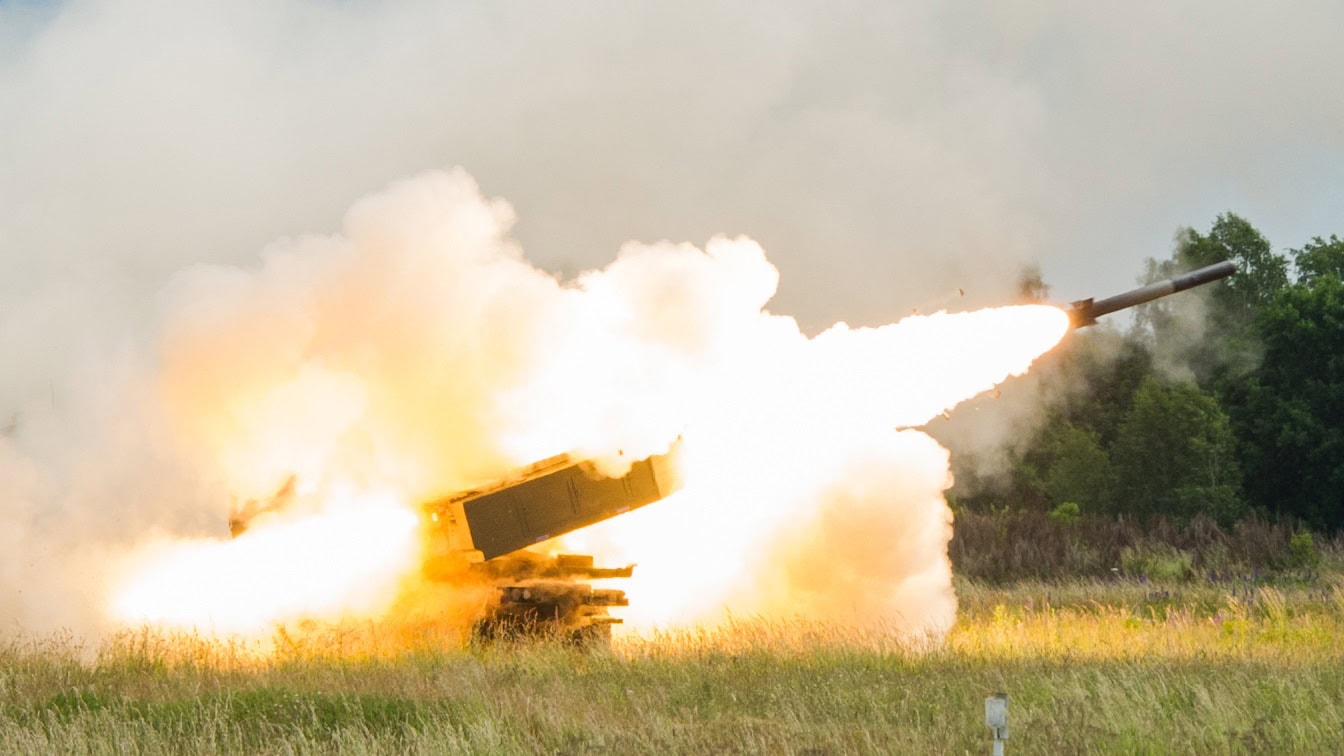
Focus Taiwan reported on July 19 that Taiwan conducted several cross-regional reinforcement drills over the previous week. Army units moved tanks, armored vehicles and artillery from Hualien toward Suao along an alternative route on the Suhua Highway. Another eastern command moved troops to Orchid Island and Green Island to practice expelling enemy forces. A Yilan-based command sent CM33 armored vehicles, CM23 mortar carriers and 105 mm howitzers through the Hsuehshan Tunnel for the first time to reinforce an undisclosed location in western Taiwan.
That is not glamorous, but it is the right problem. Anyone who has served on a destroyer knows the plan on the chart is only the opening bid. The ship still has to pass through the channel, fuel has to arrive at the pier, and the radio circuit has to work when everyone else is talking. Taiwan is now applying the same unpleasant discipline to roads, tunnels and small islands.
The obvious reason is the Peoples Liberation Army. Institute for National Defense and Security Research analyst Chieh Chung told CNA that the locations used in the drills are areas Taiwan has identified as likely targets of a PLA main assault. Orchid Island, roughly 65 kilometers off Taiwan southeast coast, used to look marginal. That changed as China brought Type 075 landing helicopter docks into service. A captured offshore island could become a forward pad for helicopter movement toward the main island rather than forcing aircraft to fly all the way from Fujian.
Mobility Makes The Missile Force Real
Missile ranges are easy to brief. Surviving long enough to use them is harder. CSIS Missile Threat lists ATACMS ranges of 165 km for Block 1 and up to 300 km for Block 1A, with HIMARS able to fire a single ATACMS round. CSIS also lists Harpoon variants at roughly 90 to 240 km, with a 224 kg high explosive fragmentation warhead and sea-skimming terminal profiles on later models. Those figures cover much of the Taiwan Strait problem on paper.
Paper is not combat power. A launcher stuck on a narrow turn is just a target with better branding. Chieh cited the 2025 Han Kuang incident in which a Patriot launcher became trapped in New Taipei after catching on a rain awning and remained stranded for more than two hours. That was embarrassing, but useful. It revealed a mismatch between the movement plan and the real urban environment.
The July 2026 drills are a direct answer to that kind of failure. Driving CM33s, mortar carriers and howitzers through actual tunnels in wartime formation tells commanders what satellite maps cannot. It reveals turn radius problems, traffic choke points, civilian infrastructure hazards, convoy spacing failures and communications dead zones. If Taiwan wants mobile missiles to survive, it has to know which road will carry the launcher at night, in rain, after an air raid, with civilian movement blocked or panicked.
Forward Fuel Is A Combat System
The Black Hawk fuel bladder exercise deserves more attention than it will get. A 500-gallon load is not enough to sustain a theater. It is enough to prove whether an aviation brigade can create a temporary refueling point without returning to a fixed base. Focus Taiwan reported that the 601st Aviation Brigade flew low along the Dahan River before lowering the bladder by sling load, while troops assembled the system within the prescribed time.
That matters because fixed logistics nodes are exactly what Chinese missiles would try to destroy early. Su Tzu-yun of INDSR described the shift as predictive, precise, modular and decentralized logistics, reflecting U.S. and NATO resilience concepts. Strip away the terminology and the point is simple: fuel and ammunition have to be split into smaller packages, hidden, moved and reconnected fast.
The same exercise included Thunderbolt-2000 multiple rocket launchers rapidly replenishing MK-15 and MK-30 rocket pods before moving into firing positions. That is the right pairing. A rocket launcher without reloads is a one-time event. A launcher with dispersed stocks, trained crews and verified movement routes becomes a recurring problem for an invasion fleet.
Decentralized Command Is Still The Hard Part
Focus Taiwan reported that the Joint Defense Exercises simulated hostile vessels entering Taiwan territorial waters and emphasized kill-chain execution under decentralized command and control. The Marine Corps component moved vehicles, ambulances and communications units from southern Taiwan into the Taipei area to set up temporary command posts and reconnaissance. That is the right operational question: can subordinate commands still fight when higher headquarters are jammed, struck or cut off?
The answer is not automatic. In April, CNA reported that the 2026 Han Kuang cycle introduced U.S.-style Combined Arms Rehearsals, confirmation briefs, support rehearsals and battle drill rehearsals. Those methods are designed to force units to explain how they will execute missions before the shooting starts. Taiwan needs that culture because a centralized force is brittle under missile attack. The PLA does not need to destroy every launcher if it can paralyze the decision chain that tells those launchers where to go.
This is where the July exercises are more important than a clean live-fire video. Taiwan is not short of brave units or good geography. It is short of time. In a Taiwan Strait fight, the side that adapts inside the first 24 hours has a real advantage. If a tunnel route fails, if a forward fuel point cannot be assembled, if a Marine reinforcement column cannot find its communications node, then the best anti-ship missile in the inventory becomes a stranded asset.
The Uncomfortable Bottom Line
The July drills do not prove Taiwan can defeat a Chinese invasion. They prove Taiwan is asking a better question. Not how many missiles are in the brochure, but how many can still be moved, fueled, targeted, reloaded and fired after China has attacked the obvious places.
That is the difference between deterrence as procurement and deterrence as a working machine. Procurement buys the launcher. Drills find the awning that stops it. Taiwan needs both, but only one of them tells Beijing that the first salvo will not settle the war.
Taiwan conducted joint defense exercises from July 13-17, 2026, testing the mobility and logistics of its armed forces in response to potential Chinese attacks. The exercises involved moving tanks, armored vehicles, and artillery along alternative routes and included a successful refueling operation by a Black Hawk helicopter. Emphasis was placed on decentralized command and control to ensure operational readiness under attack scenarios.
- Taiwan tested the mobility of its forces during joint defense exercises from July 13-17, 2026.
- A Black Hawk helicopter successfully conducted a refueling operation in 20 minutes.
- Taiwan moved tanks and artillery along alternative routes to practice logistics under attack scenarios.
- The exercises included moving troops to strategic locations like Orchid Island and Green Island.
- Taiwan emphasized decentralized command and control during the drills.