
Taiwan Uses Altius-600M Drones to Expose a US Arms Gap in 2026
 Marcus Chen
Taiwan Uses Altius-600M Drones to Expose a US Arms Gap in 2026
Taiwan has demonstrated the part of a defense plan that Washington is still struggling to deliver: usable mass. On September 18, the island held its first joint military drill built around multiple attack drones, according to ABC News and the Associated Press. The exercise came as reports emerged that the United States may delay new Taiwan arms sales until after the APEC and G20 meetings. The timing was political. The military lesson was harder to ignore.
The Drill Was About Integration, Not Gadgets
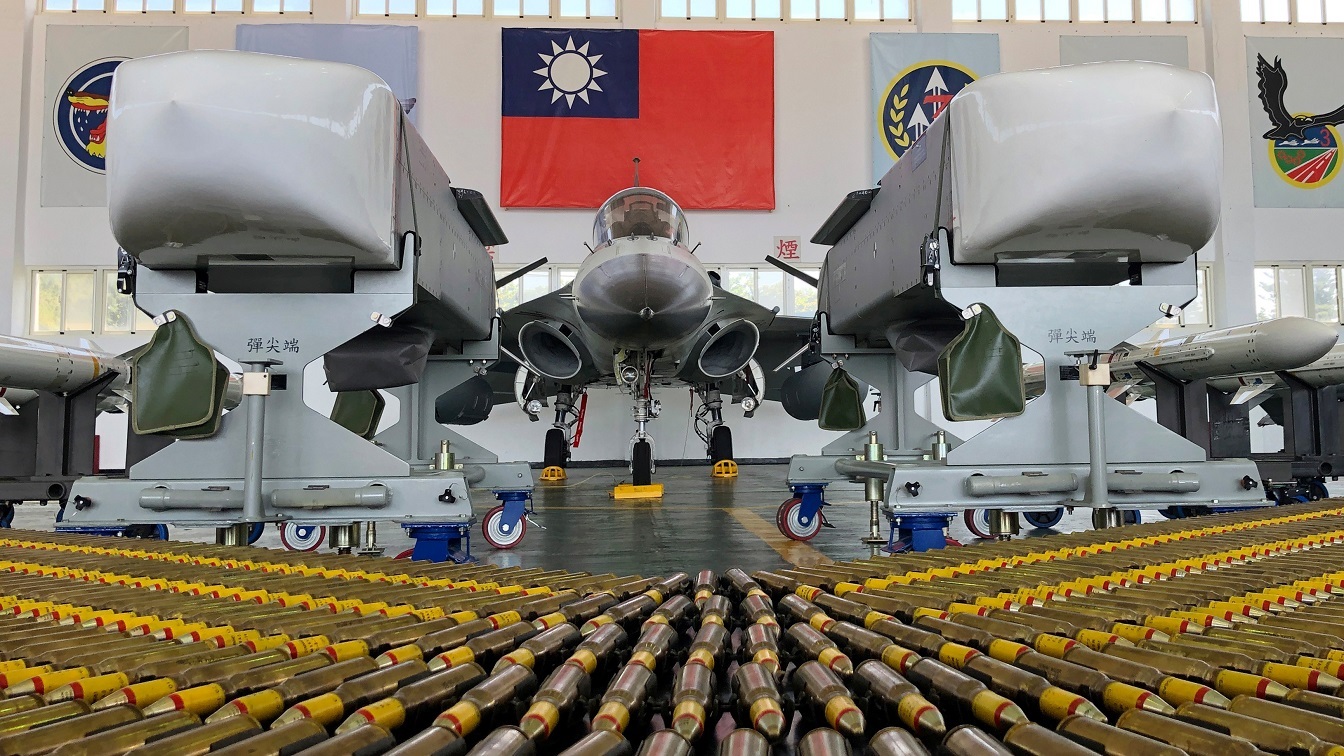
Taiwan has long fielded drones and precision missiles as separate tools. The new exercise tested whether they can function as a kill chain. A drone finds or identifies a target, passes the data through a command network, and cues artillery, coastal missiles, aircraft, or another unmanned system. That sequence is more important than the airframe. A small loitering munition that reaches the right grid reference is more useful than a sophisticated aircraft that arrives after the target has moved.
Reports on the exercise described participation by multiple Taiwanese services and the use of attack drones alongside live-fire missile activity. President Lai Ching-te also inspected joint missile drills. Taipei Times reported that a Chinese drone was observed monitoring the Pingtung exercise. That detail matters: the exercise was not conducted in an information vacuum. The People Liberation Army was watching the same signatures that Taiwan was trying to suppress, measure, and exploit.
Altius-600M Adds Reach but Not Immunity
The Altius-600M is a tube-launched loitering munition in Anduril model family. Publicly available specifications describe a system weighing roughly 27 pounds, with an endurance measured in hours rather than minutes and a range in the hundreds of kilometers depending on configuration. The useful comparison is not with a fighter aircraft. It is with the cost of exposing a manned platform to Chinese air defenses.
That trade is attractive across the Taiwan Strait. Taiwan can distribute launchers, conceal stocks, and force the PLA to spend radar attention and interceptor weapons against small targets. A network of such systems could threaten radars, communications nodes, fuel trucks, landing ships, and air-defense batteries before a landing force reaches the beach. It also complicates Chinese planning because the launch signature is smaller and the inventory can be spread across many sites.
But a drone is not automatically an asymmetric weapon. It needs navigation, communications, target data, batteries, launch tubes, maintainers, and a command architecture that can survive jamming and missile attack. If the PLA defeats the data link, spoofs navigation, or destroys the few nodes that connect sensors to shooters, Taiwan is left with expensive flying objects and no coherent salvo.
The US Delay Is Operationally Expensive
Reuters reported on September 19 that Anduril said delays in US arms sales to Taiwan were affecting its business. South China Morning Post reported that Washington was weighing a delay in arms decisions until after major diplomatic summits. Neither report proves that a specific package has been canceled. It does show the problem Taiwan faces: a weapon can be approved in Washington and still be absent from a Taiwanese unit when the crisis clock starts.
For a small island, the calendar is part of the capability. A delivery delayed six months is not merely a procurement inconvenience. It compresses training, dispersal, stockpiling, software integration, and live testing. Taiwan cannot build a resilient unmanned force by receiving containers at the last minute. Operators need to practice under degraded communications. Maintenance crews need to repair systems without factory support. Planners need to know how many drones can be launched in the first 72 hours and how many remain for day four.
This is where the political signal and the military signal diverge. Washington may view a delay as temporary risk management before a Trump-Xi summit. Beijing will read the same pause as evidence that US support is conditional. Taipei will read it as a reason to accelerate indigenous production and reduce dependence on a single supplier. Every month of uncertainty shifts more of the burden onto Taiwanese budgets and factories.
What the Exercise Does Not Prove
The drill does not prove that drones can stop a blockade or defeat a cross-Strait invasion. Taiwan still faces a severe magazine-depth problem. A force that can launch hundreds of attack drones once may not be able to replenish them after Chinese strikes hit ports, power stations, semiconductor plants, and road networks. Nor does a live-fire exercise reveal how the force performs against dense electronic warfare, cyber disruption, decoys, and simultaneous missile attacks.
It also does not make the Altius-600M a magic replacement for fighters or coastal defense cruise missiles. The system has to find a target, survive the electromagnetic environment, and deliver a useful effect. Those are three separate problems. In a real campaign, Taiwan would need large numbers of cheaper one-way systems mixed with longer-range weapons and passive sensors. The objective is not to build one perfect drone. It is to make Chinese commanders unsure which radar contact is a decoy, which is an armed scout, and which is a strike package.
Taiwan Is Buying Time With Mass
The most important outcome of the September exercise is organizational. Taiwan is beginning to treat drones as part of a joint fires network rather than as an air force accessory. That is the correct direction. The island cannot match China aircraft for aircraft or ship for ship. It can make every phase of an attack consume more time, more escorts, more interceptors, and more decision points.
But the arithmetic remains unforgiving. A drone force without stocks, hardened communications, and rapid replacement capacity is a demonstration capability. The United States can help by delivering systems faster, transferring production knowledge, and funding the boring parts of the package: batteries, launchers, spares, training, and secure networks. Taiwan must do the same at home.
The exercise showed that Taiwan understands the tactical requirement. The delayed arms debate shows that the alliance still has not solved the industrial one. If the political calendar decides when drones arrive, Beijing does not need to defeat the system in combat. It only needs to wait.
Sources
- ABC News, September 18, 2026, report on Taiwan first joint attack-drone drills: https://abcnews.com/International
- Reuters, September 19, 2026, report on Anduril and delayed Taiwan arms sales: https://www.reuters.com/world/asia-pacific/
- South China Morning Post, September 19, 2026, report on possible delay to Taiwan arms decisions: https://www.scmp.com/news/china/military
- Taipei Times, September 17, 2026, report on a Chinese drone monitoring the Pingtung exercise: https://www.taipeitimes.com/News/front
Taiwan conducted its first joint military drill using Altius-600M drones on September 18, 2026, in Pingtung. The exercise focused on integrating drones into a kill chain alongside precision missiles and artillery. A Chinese drone monitored the event, highlighting the competitive military environment. Delays in US arms sales are impacting Taiwan's operational readiness, prompting a push for increased indigenous production.
- Taiwan held its first joint military drill with multiple attack drones on September 18, 2026.
- The exercise tested the integration of drones into a kill chain.
- A Chinese drone was observed monitoring the exercise.
- Delays in US arms sales to Taiwan are affecting operational readiness.
- Taiwan is accelerating indigenous production to reduce dependence on US supplies.