
U.S. Navy wants a carrier-based unmanned fighter for $30 million
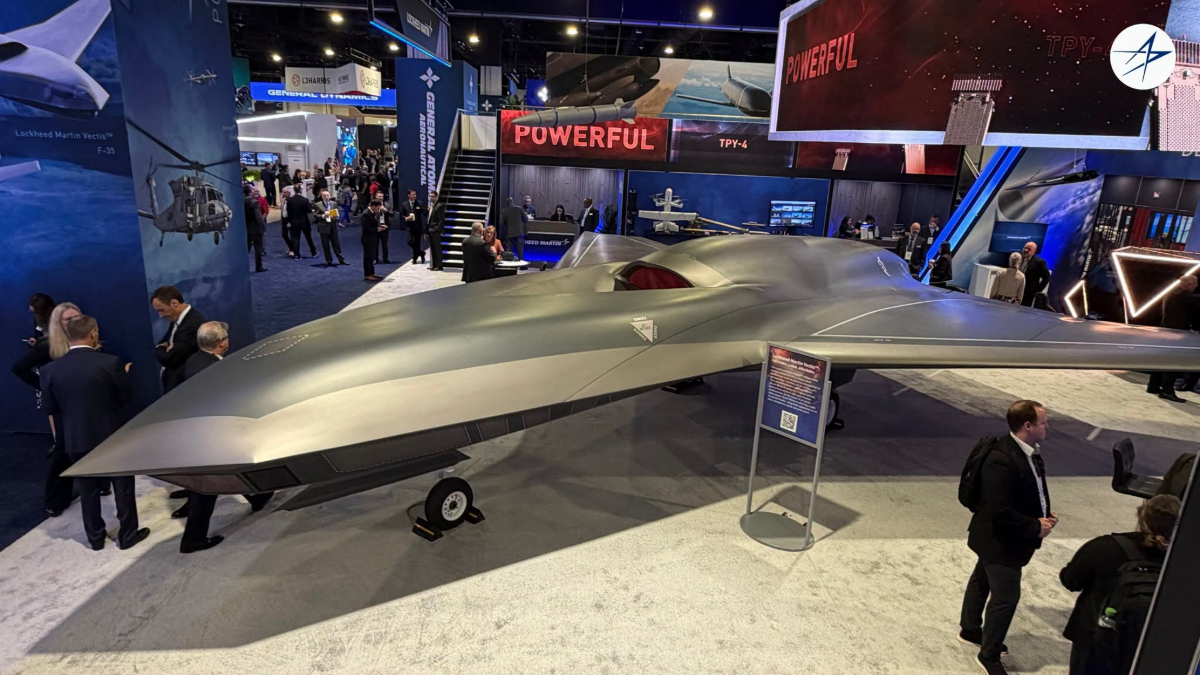
The U.S. Navy is asking defense companies to pitch designs for a carrier-launched combat drone that could fly, fight and land on aircraft carriers alongside manned fighters, according to a request for information released August 31 by Naval Air Systems Command.
The RFI covers the first increment of the Navy’s Collaborative Combat Aircraft program, run by the Future Advanced Capability Program Office, known as PMA-228. The Navy wants an autonomous, weaponized unmanned aircraft capable of taking off from and landing on Gerald R. Ford-class and Nimitz-class carriers using their catapults and arresting gear, then operating alongside 4th and 5th generation fighters in high-threat environments.
Companies that respond are expected to build two working prototype aircraft and get them through shore-based carrier certification testing within three years of any resulting agreement, according to the RFI. The Navy set an affordability target of $30 million per unit and said it wants the design’s size and deck footprint to stay within the limits of existing 4th generation fighters, so it does not disrupt how carriers already handle aircraft on deck.
The aircraft would need to carry up to four weapons weighing as much as 2,500 lbs (1,134 kg) each on external stations, fly at standard carrier air wing cruise speeds, and operate in sea states up to Sea State 5, the choppy conditions carriers regularly encounter during normal operations. The Navy also wants the design to work from austere locations with minimal support equipment, not just from a carrier deck.
Autonomy is central to the requirement. The Navy is asking for aircraft capable of both mission-level autonomy, covering tasks like flight planning and target work, and separate flight-safety autonomy that would need its own Navy airworthiness certification. Companies must show how they would divide those two systems while still letting the aircraft team with manned fighters, a concept the Navy calls Manned-Unmanned Teaming.
For command and control, the RFI asks bidders to show their aircraft can work with the Navy’s MD-5 Unmanned Carrier Aviation Mission Control System, the same ground control architecture used for the MQ-25 Stingray refueling drone. The Navy specifically said any integration approach needs to avoid requiring changes to the MQ-25 itself.
The Navy is treating this as a cost-sharing prototype effort rather than a traditional contract. Under the Other Transaction Authority framework cited in the RFI, companies would be expected to put up significant financial investment of their own alongside government support such as range access and test facilities, structured to meet the requirements of federal law governing this type of prototype agreement.
An Industry Day originally planned for September 22 at the University System of Maryland’s Southern Maryland campus was postponed, NAVAIR said in a September 18 update. The agency has not announced a new date and said it will post updated registration details on SAM.gov. The postponement does not change the RFI’s original response deadline, which had already passed by the time of the update.
The Navy’s program mirrors an existing U.S. Air Force effort of the same name. The Air Force selected Anduril’s Fury, designated YFQ-44A during prototyping, and General Atomics’ YFQ-42A in April 2024 for the first increment of its own Collaborative Combat Aircraft program, which pairs semi-autonomous fighter drones with crewed jets such as the F-22 and F-35. The Air Force moved Anduril’s aircraft into production in June 2026 and has said it could order between 100 and 150 aircraft under that program’s first phase, though it has not disclosed how the order will split between the two designs. Anduril recently showed the Fury, redesignated FQ-44, fitted with guided bombs, Small Diameter Bombs, cruise missiles and rocket pods as weapons integration work continues.
Content preview only. Full article available at source. View Full Article
The U.S. Navy is seeking designs for a carrier-based unmanned combat drone capable of operating alongside manned fighters. The request for information, released on August 31, 2023, outlines requirements for the drone, including a target cost of $30 million per unit and the ability to operate in high-threat environments. Companies are expected to deliver two prototypes within three years and ensure compatibility with existing carrier operations.
- U.S. Navy is seeking designs for a carrier-launched combat drone.
- The target cost for each unit is $30 million.
- The drone must operate alongside manned fighters in high-threat environments.
- Two working prototypes are expected within three years.
- The design must accommodate existing carrier operations without disruption.