
Taiwanese Military Fires 32 Rockets from 6 HIMARS on the West Coast, Compressing PLA's Landing Assembly Window
 Li Minghui
Taiwan's Military Fires 32 Rockets from 6 HIMARS, Compressing PLA's Landing Assembly Window
On June 10, the live fire of HIMARS at the mouth of the Dajia River in Taichung had a detail more noteworthy than "firing towards the mainland": the Taiwanese military deployed 6 launch vehicles on both the northern and southern banks, with each vehicle loaded with 6 M28 reduced-range training rounds. They planned to fire a total of 36 rounds in three waves but actually fired 32, landing approximately 9 kilometers offshore. This number may not seem large, but it indicates that the Taiwanese Army is advancing from "demonstrating equipment" to systematic firepower process training with HIMARS.
This is Not Just a Show of Muscle
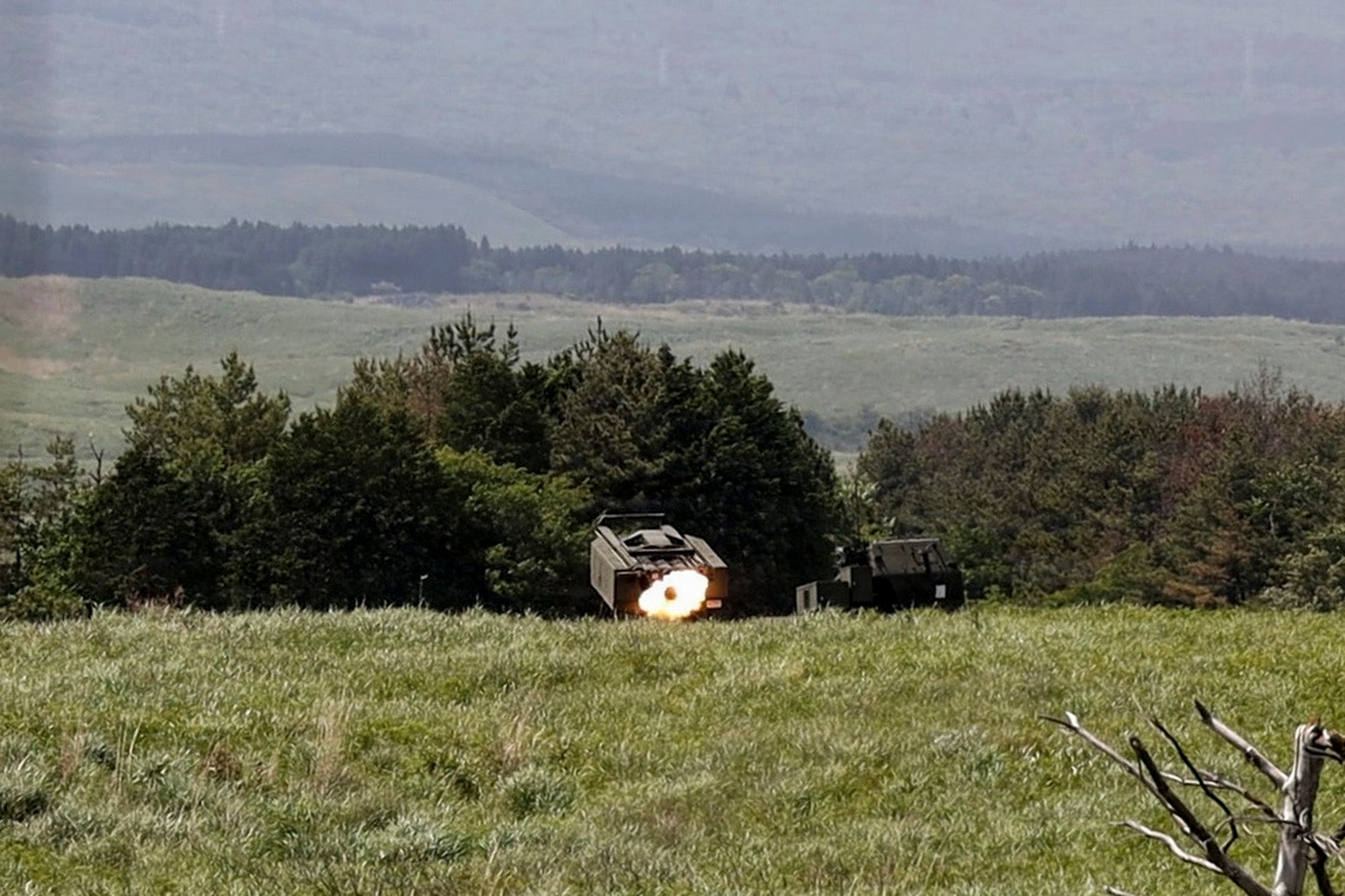
According to the Taipei Times, the scenario of this 10th Corps exercise was cross-regional precision fire support, targeting high-value objectives in the northern direction to delay enemy advances. The Associated Press emphasized that this was the first time HIMARS fired live rounds into the Taiwan Strait, with the vehicles moving into position after receiving orders and completing the launch in about 3 minutes. In my opinion, the 3-minute process metric is more valuable than promotional slogans, as it directly relates to whether the launch vehicles can leave their positions before the PLA's reconnaissance-strike chain closes.
The HIMARS system itself is not a new weapon; the key lies in the ammunition and deployment method. The M28 training round has a short range, only proving the process; if replaced with GMLRS, the common range is about 70 to 80 kilometers; if ATACMS is integrated in the future, publicly available data usually indicates a range of about 300 kilometers. The straight-line distance from Taichung to the Fujian coast is not a mystery; the real problem is that if a dispersed firepower network forms on Taiwan's west coast, the PLA will have to deal with an additional layer of mobile rocket artillery threats during the stages of loading, assembly, mine clearance, and beach landing.
Pressure on the PLA Before Landing
Many discussions imagine HIMARS as a weapon for "attacking landing craft," which is too simplistic. A more realistic target includes command posts, artillery positions, loading areas for crossing the sea, temporary fuel and ammunition points, air defense radars, and shallow depth assembly areas after landing. In simple terms, it doesn't necessarily need to sink many ships; as long as it shortens certain windows of opportunity and forces troops to change positions more frequently, the complexity of the plan increases.
- The Taiwanese military has placed the exercise site near the "Red Beach" on the west coast, close to possible landing directions.
- The deployment of 6 launch vehicles across the banks indicates that the training focus is on dispersed positions and synchronized firing, rather than individual vehicle performances.
- Among the 32 live rounds fired, 4 failed to ignite, exposing reliability and maintenance training issues in the early stages of equipment integration.
- If the subsequent purchase of 82 sets of HIMARS is delayed due to U.S.-China relations, the firepower density of the Taiwanese military will still be constrained by the delivery pace.
The PLA Will Not Rely Solely on Counter-Battery Radars
The PLA's response to such targets cannot be simply understood as "detect and destroy." The survival logic of HIMARS is precisely short stays and quick relocations; traditional counter-battery radars can only provide the area of origin for the trajectory, and further support is needed from drones, electronic reconnaissance, satellite revisit, long-range rocket artillery, or cruise missiles. The Eastern Theater Command has repeatedly demonstrated joint land, sea, and air fire control in exercises such as "Joint Sword," "Strait Thunder," and "Mission of Justice," with official narratives emphasizing comprehensive control and strikes against land and sea; however, small mobile targets like HIMARS test the density of tactical sensors more finely.
A shortcoming that is easily overlooked is cost. Using high-value missiles to target each launch vehicle is not always cost-effective; covering with conventional long-range fire may also be limited by terrain, camouflage, and civilian environments. A more feasible approach is to establish a "potential position library" through continuous monitoring before the war, suppressing road nodes, bridges, ammunition supply points, and communication links during crisis escalation. In other words, what the PLA really needs to target may not just be the launch vehicles, but to prevent this "fire and run" system from functioning.
The Taiwanese military stated that this exercise demonstrated rapid deployment, precise strikes, and cross-regional reinforcement capabilities; the Associated Press reported that the sale of 82 sets of HIMARS to Taiwan announced by the U.S. last December seems to have been shelved after the meeting between the U.S. and Chinese leaders in Beijing.
Supply Chain is More Critical than Range
The old question posed by Li Minghui remains: how far can it shoot is one thing, but how long can it sustain fire is another. The 32 training rounds already had 4 that failed to ignite, which may not indicate a major system failure, but it is enough to remind the outside world that equipment integration, maintenance, ammunition storage, fire control calibration, and wartime resupply are the core factors determining whether HIMARS can form a deterrent. The experience in Ukraine has led many to place undue faith in HIMARS, but the Taiwan Strait scenario is narrower, more transparent, and easier to monitor continuously.
From the perspective of the mainland, this live fire will not change the balance of power but will alter tactical assumptions. Many of the PLA's past public exercises on landing operations assumed that the Taiwanese military's long-range precision firepower was limited; now the question becomes: if there are several HIMARS, Thunder 2000s, and 155mm self-propelled howitzers firing in turn at every possible landing direction on the west coast, can the PLA continue to locate them after the first round of fire suppression? What is truly worth monitoring is not the 32 training rounds fired in Taichung, but whether the next exercise will showcase drone reconnaissance, decoy targets, nighttime relocations, and long-range munitions together.
Source
Main references: Taipei Times report on June 11, Associated Press report on June 10, U.S. Army Reserve Innovation Command analysis on Taiwan's rocket artillery situation.
The Taiwanese military conducted live-fire exercises with 6 HIMARS launchers, firing 32 M28 training rockets near the Dajia River on June 10. This exercise demonstrated rapid deployment and precision strike capabilities, with the aim of complicating potential Chinese military operations. Four rockets failed to ignite, highlighting reliability concerns. The exercise is part of Taiwan's efforts to enhance its military readiness in the face of potential threats from the mainland.
- Taiwanese military fired 32 M28 training rockets from 6 HIMARS launchers.
- The exercise took place near the Dajia River, targeting the Taiwan Strait.
- 4 rockets failed to ignite, indicating reliability issues with the system.
- The exercise aimed to enhance rapid deployment and precision strike capabilities.
- The deployment of HIMARS is intended to complicate Chinese military operations during potential landings.