
Taiwan's $35 Billion 2027 Defense Budget Won't Close the Strait Gap
 Marcus Chen
Taiwans $35 Billion 2027 Defense Budget Wont Close the Strait Gap
NT$1.12 trillion sounds like a strategic turning point. It is not. Taiwans proposed 2027 defense budget, up 18% and just above 3% of gross domestic product, is the biggest in the islands history. Reuters and other outlets were right to frame that as a political signal. The harder question is what it buys in a fight measured in missile salvos, runway repair teams, attritable drones, and days of resupply under blockade.
That is the real standard for Taipei now. Not whether the number looks serious on a chart. Whether the money turns into enough mobile, reloadable firepower to keep the island in the fight after the first seventy-two hours. On that test, the 2027 budget is progress, but it is not yet an answer.
The Number Is Big. The Distance Is Bigger.
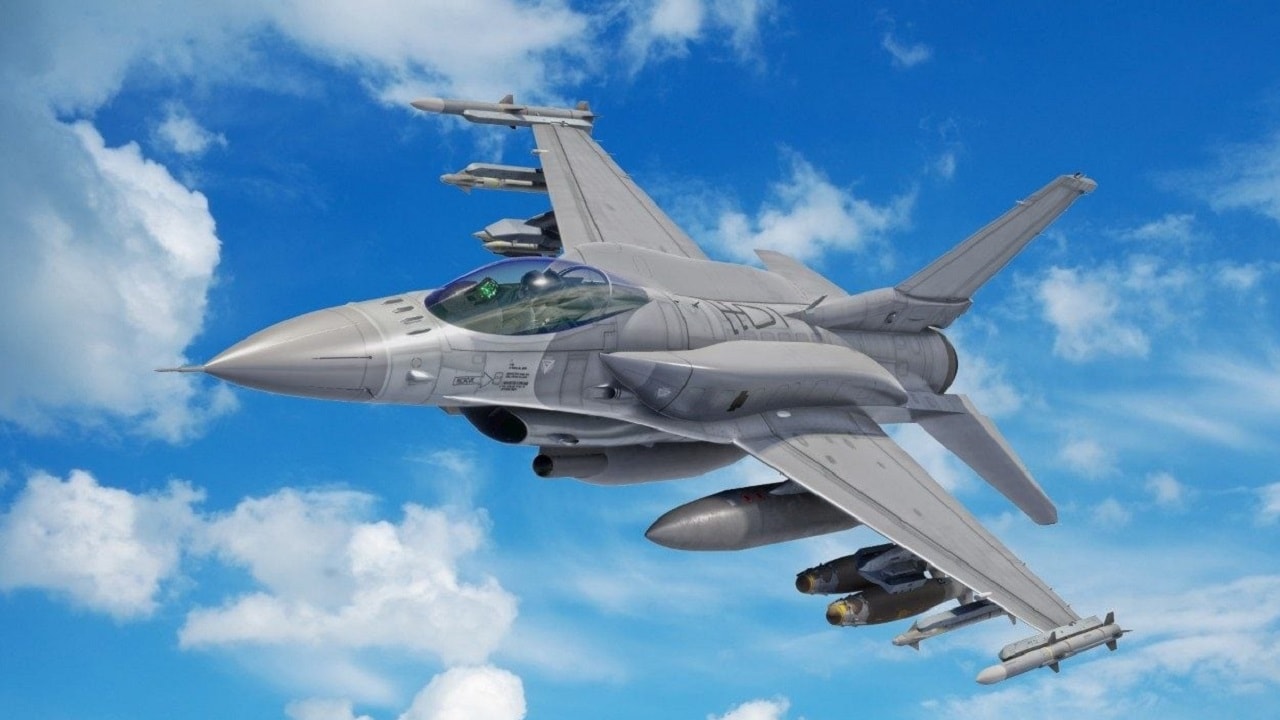
The topline matters because Taiwan has spent years underinvesting relative to the threat curve. Beijings military pressure has not been abstract. Chinese aircraft and ships now operate around Taiwan with a frequency that would have looked escalatory a decade ago but is increasingly treated as routine. President Lai Ching-te underlined the political side of the problem in Kinmen this week, saying peace requires strength and that not even an inch of territory can be surrendered. That is a message to Beijing, but it is also a message to Washington: Taipei is trying to show it understands the bill is coming due.
The problem is scale. Even at roughly US$35 billion, Taiwans defense budget remains a fraction of Chinas official military spending, which is more than seven times larger and backed by a far deeper industrial base. Taiwan does not need symmetry to deter China, but it does need enough distributed lethality to make an amphibious assault or blockade prohibitively expensive. A larger budget helps only if it buys the right things fast enough.
- Total proposed 2027 defense spending: NT$1.12 trillion, about US$35 billion.
- Increase over the prior year: 18%.
- Share of GDP: just above 3%.
- Declared longer-term target: 5% of GDP by 2030.
What Taipei Is Buying Looks More Serious Than Before
Here the news is better. In an August 3 interview published by Taiwans Ministry of National Defense, Minister Wellington Koo described a force design built around layered defense, intelligence fusion, unmanned systems, counter-drone networks, and more survivable procurement choices. He also pointed to a proposed NT$210 billion special budget for unmanned systems focused on coastal surveillance drones, coastal attack drones, and one-way attack unmanned surface vessels. That is mostly the right shopping list.
"Future procurement will emphasize mobility, survivability, and operational flexibility," Koo said, according to the ministrys published interview.
That sentence matters more than the topline. Anyone who has served around a missile fight knows fixed assets are invitations. Taiwan does not win by presenting the Peoples Liberation Army with clean aimpoints. It wins by staying hard to find, hard to kill, and still capable of delivering salvos after ports, airfields, and command nodes come under pressure.
Koo also highlighted the Strong Bow missile program, the so-called Taiwan Dome air-defense concept, Tactical Assault Kit networking, and continued work on munitions and counter-drone systems. In operational terms, that points toward a force built to absorb the opening blow and keep fighting through it. That is a more credible direction than treating defense spending as a referendum on prestige platforms alone.
The Strait Problem Is Magazine Depth, Not Just GDP
This is where the math still gets ugly. Money appropriated is not magazine depth. Magazine depth is how many anti-ship missiles, loitering munitions, air-defense interceptors, replacement drones, decoys, and fuel bladders are actually dispersed, protected, and ready when the shooting starts. Taiwans 2027 proposal improves that picture only if procurement timelines stay short and the legislature stops turning urgency into theater.
That political risk is not theoretical. Taiwans 2026 central budget was delayed for months, and earlier funding battles left parts of the islands military wish list in limbo. In a Taiwan scenario, delay is not neutral. A launcher that arrives next year instead of this year does not merely show up late; it may miss the only deterrence window that matters.
There is also an allocation problem. Submarines, manned aircraft sustainment, and high-end air defense all have military value, but they are expensive and slow to scale. Taiwans quickest path to stronger denial capacity lies in mass: more coastal missiles, more maritime drones, more mobile short-range air defense, more counter-drone systems, more hardened communications, and more repair and reload capacity. The first week of a Taiwan war will not be decided by abstract GDP ratios. It will be decided by whether Taiwan can keep enough shooters alive to break wave after wave of follow-on operations.
The Budget Is Serious. The Timeline Is Not Forgiving.
So the correct reading of the 2027 budget is neither triumphalist nor dismissive. Taipei has finally moved the topline into genuinely consequential territory, and that matters politically. It also appears to be spending more in the categories that a denial strategy actually needs. Those are real improvements.
But an 18% increase does not close the Strait gap by itself. Taiwan still has to turn budget authority into production orders, training cycles, stockpiles, and dispersal plans at a pace that matches the PLAs operational tempo. Beijing is already rehearsing pressure. Taiwan is still financing the response.
That is the gap. The 2027 budget gives Taiwan a better chance to narrow it, especially if the unmanned and layered-defense pieces survive legislative bargaining intact. But deterrence in the Taiwan Strait will not be restored because the number got bigger. It will be restored only if the island can convert that money into enough mobile firepower to convince Beijing that the first strike would not end the fight. Right now the math is improving. It still does not work.
Taiwan proposed a defense budget of NT$1.12 trillion (approximately US$35 billion) for 2027, marking an 18% increase aimed at enhancing military capabilities against Chinese threats. The budget, representing just above 3% of GDP, focuses on unmanned systems and layered defense strategies. Despite the increase, Taiwan's military spending remains a fraction of China's, necessitating effective procurement and operational readiness to deter potential aggression.
- Taiwan's proposed 2027 defense budget is NT$1.12 trillion (approximately US$35 billion), an 18% increase from the previous year.
- The budget represents just above 3% of Taiwan's GDP, with a target of 5% by 2030.
- Taiwan's military strategy emphasizes mobility, survivability, and operational flexibility in response to Chinese military pressure.
- Minister Wellington Koo highlighted the importance of unmanned systems and layered defense in future procurement.
- Taiwan's defense budget remains significantly smaller than China's military spending, which is over seven times larger.