
Taiwan’s 82 HIMARS Sale Still Has a Delivery Problem
 Marcus Chen
Taiwan’s 82 HIMARS Sale Still Has a Delivery Problem
Eighty-two HIMARS launchers and 420 ATACMS missiles sound like a serious answer to a Taiwan Strait fight. The package announced by the Trump administration this week is the largest U.S. weapons sale ever proposed for Taiwan, according to the Associated Press, and it puts real numbers behind a concept Washington has talked about for years: make any Chinese landing force pay before it reaches the beach.
The problem is that the numbers only look decisive if they arrive on time, with trained crews, protected magazines, functioning target data, and enough reloads to survive the first week. That is the part of the sale that deserves more attention than the topline price.
The Package Is Built Around Long-Range Fires
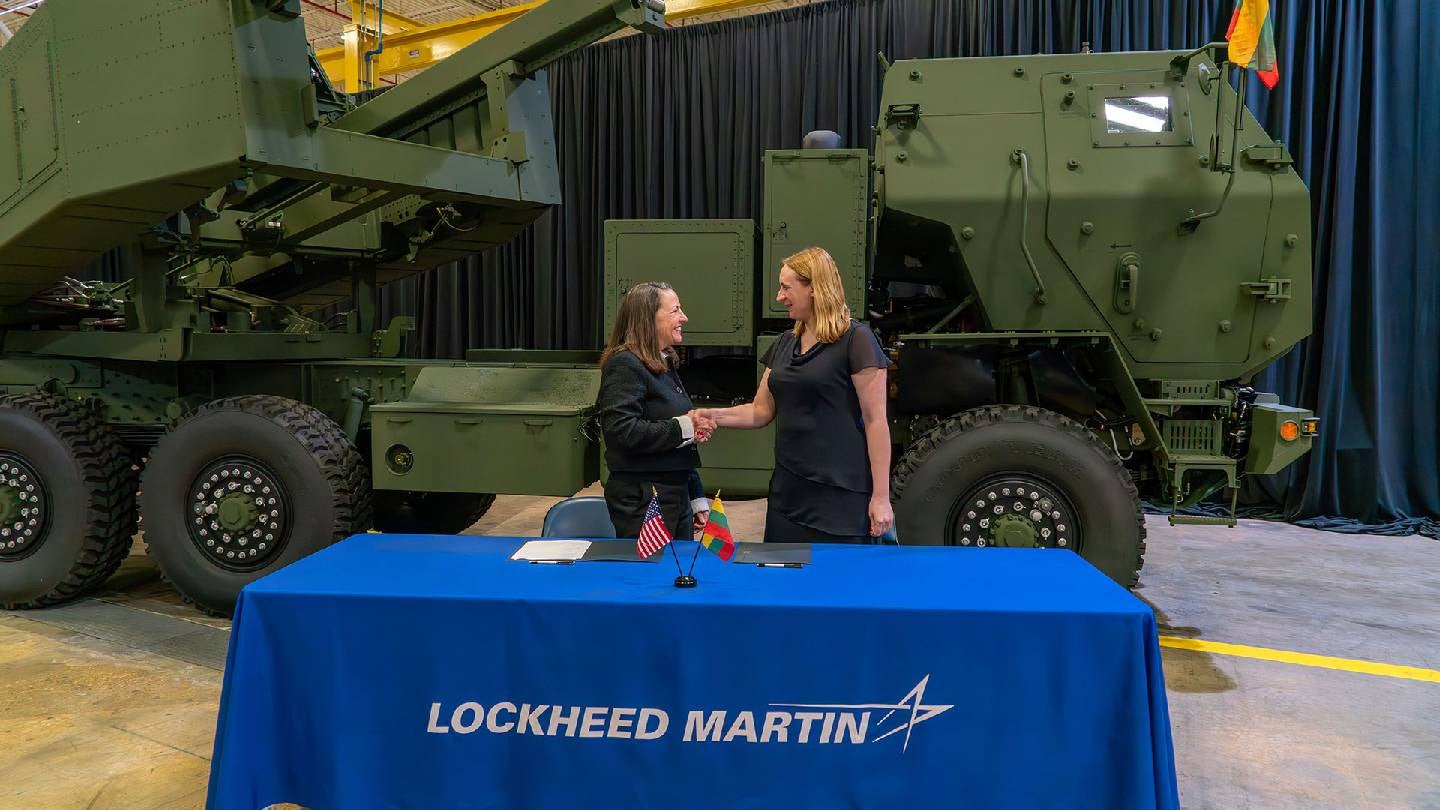
AP reported that the eight proposed agreements are worth more than $10 billion and include 82 High Mobility Artillery Rocket Systems, 420 Army Tactical Missile Systems, 60 self-propelled howitzers, related equipment, and more than $1 billion in drones. That is not a symbolic package. It is a fires architecture.
Lockheed Martin says HIMARS can carry six Guided Multiple Launch Rocket System rockets, two Precision Strike Missiles, or one ATACMS missile. The same company lists ATACMS at a maximum range of 300 kilometers. On Taiwan, that range matters. From the island’s western side, 300 kilometers can reach assembly areas, ports, airfields, logistics nodes, and amphibious staging corridors on or near China’s southeast coast. From the eastern side, it gives Taiwan a way to preserve some strike capacity after western bases are hit.
But one launcher is not one salvo forever. If Taiwan receives 82 launchers and 420 ATACMS, that is roughly five ATACMS rounds per launcher before counting training rounds, maintenance losses, dispersal requirements, or rounds held back for later phases. HIMARS is valuable because it can shoot and move. It is not valuable if it becomes a fixed political trophy parked in predictable garrisons.
The First Week Is the Real Test
In a Taiwan contingency, the opening problem is not whether ATACMS can fly 300 kilometers. It can. The harder question is whether Taiwan can keep enough launchers alive to generate repeated fires while Chinese missiles, drones, cyberattacks, sabotage teams, and airpower are trying to blind the targeting chain.
Anyone who has served on a destroyer knows the first few days of a missile fight are less about slogans than inventory control. What can you see? What can you shoot? How many rounds remain? How fast can you reload? Where is the next magazine? Is the communications path still alive after the first strike?
Taiwan’s geography helps and hurts. The island is small enough that HIMARS can move between pre-surveyed firing areas faster than heavier systems. It is also small enough that China can spend years mapping likely hide sites, road junctions, bridges, depots, and command nodes. Mobility buys time. It does not create sanctuary.
That is why the drone part of the package may matter as much as the launchers. Long-range fires without persistent targeting become expensive area weapons. Drones can help Taiwan find landing ships, logistics vessels, missile batteries, and temporary staging sites. They can also be jammed, shot down, or overwhelmed. The sale improves the kill chain, but it does not solve the kill chain.
Delivery Timelines Are Now Deterrence Timelines
The sale also collides with a larger U.S. industrial problem. HIMARS, ATACMS, GMLRS rockets, 155 mm artillery, and drones are not Taiwan-only items. Ukraine has consumed U.S. precision fires. The U.S. Army wants more long-range fires for its own formations. Allies in Europe and the Indo-Pacific are buying the same categories of weapons because everyone watched Ukraine and learned the same lesson.
That creates a queue. Taiwan can receive congressional approval and still wait years for production slots, training pipelines, spares, and support equipment. A contract award is not a battalion in the field. A delivery is not a trained fire unit. A trained fire unit is not a resilient wartime network.
This is where Washington’s Taiwan policy often drifts into bad accounting. Officials announce a large package, Beijing protests, and the political system treats the deterrence problem as partially solved. It is not solved until the equipment is dispersed on the island, crews are practiced under degraded communications, reloads are hidden in multiple locations, and command authorities know when to fire without waiting for a perfect picture.
Allied Firepower Is Moving Closer to the Strait
The Taiwan package is not happening in isolation. During Balikatan, Japanese forces fired Type 88 anti-ship missiles in the northern Philippines with U.S., Australian, and Philippine participation, hitting the decommissioned BRP Quezon about 75 kilometers off Paoay, according to reporting carried by Asharq Al-Awsat from Reuters. The same report noted that U.S. and Philippine forces deployed NMESIS anti-ship missiles in Batanes province near Taiwan earlier in May.
That matters because the emerging allied concept is no longer centered only on aircraft carriers and submarines. It is a distributed missile belt: Taiwan with HIMARS and ATACMS, the Philippines with coastal anti-ship fires, Japan with island-defense missile units, and U.S. forces trying to stitch the network together. In theory, that gives China more firing problems than it can cheaply suppress.
In practice, the belt is only as strong as its magazines and political permissions. A Japanese live-fire event in the Philippines is useful. It is not the same as a standing wartime commitment to shoot Chinese ships in a Taiwan crisis. A U.S. launcher in Batanes is useful. It is not useful if it has too few missiles, weak air defense, or ambiguous rules of engagement.
The Sale Is Necessary But Not Enough
Taiwan needs the HIMARS package. The island’s legacy artillery cannot hold Chinese ports and assembly zones at risk the way ATACMS can. Self-propelled howitzers add survivable tube artillery. Drones add reconnaissance and strike options. This is closer to the right portfolio than another prestige platform that cannot survive the first missile wave.
Still, the hard part begins after the announcement. Taiwan needs hardened storage, decoys, rapid road movement, preplanned firing points, redundant communications, and a domestic sustainment system that does not assume the U.S. Navy can reopen every supply lane on demand. Washington needs to treat delivery speed as part of deterrence, not an administrative detail.
The package changes the map if it arrives as a working system. If it arrives slowly, thinly, and without enough reloads, Beijing will do the same math everyone else can do.
Eighty-two launchers are impressive. Five missiles per launcher is not a war plan.
Taiwan is preparing to enhance its military capabilities with a significant arms package from the U.S., which includes 82 HIMARS launchers and 420 ATACMS missiles. The deal, valued at over $10 billion, aims to improve Taiwan's deterrence against potential Chinese aggression. However, delivery timelines remain uncertain, raising concerns about Taiwan's military readiness and the effective deployment of these systems. The report highlights the importance of developing a resilient wartime network to utilize the new capabilities effectively.
- Taiwan is set to receive 82 HIMARS launchers and 420 ATACMS missiles from the U.S.
- The arms package is valued at over $10 billion, making it the largest U.S. weapons sale to Taiwan.
- Delivery timelines for the equipment are uncertain, impacting Taiwan's military readiness.
- The HIMARS and ATACMS will enhance Taiwan's long-range strike capabilities against Chinese forces.
- The report emphasizes the need for Taiwan to develop a resilient wartime network for effective use of the new systems.