
Taiwan’s F-16V Upgrade Exposes a 2026 Readiness Gap
 S.W
S.WTaiwan’s F-16V Upgrade Exposes a 2026 Readiness Gap
Taiwan is buying and rebuilding one of the most capable fighter fleets in the Indo-Pacific. It is also discovering the less glamorous limit of air power: aircraft have to arrive, disperse, shelter, arm, and fly before they count. Recent reports that Taiwan-bound F-16Vs turned back toward Hawaii, alongside plans to build 26 hardened aircraft shelters, put that problem in plain view. The aircraft are not the weakness. The transition system around them is.
The latest signal is about readiness, not procurement
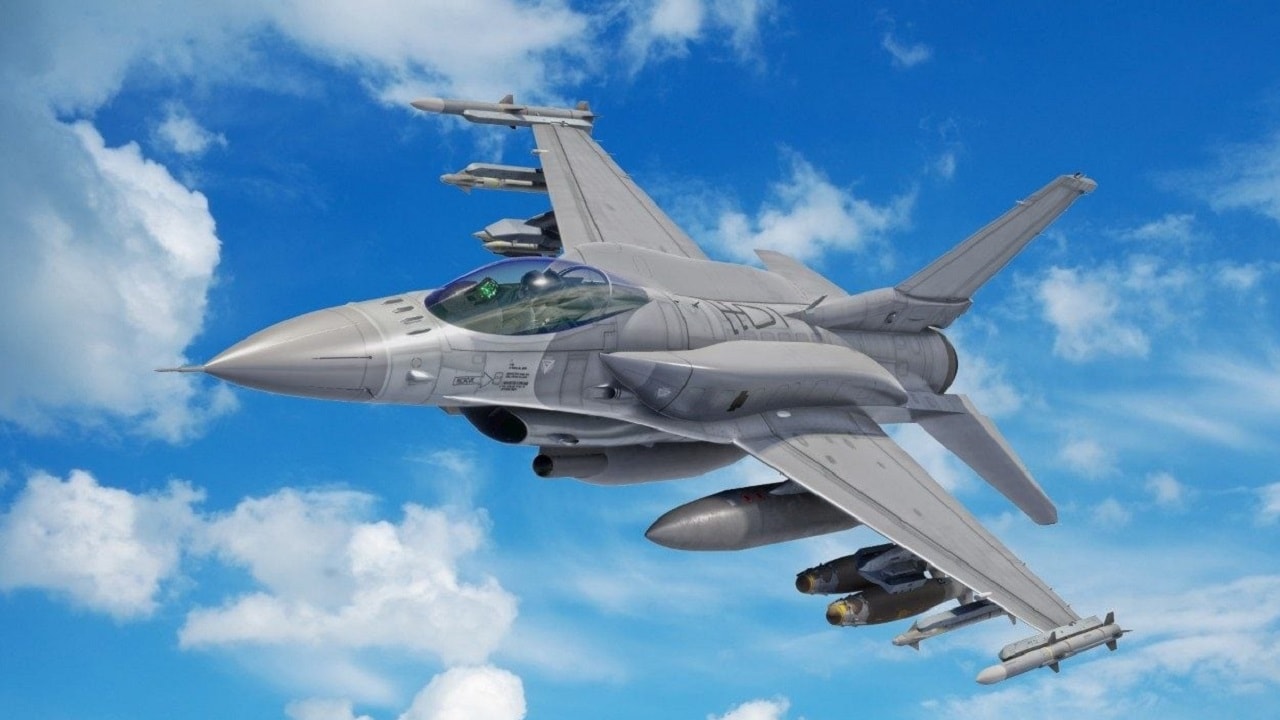
Taiwan News and the Taipei Times reported this week that F-16Vs being ferried to Taiwan turned back shortly after departing Hawaii. The public reporting does not establish the cause, and it would be a mistake to convert an unresolved flight event into a maintenance scandal. The important fact is narrower: every delivery milestone is now operationally visible because Taiwan is trying to turn a modernization program into a wartime force.
The same reporting describes a plan for 26 hardened aircraft shelters. That number matters. Taiwan operates from a small number of vulnerable air bases facing the People’s Liberation Army Rocket Force and long-range aviation. A shelter is not a fighter, but it can preserve sortie generation after runway attacks and missile strikes. It also signals that Taipei is moving from the political announcement of the F-16V program toward the physical problem of keeping the fleet alive.
What the F-16V adds
The F-16V standard gives Taiwan a substantial improvement over the original F-16A/B fleet. The central upgrade is the AN/APG-83 active electronically scanned array radar, supported by a modern mission computer, improved electronic warfare equipment, a high-capacity data bus, and Link 16 connectivity. The Block 70 airframe also brings longer structural life and updated avionics. Armed with beyond-visual-range missiles such as the AIM-120 AMRAAM, the aircraft can contribute to Taiwan’s air-defense network rather than operating as an isolated interceptor.
Taiwan has been upgrading 141 existing F-16A/B aircraft to the V standard while also acquiring 66 new F-16C/D Block 70 aircraft. On paper, that is a major increase in sensor quality and fleet endurance. In an actual crisis, however, the calculation is not 207 aircraft versus the PLA Air Force. It is the number that can launch from surviving runways, receive targeting data, carry usable weapons, and return for maintenance.
Why 26 shelters are a revealing number
Twenty-six hardened shelters would not make Taiwan’s air bases invulnerable. They would provide a limited protected capacity for high-value aircraft, maintenance teams, and perhaps weapons stocks. The rest of the fleet still depends on dispersal, rapid runway repair, camouflage, decoys, fuel resilience, and the ability to operate from alternate locations.
That is the familiar difference between owning a platform and generating combat power. A modern fighter may carry a radar with a detection range measured in tens or hundreds of miles, but its usefulness collapses if its base is cratered or its ground crews are trapped under attack. Shelters buy time. They do not solve sortie-generation math by themselves.
Taiwan’s daily operating environment makes this especially urgent. Taiwan’s Ministry of National Defense reported tracking 12 Chinese naval vessels and eight military aircraft in the latest 24-hour activity report. Those numbers are not an invasion force, and they should not be presented as one. They are a reminder that the People’s Liberation Army can maintain pressure while collecting patterns, testing response times, and forcing Taiwan to spend readiness hours.
The PLA can attack the system around the fighter
China does not need to defeat every F-16V in an air-to-air engagement. It can attack the conditions that allow the jet to fight: fuel farms, command nodes, hardened communications, maintenance facilities, runways, and the transport links that move spare parts. The aircraft’s APG-83 radar and Link 16 are valuable precisely because they connect it to a wider kill chain. They also create more nodes that must be protected from jamming, cyber intrusion, and physical attack.
This is why a recently reported United States-backed Taiwanese cyber unit is relevant to the aircraft story. Taiwan is reportedly building a team to identify hidden military threats and hunt compromises inside networks. That work is less visible than a fighter delivery, but it protects the same combat system. A F-16V that is fueled and armed but cut off from trusted targeting data is only partially useful.
Washington should measure delivery by sorties
For the United States, the lesson is straightforward. The success of the F-16V program should not be measured only by aircraft delivered or upgrade contracts completed. It should be measured by how many sorties Taiwan can generate after the first 72 hours of a missile campaign, how quickly damaged runways can reopen, and whether pilots can receive a common air picture when communications are under attack.
That requires more shelters, but also mobile fuel and weapons teams, redundant data links, runway-repair equipment, decoys, distributed maintenance, and exercises that include degraded communications. It also requires honest public accounting when aircraft or infrastructure are delayed. A delivery schedule that looks good in a press release but leaves the receiving air force short of trained maintainers is not deterrence. It is inventory.
The judgment
Taiwan’s F-16V modernization is a serious improvement, and the aircraft will complicate Chinese air operations. But the latest delivery disruption and the plan for 26 shelters expose the gap between platform quality and wartime readiness. Taipei is strengthening the spear while still hardening the hand that holds it.
The next test is not whether Taiwan can receive another F-16V. It is whether the aircraft can survive the first missile salvo and keep flying on day four. Until that answer is demonstrated in exercises, the F-16V fleet is a powerful capability with an unfinished operating system.
Sources
- Taiwan News, “Taiwan Air Force to build 26 hardened aircraft shelters,” September 2026.
- Taipei Times, “Taiwan-bound F-16Vs turn back to Hawaii shortly after takeoff,” September 2026.
- Taiwan Ministry of National Defense, “PLA activities in the waters and airspace around Taiwan,” September 8, 2026.
- Taiwan News and South China Morning Post reporting on Taiwan’s proposed United States-backed cyber hunt unit, September 2026.
Taiwan is upgrading its F-16 fleet and constructing 26 hardened aircraft shelters to enhance its military readiness against potential threats from the People's Liberation Army. Recent reports indicate that F-16Vs turned back to Hawaii shortly after departure, highlighting operational challenges. The Taiwan Air Force is focused on improving logistics and infrastructure to ensure the fleet can effectively respond to threats.
- Taiwan is upgrading 141 F-16A/B aircraft to F-16V standard and acquiring 66 new F-16C/D aircraft.
- Taiwan plans to build 26 hardened aircraft shelters to protect its air fleet.
- Recent reports indicate that F-16Vs turned back to Hawaii shortly after departure, raising concerns about operational readiness.
- Taiwan's Ministry of National Defense reported tracking 12 Chinese naval vessels and eight military aircraft in the vicinity.
- The effectiveness of the F-16V fleet depends on the ability to generate sorties and maintain operational capabilities under attack.