
Taiwan's Leshan Radar Tracks PLA Submarine-Launched Missiles, 5000-Kilometer Early Warning Network Exposes Nuclear Deterrence Shortcomings
 Li Minghui
Taiwan's Leshan Radar Tracks PLA Submarine-Launched Missile, 5000 km Early Warning Network Exposes Nuclear Deterrence Shortcomings
On July 10, the most interesting detail was not how far the PLA's submarine-launched ballistic missile flew, but rather Taiwan's claim that it saw it almost immediately. The South China Morning Post cited Taiwanese media reports stating that Taiwan's Leshan radar station's AN/FPS-115 Pave Paws long-range early warning radar captured the target shortly after the missile was launched from a nuclear-powered submarine near the South China Sea and continued to track it during the initial flight phase. This detail appears to showcase intelligence capabilities, but it actually reflects that China's sea-based nuclear deterrence is entering a more public phase, one that is also more easily observed by multiple sensors.
What One Radar Saw
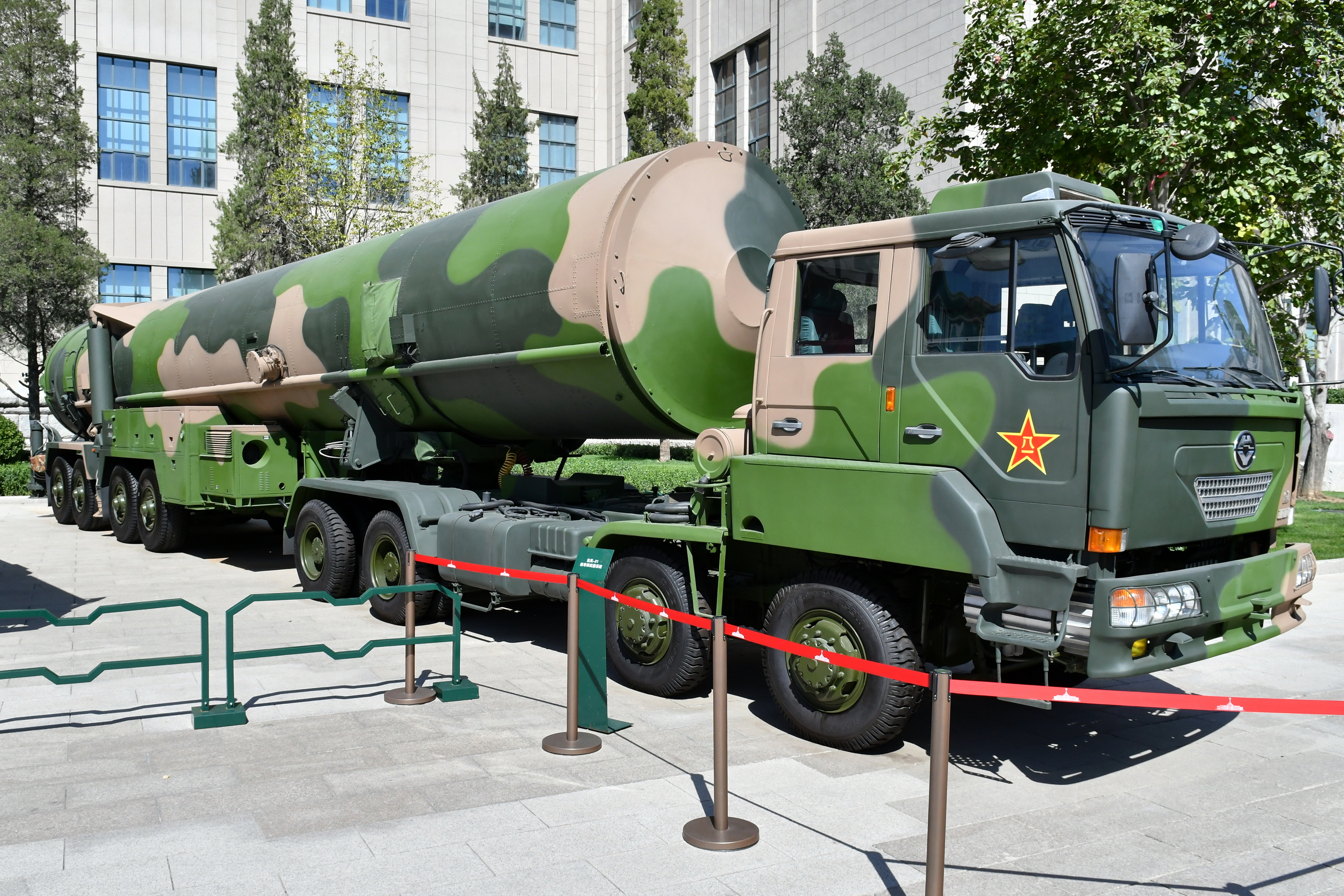
The Leshan radar is located in the northern mountainous area of Hsinchu, Taiwan, at an altitude of about 2600 meters, with publicly available information stating that its maximum detection range can reach approximately 5000 kilometers. It was originally a customized export version of the U.S. Pave Paws system, with the primary mission of detecting ballistic missiles, submarine-launched ballistic missiles, and some low-altitude cruise missiles. In other words, if the launch point is in the South China Sea, it is not surprising that Taiwan can see the missile once its infrared and radar characteristics enter the coverage area during the ascent phase.
However, "being able to see" and "seeing the whole trajectory" are not the same thing. The initial flight phase of a ballistic missile is fast and has a short window, and radar is greatly affected by the curvature of the Earth, the target's attitude, and the electronic environment. The tracking that Taiwanese officials refer to is more credibly understood as capturing the early trajectory after launch and cross-verifying it with U.S. intelligence links, rather than relying solely on one radar to completely reconstruct the entire ballistic path. In simple terms, this is a node in an early warning network, not a universal eye.
The Real Signal of the Submarine Launch Test
Xinhua News Agency and Chinese official statements described this launch as a routine arrangement for annual military training, occurring at 12:01 PM on Monday, simulating a warhead landing in a designated sea area. The South China Morning Post emphasized that this is the first known submarine-based missile test by China since 1982, and also the first known public launch of this kind conducted by a nuclear-powered submarine. The model has not been confirmed, and the outside world naturally thinks of the JL series, but without sufficient public evidence, it is not rigorous to directly label it as JL-3.
- Technical aspect: The submarine, missile, communication, and test control chain must work simultaneously, which is more difficult than land-based launches.
- Strategic aspect: The value of sea-based nuclear forces lies in their survivability, and a public test launch is meant to demonstrate to adversaries that "it can strike from underwater."
- Intelligence aspect: The launch being captured by Taiwan and U.S. systems indicates that China's underwater deterrence is not inherently invisible to the regional early warning network.
I believe that the most cautious interpretation of this test should focus precisely on this point. A successful launch can prove that the chain is operational, but it does not directly prove that routine combat readiness patrols have matured. True sea-based second-strike capability relies not on a single launch, but on the stealth level of nuclear submarines, long-range patrol cycles, readiness duty ratios, port support, and the long-term stability of command and communication. This calculation is much more complex than missile range.
Impact on the Taiwan Strait and Western Pacific
Taiwan's disclosure that the Leshan radar captured the missile is itself a signal. It tells Beijing that the Taiwan-U.S. early warning chain can at least detect strategic launches from the South China Sea in some cases; it also informs the domestic society that the expensive long-range early warning assets are not merely for show. The Leshan radar was put into operation around 2013, and its construction cost has long been a topic of debate in Taiwanese public opinion. Now, it is included in the narrative of submarine-launched missiles, which carries significant political implications.
The South China Morning Post reported that the radar's coverage includes mainland China, the South China Sea, and the Korean Peninsula, and has been upgraded to enhance its detection capabilities for low-altitude cruise missiles and tactical ballistic missiles.
From the PLA's perspective, this is not necessarily bad news. Strategic deterrence sometimes needs to be visible, especially against the backdrop of the NATO summit and the warming security coordination among the U.S., Japan, Australia, and New Zealand. The issue is that the degree of visibility cannot spiral out of control. If adversaries can determine the launch direction, initial trajectory, or even the general activity area of the submarine early on, then the core "unpredictability" of sea-based nuclear forces will be weakened.
An easily overlooked detail is that China notified relevant countries, including Australia, Japan, and New Zealand, in advance. This indicates that this launch is more like a public demonstration with political boundaries rather than a purely technical assessment. Li Minghui believes that such demonstrations may become more common in the future, as China needs to prove that its nuclear triad is addressing the shortcomings of sea-based capabilities; but the real unanswered question is whether the next test will be launched from a farther, quieter, and more difficult-to-detect position by the Leshan radar.
Taiwan's radar successfully tracked a Chinese submarine-launched missile shortly after its launch from the South China Sea on July 10. This event marks the first known test of a submarine-launched missile by China since 1982, highlighting advancements in China's nuclear deterrence capabilities. The Taiwanese AN/FPS-115 Pave Paws radar, which can detect missiles up to 5000 km, played a crucial role in this tracking. China also informed several nations about the test, indicating a political dimension to the demonstration of its military capabilities.
- Taiwan's radar detected a Chinese submarine-launched missile shortly after launch.
- The missile was launched from a nuclear submarine in the South China Sea.
- This is the first known submarine-launched missile test by China since 1982.
- The radar used is an AN/FPS-115 Pave Paws, capable of detecting missiles up to 5000 km away.
- China notified several countries, including Australia and Japan, prior to the missile test.