
Taiwan's Opposition Just Cut Its Own Defense Budget by Two-Thirds
 Marcus Chen
Taiwan's Opposition Just Cut Its Own Defense Budget by Two-Thirds
Taiwan's Legislative Yuan has been sitting on a NT$1.25 trillion defense budget since November — and the opposition's counteroffer is NT$400 billion. That's a 68 percent cut. While that negotiation plays out in Taipei, the People's Liberation Army Navy Marine Corps is actively rehearsing amphibious assault operations designed to seize Taiwan before the United States can respond. The arithmetic here isn't complicated. It's just uncomfortable.
The Numbers Taiwan Is Fighting Over
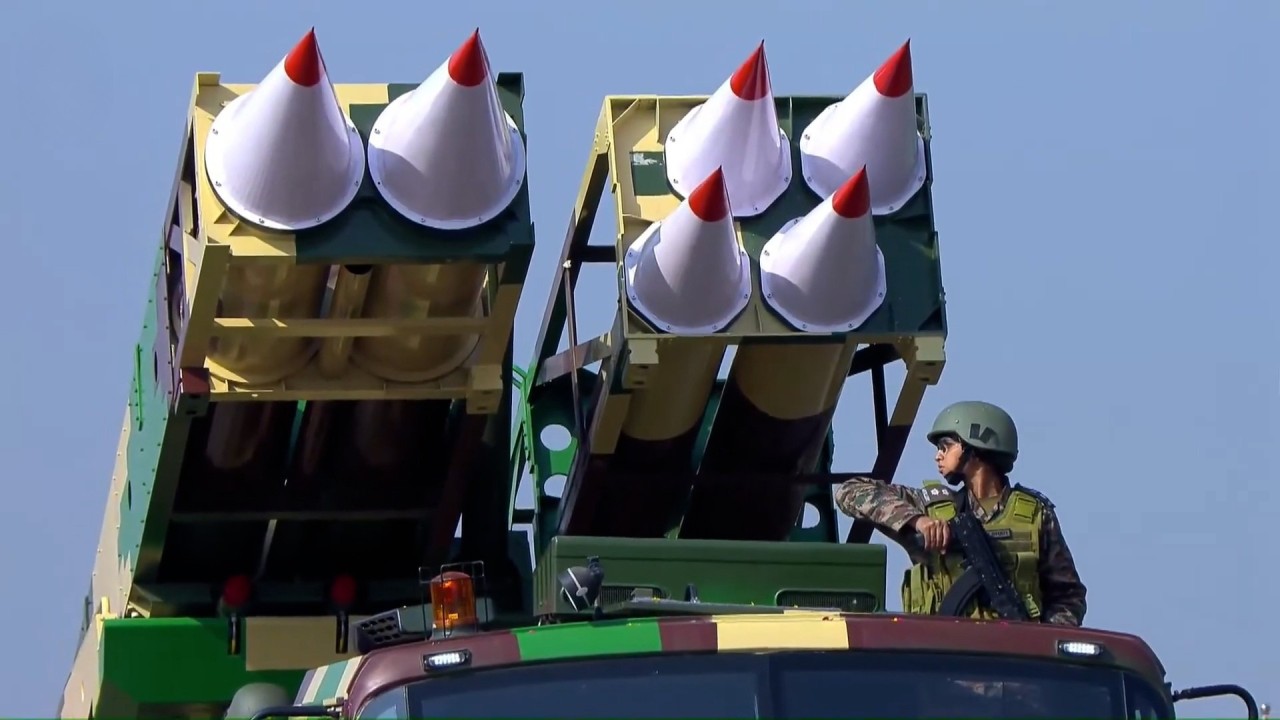
President Lai Ching-te's Cabinet proposed a NT$1.25 trillion ($39.5 billion) eight-year special defense budget in late 2025 — roughly NT$156 billion per year — to fund asymmetric warfare capabilities, coastal missile batteries, hardened logistics networks, and reserve force modernization. The KMT-controlled legislature blocked it from entering formal review until parliamentary speaker Han Kuo-yu pledged this week to take it up after Lunar New Year.
The KMT's counter-proposal: NT$400 billion through 2033, or roughly NT$50 billion per year — approximately $1.6 billion annually. Japan's 2026 defense budget is NT$1.8 trillion equivalent. South Korea's: NT$1.4 trillion. Taiwan, with the most immediate threat environment of any US partner in the Pacific, would spend NT$50 billion per year under the opposition plan.
That is not asymmetric defense spending. That is austerity during a crisis.
The Backlog Argument That Doesn't Hold
The KMT has centered its opposition on Taiwan's $32 billion backlog of US weapons — already purchased but not yet delivered. The logic: why approve new spending when what you've already ordered hasn't arrived? KMT caucus whip Fu Kun-chi demanded Lai explain when the NT$700 billion in purchased military equipment would actually arrive before discussing new commitments.
This argument looks better than it is. Anyone who has dealt with defense acquisition knows a delivery backlog is a timeline problem, not an inventory surplus. Those weapons are not waiting in a warehouse. They are in production queues alongside US commitments to Ukraine, Israel, and INDOPACOM pre-positioning requirements. Some deliveries are running 18 months late. The 34 US lawmakers who wrote to Taiwan's opposition leaders last week acknowledged Washington must address the backlog — but said Taiwan needed to step up too.
The $32 billion in pending deliveries does not reduce Taiwan's current vulnerability. It describes it. And Taiwan is already seeking deadline extensions on US arms agreements because the budget standoff has prevented signing the paperwork. Delay compounds delay.
What Beijing's Marines Are Doing in the Meantime
The US Naval War College recently published a translation of a January 2025 article by Rear Admiral Zhu Chuansheng, Commander of the PLANMC, written for the internal PLA journal Military Art. Zhu outlined four missions for China's 30,000-strong marine corps. One requires no interpretation: seize Taiwan before outside powers can intervene.
Zhu wrote that the PLANMC must rapidly seize and control target areas, "denying the enemy time for reinforcements and denying extra-regional powers time to intervene." The Pentagon's December annual report on PLA capabilities was equally direct: PLANMC modernization "continues to indicate that a Taiwan invasion scenario remains a top consideration for the PLA."
The PLANMC now fields ZTQ-15 light tanks, ZBD-05 tracked amphibious assault vehicles, and six combined-arms amphibious brigades. On February 12, while Taiwan's lawmakers were still debating whether to review the budget, Taiwan's Ministry of National Defense detected 11 Chinese military aircraft — including nuclear-capable H-6K bombers — conducting long-distance training to Taiwan's east and southwest. That same day, KMT's Fu declared Lai's budget would not pass.
The US Leverage Problem
The Trump administration notified Congress of an $11 billion arms package for Taiwan in December — one of the largest in years. That pipeline depends on Taiwan being a credible buyer. Defense Minister Wellington Koo warned that the budget delay risks a rupture in Indo-Pacific collective deterrence. President Lai warned failure could cause Washington to deprioritize Taiwan for arms entirely.
These are not rhetorical threats. The US industrial base is simultaneously rebuilding stockpiles depleted by Ukraine, responding to Indo-Pacific requirements, and managing an allied acquisition queue. There is no spare capacity absorbing Taiwan's reluctance.
The Window Beijing Is Watching
The KMT counter-proposal is not a defense strategy. NT$50 billion per year cannot fund the Hsiung Feng coastal missile expansion, hardened underground facilities, sea mine stockpiles, and reserve force equipment Taiwan's own military planners have identified as essential. Lai's version runs NT$156 billion per year. The KMT wants one-third of that.
Rear Admiral Zhu's operational concept is built around exploiting a window: the gap between when China strikes and when US forces can mass combat power in the Western Pacific. Taiwan's defense spending doesn't determine whether that window exists. It determines how narrow it is.
Cut the budget by two-thirds and the window gets a lot wider.
Taiwan's opposition cut its defense budget by 68% to NT$400 billion, while the People's Liberation Army Navy Marine Corps rehearsed amphibious assault operations aimed at seizing Taiwan. The budget standoff has led to concerns about Taiwan's military readiness and a backlog of $32 billion in US weapons purchases. US officials warned that delays in Taiwan's defense spending could jeopardize arms prioritization.
- Taiwan's opposition cut its defense budget by 68% to NT$400 billion.
- The People's Liberation Army Navy Marine Corps rehearsed amphibious assault operations.
- Taiwan has a backlog of $32 billion in US weapons purchases.
- Taiwan's proposed defense budget is NT$1.25 trillion over eight years.
- The US warned that budget delays could affect arms prioritization for Taiwan.