
Taiwan's Penghu Hsiung Feng III Batteries Force China to Fight for the Strait First
 Marcus Chen
Taiwan's Penghu Hsiung Feng III Batteries Force China to Fight for the Strait First
Penghu sits only about 50 kilometres off Taiwan's southwest coast, but in a Taiwan Strait war it behaves less like an outer island and more like a gate. Reuters reported on August 28 that Taiwanese troops on the archipelago are training for the first wave of a Chinese attack, and that is the right way to think about it. If the People's Liberation Army wants to move ships and landing forces toward Taiwan's main island without taking unacceptable risk, it has to suppress Penghu early. That changes the invasion problem. China would not be fighting one island campaign. It would be fighting for the middle of the Strait before it could fight for Taiwan itself.
The military logic is simple. Penghu is a cluster of 90 islands and islets with a population of roughly 110,000, large enough to host a serious garrison and close enough to the main island to work as part of a layered defense. Taiwanese officials told Reuters that Hsiung Feng missile launchers were deployed there during this month's Han Kuang drills. CSIS's Missile Threat project describes the Hsiung Feng III as a supersonic anti-ship cruise missile with a 120 to 150 kilometre range in its standard form. From Penghu, that is enough reach to threaten ships moving through central approaches to Taiwan and complicate PLA assembly areas along parts of the Chinese coast. Geography is doing a lot of work here.
Penghu Turns the Strait into a Fire Sack
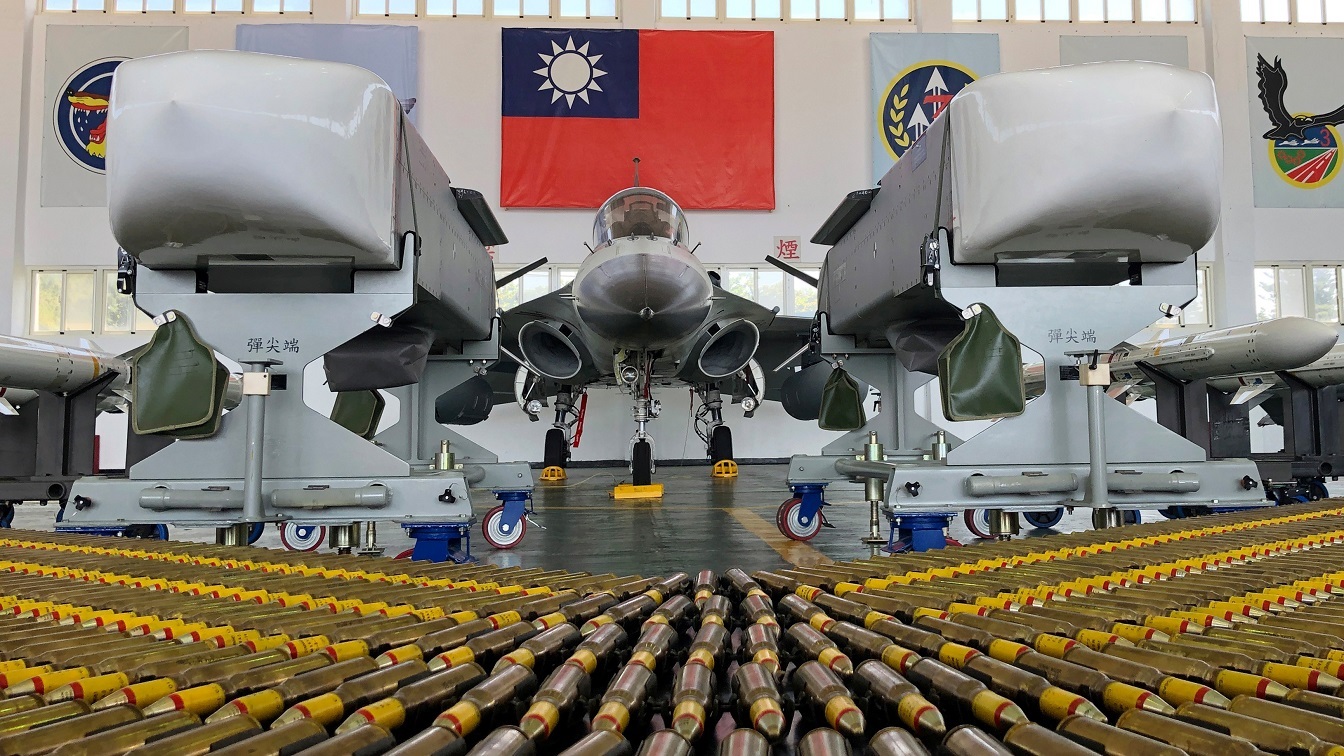
Analysts often talk about Taiwan in terms of a beach defense on the main island. Penghu pushes the fight westward. Su Tzu-yun of Taiwan's Institute for National Defense and Security Research told Reuters that PLA ships bypassing Penghu could be struck from the islands. More important, Taiwanese missiles on Penghu can help build crossfires with batteries on Taiwan proper. That matters because amphibious operations are not won by a single dramatic beach assault. They are won by moving thousands of men, fuel, ammunition, engineering vehicles and follow-on waves across a narrow but intensely contested body of water. Every extra axis of fire reduces the amount of shipping that gets through intact.
That is why Penghu is so dangerous for Beijing and so valuable for Taipei. A bypass is unattractive. A direct seizure is costly. A prolonged missile suppression campaign burns time and exposes launch positions, airfields and ships. The PLA can absorb losses, but it cannot make distance disappear. Anyone who has served around littoral operations knows the rule: the closer the water, the less room you have to recover from mistakes. Penghu gives Taiwan one more place to impose that rule.
Han Kuang Showed the Right Priority
Reuters described live-fire drills on August 10 in which tanks, artillery, mortars and infantry rehearsed repelling landings on Penghu's shoreline. That by itself is not decisive. Four tanks firing in the dawn are a signal, not a war-winning force. The more important detail is what was added around them. Reuters reported that Taiwan's Navy Coastal Operations Command deployed to Penghu for the first time during Han Kuang with anti-ship launch vehicles, and Focus Taiwan reported before the exercise that this year's drills would include drone warfare, counter-drone operations, anti-blockade work and unscripted responses to wartime conditions. That is a more realistic template than the old performance-piece version of Han Kuang.
The reason is that Penghu does not only have to survive a landing. It has to survive isolation. Beijing could try to cut the islands off, blind their sensors, hammer fixed infrastructure and pressure civilians before the main amphibious phase ever begins. Taiwan's answer has to be mobility, dispersion and endurance. Missile trucks matter more than parade formations. Drone reconnaissance matters more than static observation posts. Fuel, repair capacity and reload discipline matter more than speeches about resolve.
The Weak Point Is Staying Power
This is where the math gets uncomfortable. Reuters reported that a think-tank war game last year saw Penghu fall within a day of surprise long-range Chinese strikes. Even if that result is too pessimistic, it captures the core problem. A frontline island garrison can be brave and still be overwhelmed if it cannot keep launchers moving, replace damaged communications and ration munitions intelligently. Coastal defense batteries are lethal, but only while they remain hidden, connected and supplied.
Taipei does appear to understand that. Reuters found that around 1,200 Penghu residents have already been certified through Taiwan's whole-of-society resilience program, with a nationwide target of about 200,000 trained civilians by the end of the year. Local authorities have rehearsed blockade scenarios and arranged wartime support agreements with grocers, pharmacies and construction companies. That is not window dressing. On an island that could be cut off quickly, civil resilience is combat power. A missile battery that can still refuel, repair vehicles and keep civilians from panicking lasts longer. That's the gap between a sharp first salvo and a defense that holds into day two or day three.
China's First Problem Is Not Taipei
The strategic conclusion is blunt. If Penghu is properly armed and supplied, China cannot treat Taiwan as a single objective centered on Taipei. It has to first win control of the middle Strait, neutralize mobile anti-ship fires, and break a defended island position that sits directly across the invasion route. That adds friction, delays follow-on waves and increases the number of things that must go right at once for Beijing. Invasion plans fail when they become sequencing problems instead of momentum problems.
Penghu will not save Taiwan by itself. A handful of missile batteries and a tougher civil defense network do not erase the balance of mass across the Strait. But they do force the PLA to spend time, missiles and attention before it gets the decisive fight it wants. For Taiwan, that is the point. The best defense of the main island may begin with making China fight hard for a place most outsiders still think of as a tourist stop. In this war, Penghu is not a sideshow. It is the first lock on the door.
Taiwanese troops conducted training exercises in Penghu in August 2023, preparing for a potential Chinese attack. The deployment of Hsiung Feng III missiles and live-fire drills involving tanks and artillery were reported. Analysts emphasize that Penghu's strategic position complicates Chinese invasion plans, requiring them to secure the Strait before targeting Taiwan. Civil resilience initiatives are also underway to bolster defense capabilities.
- Taiwanese troops are training for a potential Chinese attack on Penghu.
- Hsiung Feng III missile launchers were deployed during military drills.
- Live-fire drills included tanks, artillery, and infantry rehearsing land defense.
- Penghu's strategic location complicates Chinese invasion plans.
- Civil resilience programs are being implemented to support defense efforts.