
The 17-Day Loop Around Japan Is the Fait Accompli Tokyo Can't Undo
 Marcus Chen
The 17-Day Loop Around Japan Is the Fait Accompli Tokyo Can't Undo
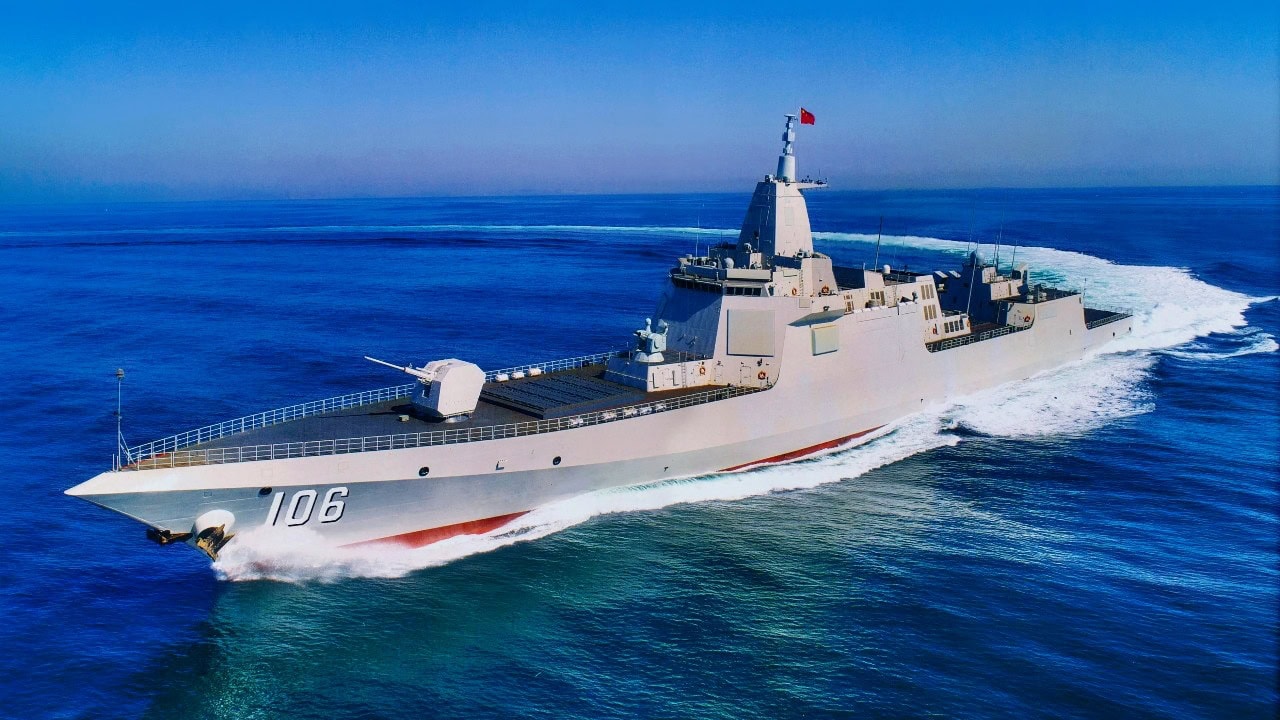
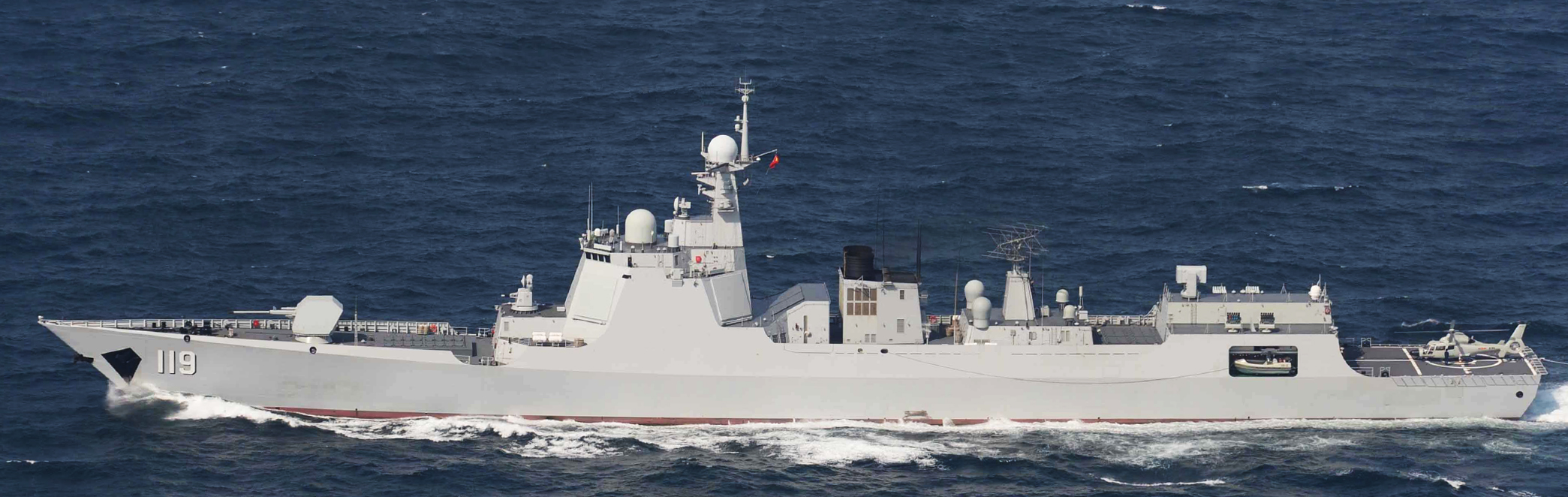
Seventeen days, four ships, and a full lap around the Japanese archipelago. On August 3, three People's Liberation Army Navy vessels — a Type 055 guided-missile cruiser, a Type 052D destroyer, and a Type 903 replenishment ship — slid southwest through the Korea Strait and closed the loop on the first complete Chinese circumnavigation of Japan. The Russian corvette that sailed with them had peeled off at Vladivostok five days earlier. The Chinese half of the formation kept going. Tokyo tracked every mile, and there was nothing it could do about it.
The Route
The timeline, reconstructed from Japanese Ministry of Defense releases and Chinese state media, is a deliberately chosen itinerary:
- July 13: Three PLAN ships and a Russian Navy corvette depart Qingdao.
- July 16: The formation transits the Miyako Strait near Okinawa, the most watched chokepoint in the First Island Chain.
- Late July: The ships pass south and east of the Ogasawara Islands, then round the northern route.
- July 27: The group reaches the La Perouse Strait between Hokkaido and Sakhalin.
- July 29: The patrol formally ends at Vladivostok, part of the Joint Sea-2026 cooperation cycle, per Reuters.
- August 2-3: The three Chinese ships continue southwest through the Korea Strait, completing the full circuit.
One detail is genuinely new. The Global Times, citing the joint command, said the patrol marked the first time Chinese and Russian warships transited the Vries Strait together — the passage between the Russian-held Kuril islands that Tokyo still claims. That is not a routine gap in a schedule. It is a test of the seam in Japan's northern watch.
What Tokyo Says It Saw
"This series of activities, including such joint voyages, is clearly intended as a show of force against Japan and is a matter of serious concern for Japan's national security." — Japan Ministry of Defense
The Japan Maritime Self-Defense Force dispatched surface vessels and patrol aircraft to shadow the formation through the Korea Strait. Five days later, on August 4, Japan's Cabinet approved the 2026 edition of Defense of Japan, which again calls China "an unprecedented and the greatest strategic challenge" and, for the first time, includes a dedicated section tracing the evolution of China-Russia military cooperation — joint naval drills, long-range bomber patrols, and reciprocal exercise participation.
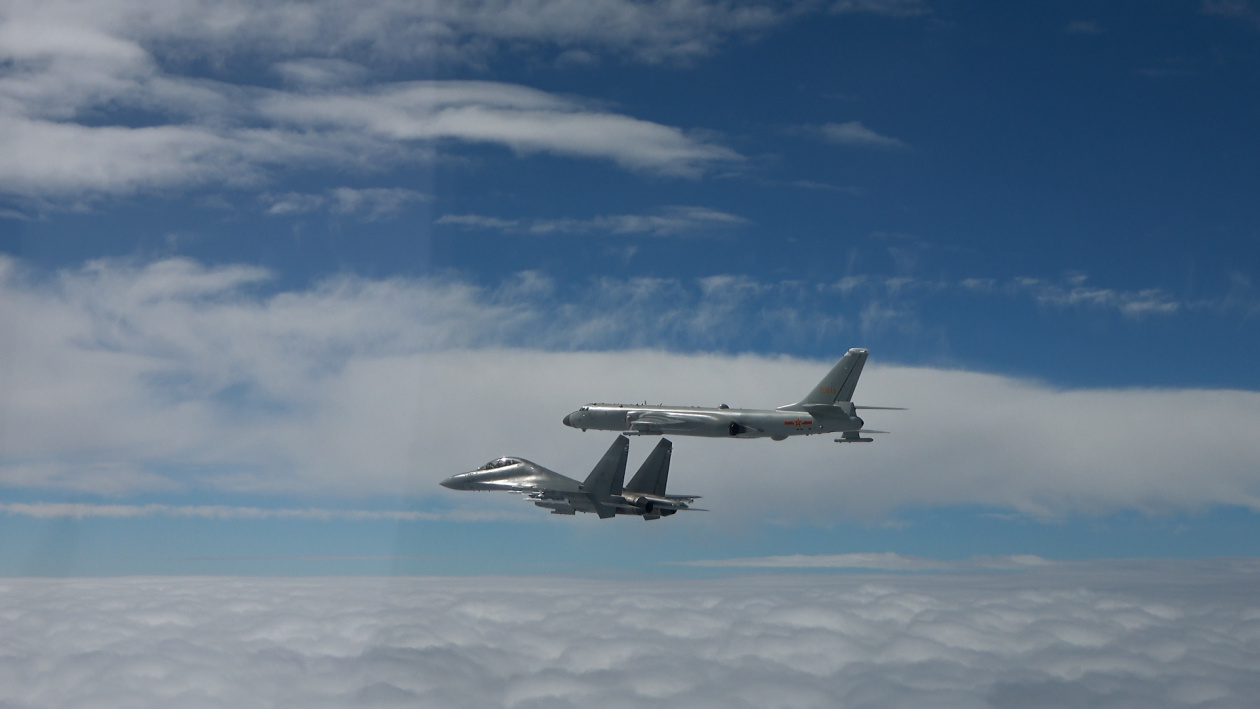
The white paper's core warning is that the PLA is building a "fait accompli" — a regular, normalized military presence in waters it previously visited only episodically. It cites the carrier Liaoning's operations east of Iwo Jima in June 2025 and its first confirmed sorties beyond the Second Island Chain, plus a 30-minute laser attack on a JMSDF patrol aircraft east of Okinawa.
The Smallness Is the Point
Here is the number that matters: four hulls. This was not a carrier strike group, not a surge, not a fleet review. A single destroyer could have made most of this transit alone. The signal is not size — it is regularity. Since 2021, Beijing and Moscow have conducted at least 14 joint naval activities in the Sea of Japan and 13 in the Pacific, according to Geopolitical Futures' count. The Japan circumnavigation is not a new capability. It is the annualization of one.
Anyone who has transited these straits on a warship knows the operational reality: they are international waters, and the right of transit passage is not Tokyo's to grant or revoke. Japan can intercept, shadow, photograph, and protest — and then the ships are gone. Blocking a strait is not a monitoring decision; it is a shooting decision. The PLA knows this. The white paper's own language — "grave concern," "show of force" — is an admission that the pattern is being set on Beijing's terms.
The Answer That Isn't
Tokyo's response is the part that should worry Washington as much as Beijing. The white paper elevates Japan's defense production and technology base to a full section, celebrates eased arms export rules, and leans into "new ways of warfare" — drones, artificial intelligence, stockpiles. But none of that answers the patrol. Counterstrike missiles do not stop a replenishment ship from transiting the Miyako Strait. A stronger industrial base does not close the Vries Strait. The report describes the problem accurately and then buys weapons aimed at a conflict the patrol was never trying to start.
There is a sharper way to read it. Beijing is playing a normalization game — each transit slightly bolder, each route slightly wider, each year one more first. Tokyo is playing a procurement game. Those games do not intersect. When a Chinese vessel was accused of live-fire drills inside Japan's EEZ in late July, the Global Times called it routine. That is the vocabulary of fait accompli: act, then describe the act as unremarkable.
The Loop Is Already Routine
The white paper counts China's ships and draws an accurate map. It just cannot draw the conclusion. The circumnavigation is done; the next one is already being planned, and the one after that will include something larger — a carrier, a longer leg, another strait. Tokyo can track the transit, but it cannot tax it, stop it, or threaten it away. The only lever left is the one the white paper is least willing to pull: deciding what Japan is actually prepared to fight for, and whether the United States will be there when the tracking stops and the decision starts.
On August 3, 2023, three People's Liberation Army Navy vessels completed a circumnavigation of Japan, transiting through the Korea Strait and other strategic waterways. This operation, which included a Type 055 guided-missile cruiser, a Type 052D destroyer, and a Type 903 replenishment ship, has raised significant concerns for Japan's national security. The patrol is seen as a demonstration of military capability and a normalization of Chinese naval presence in the region.
- Three PLAN ships completed a circumnavigation of Japan.
- The operation included a Type 055 cruiser, Type 052D destroyer, and Type 903 replenishment ship.
- The patrol marked the first joint transit of the Vries Strait by Chinese and Russian warships.
- Japan's Ministry of Defense expressed serious concern over the operation.
- The operation is part of a pattern of increasing military cooperation between China and Russia.