
The 2026 Deployment of U.S. Military Typhoon in Kagoshima Indicates a New Phase of Long-Range Strikes between Japan and the U.S.
 Tanaka Takashi
The 2026 U.S. Military Typhon Deployment in Kagoshima Indicates a New Phase in U.S.-Japan Long-Range Strike Capability
The U.S. Army's mid-range capability system, known as Typhon, will be deployed at a training ground in Kagoshima Prefecture. According to reports from Japanese media on June 21, the U.S. military plans to send this system for joint training with the Self-Defense Forces, and it was reported that the U.S.-hosted multinational joint exercise, Variant Shield 2026, began on June 23 in multiple locations, including Japan and Hawaii. The Ministry of Defense also announced its participation in this exercise on May 22. While this is a combination of low-profile announcements, it appears to the author that the firepower design of the U.S.-Japan alliance has entered a new phase.
The Political Significance of Typhon's Range
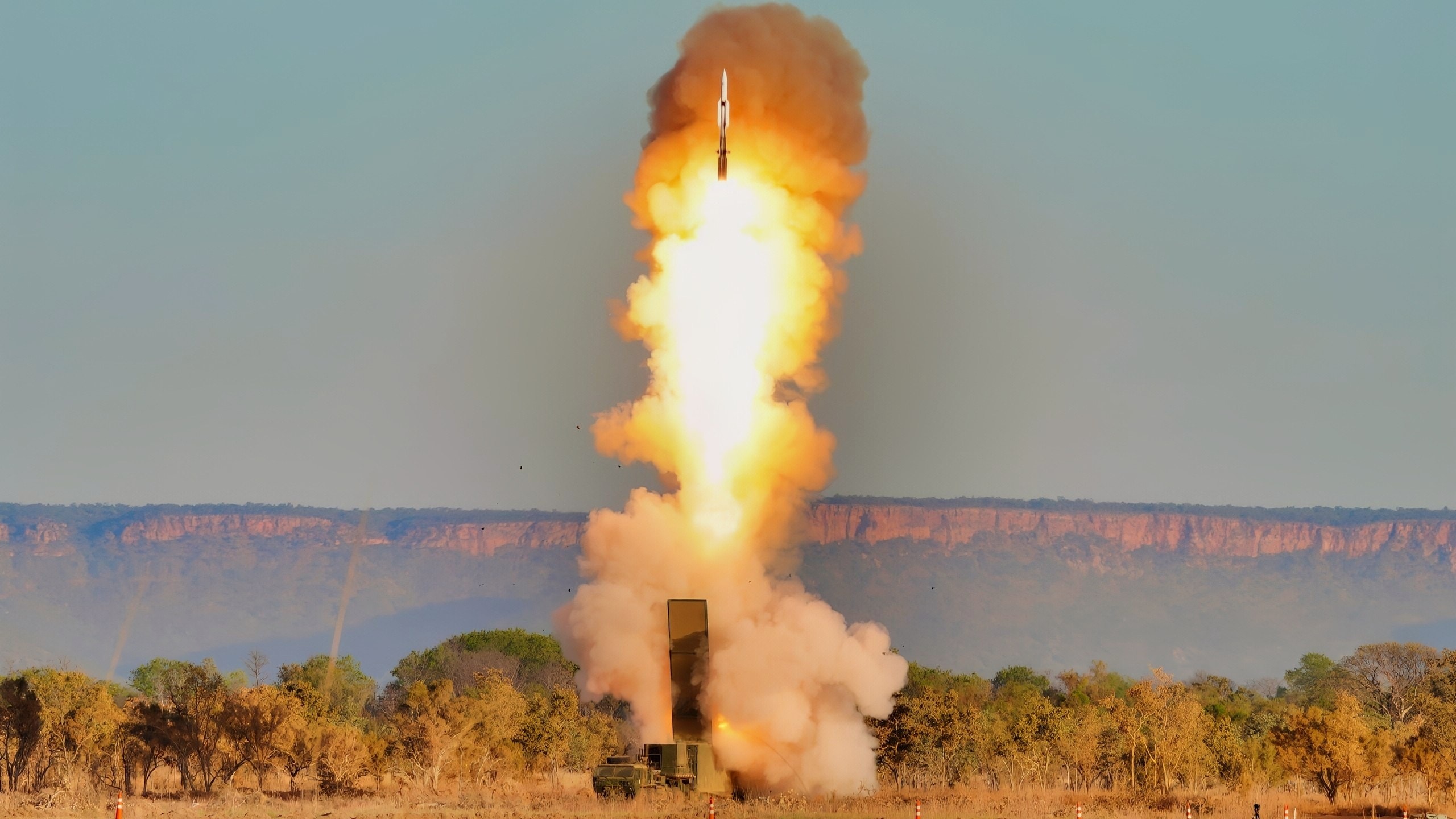
Typhon is a land-based launch system that the U.S. Army has developed as a mid-range capability (MRC). According to publicly available information, it is envisioned to combine the Tomahawk cruise missile with the SM-6 series of interception and attack capabilities. CSIS Missile Threat categorizes the Tomahawk as a long-range cruise missile with a range generally between 1,250 to 2,500 kilometers, depending on the variant. The temporary deployment of such launch capabilities in the southwestern part of the Japanese archipelago is not merely participation in an exercise.
What should be noted here is not the existence of launches, but how far the deployment, concealment, resupply, and command and control can be practically verified within Japan. From the perspective of the Japan Maritime Self-Defense Force, the issues are not just the missiles themselves, but also the ammunition depots, transport routes, communication lines, security forces, and the time for political decision-making. The geography of Kagoshima prompts consideration of both the distance to the southwestern islands and the rear support from Honshu.
Overlap of Variant Shield and RIMPAC
Variant Shield 2026 is a U.S.-led multinational exercise, and English-language reports from the Yomiuri Shimbun indicate that it began on June 22 at multiple locations, including Kagoshima, Hokkaido, and Hawaii. Furthermore, on June 23, the Japan Maritime Self-Defense Force also announced its participation in RIMPAC 2026, hosted by the U.S. Navy. One is a joint exercise that includes the surrounding islands, while the other is a maritime multinational exercise across the entire Pacific. The proximity of these two exercises suggests that the U.S. and Japan are attempting to synchronize not just individual unit operations, but the operational cycles themselves.
This has significance from the perspective of sea lines of communication (SLOC). The Chinese Navy reportedly operated two aircraft carriers almost simultaneously in the waters south of Japan in June. Looking solely at the actions of the aircraft carriers, the gap in overall strength compared to the U.S. Navy remains significant. However, at a stage where aircraft carriers, submarines, long-range missiles, and drones are used simultaneously, the idea that Japan can handle local responses solely with escort ships is outdated. How to connect land-based long-range firepower with the sensors of the air and maritime self-defense forces will determine the reality of deterrence.
Japan's Homework
Japan is also hastening the enhancement of its Type 12 surface-to-ship guided missile capability. The Associated Press reported that the Ministry of Defense plans to deploy an improved version of the Type 12, with a range of approximately 1,000 kilometers, at the Kengun garrison in Kumamoto Prefecture ahead of the initial schedule. While the U.S. Typhon and Japan's Type 12 are not the same equipment, they pose the same question. That is, when operating long-range strikes within Japan, who verifies target information, who approves the launch, and at what stage can information sharing with the U.S. military no longer be halted?
The deterrent power of an alliance cannot be established by the range of weapons alone. As the range increases, the slowness of political decision-making and the weakness of base protection become exposed.
In the author's view, the most overlooked risk of the Typhon deployment in Kagoshima is not the backlash from China itself. Rather, it is how much control Japan can maintain over long-range firepower operations, which began as peacetime exercises, during a crisis. The U.S.-Japan alliance is strengthening. However, as it strengthens, the Self-Defense Forces are pushed closer to the decision-making for launches rather than remaining in the background of the alliance. The challenge that remains after this exercise is how much of this reality can be explained domestically.
The U.S. Army deployed the Typhon system in Kagoshima for joint training exercises with Japan's Self-Defense Forces in June 2026. This deployment coincided with the start of the multinational exercise 'Variant Shield 2026' on June 23, which involved multiple locations including Hawaii. Japan is also advancing its missile capabilities, reflecting a shift in the operational dynamics of the U.S.-Japan alliance.
- U.S. Army's Typhon system is being deployed in Kagoshima for joint exercises with Japan.
- Multinational exercise 'Variant Shield 2026' began on June 23, 2026.
- Japan is enhancing its missile capabilities with the improved Type 12 anti-ship missile.
- The exercises are intended to improve operational coordination between U.S. and Japanese forces.
- China's naval activities in the region are influencing the strategic context of these exercises.