
The 2026 Model Air Defense Connection Demonstrated by Three JASDF F-2s and the U.S. Military MQ-9B Off the Coast of Tohoku
 Tanaka Takashi
Three JASDF F-2s and a U.S. MQ-9B Demonstrate 2026 Model Air Defense Integration Off the Tohoku Coast
On July 24, three F-2s from the Japan Air Self-Defense Force's 7th Air Wing, two U.S. F-16s, and one MQ-9B appeared over the eastern Pacific Ocean off the Tohoku region. The Joint Staff Office's report released the following day simply referred to this as "tactical training." However, this small formation clearly reflects where the current Japan-U.S. alliance is focusing its attention.
What the Announcement Data Reveals in Numbers
According to the Joint Staff, the training airspace was "over the eastern Pacific Ocean," and the participating units included three F-2s from the JASDF's 7th Air Wing, two U.S. F-16s, and one MQ-9B. The purpose statement explicitly mentioned that activities posing significant security concerns for Japan in the surrounding area are increasing, and it indicated a willingness not to tolerate unilateral changes to the status quo by force. Notably, this took place off the Tohoku coast rather than the southwestern islands. From the perspective of the Maritime Self-Defense Force's Cold War-era emphasis on the defense of the three straits, the Hokkaido and Tohoku front is certainly not a thing of the past.
The Significance of the MQ-9B's Inclusion
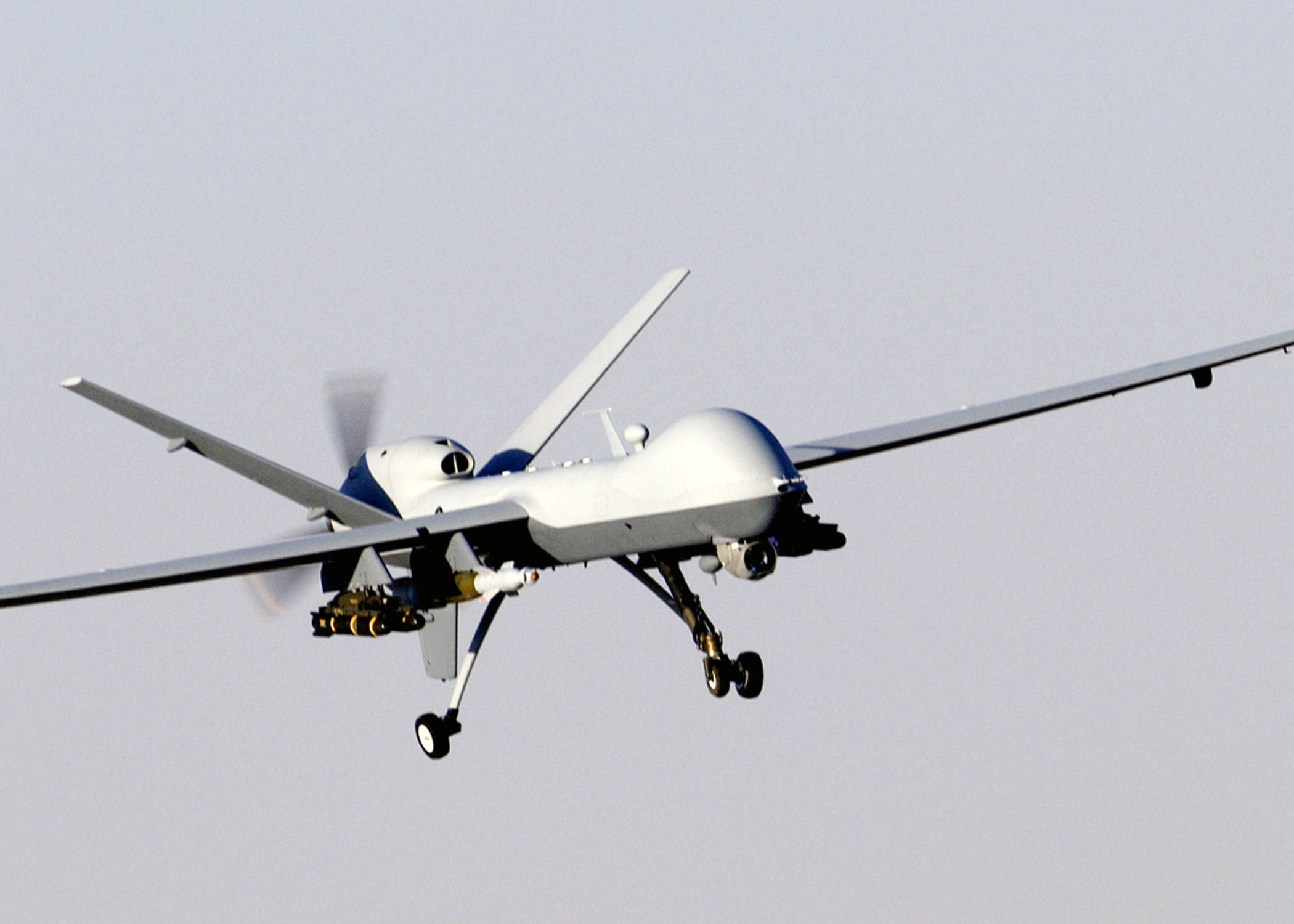
The MQ-9B is a next-generation remotely piloted aircraft described by GA-ASI as the SkyGuardian, featuring over 40 hours of endurance, beyond-line-of-sight operations via satellite communication, and persistent ISR capabilities with EO/IR sensors and Lynx multi-mode radar. While the announcement did not specify the onboard sensors or mission roles, it should be avoided to make definitive conclusions; however, the inclusion of the MQ-9B in training alongside the F-2 and F-16 suggests a confirmation of integration that includes detection, identification, sharing, and handover to interceptors, rather than just air-to-air maneuvers.
Role Division Between F-2 and F-16
The F-2 is designed and operated with a focus on anti-ship attack missions in Japan's surrounding air and maritime areas. In contrast, the U.S. Air Force's F-16 is classified as a multi-role fighter in official documents, capable of air-to-air, air-to-ground, all-weather operations, with an operational radius exceeding 500 miles and a maximum performance of Mach 2. While the training may appear to involve similarly sized fighters, the practical focus is on "who detects first, who prepares the information necessary for shooting decisions, and who ultimately takes the risk."
Not a Blank Maritime Area Off the Tohoku Coast
Recent discussions tend to concentrate on the Taiwan Strait and the southwestern islands. Of course, this is understandable. However, the area off the Tohoku coast on the Pacific side is also the outer edge where the Russian Pacific Fleet, the Chinese Navy's blue-water operations, and North Korea's ballistic and cruise missile activities overlap. From the perspective of SLOC (Sea Lines of Communication) defense, if the surveillance lines in this airspace become thin, even if the southwestern front is reinforced, Japan's overall air defense alert will be compromised.
Deterrence is Not About Flashy Numbers
The total number of participating aircraft this time was only six. However, it is precisely this small size that is practical. Large-scale exercises can easily become political messages, but routine small-scale training serves as a venue to finely hone command communications, data links, rules of engagement, and the reliability of information from unmanned systems. In my view, what is being questioned in the Japan-U.S. air defense cooperation in 2026 is not the number of fighter aircraft, but how quickly information from long-endurance ISR can be translated into decisions made by manned aircraft.
The Joint Staff's announcement stated, "We will demonstrate readiness and further strengthen the deterrent and response capabilities of the Japan-U.S. alliance." The issue lies in the speed of information processing that makes those words a reality.
Remaining Challenges
However, unmanned ISR like the MQ-9B is not omnipotent. While it is strong in wide-area surveillance during peacetime, there remain political barriers regarding interference environments, satellite communication delays, coordination with civilian airspace, and at what stage information obtained from unmanned systems will be used for engagement decisions. The tactical training off the Tohoku coast demonstrated not only the maturity of the Japan-U.S. alliance but also highlighted the true challenge: it is not about the ability to detect, but rather who decides what within how many minutes after detection.
Sources
- Japan Joint Staff, Japan-U.S. Bilateral Exercise, July 25, 2026.
- U.S. Air Force, F-16 Fighting Falcon fact sheet.
- General Atomics Aeronautical Systems, MQ-9B SkyGuardian overview.
On July 24, 2026, three Japan Air Self-Defense Force F-2 aircraft, two U.S. Air Force F-16s, and one MQ-9B drone conducted a joint tactical training exercise over the Pacific Ocean northeast of Japan. The exercise focused on air operations and ISR capabilities, reflecting the ongoing military collaboration between Japan and the U.S. and addressing regional security concerns.
- Three Japan Air Self-Defense Force F-2 aircraft participated in the exercise.
- Two U.S. Air Force F-16 aircraft were involved.
- One MQ-9B drone was included in the training.
- The exercise took place over the Pacific Ocean, northeast of Japan.
- The training aimed to enhance Japan-U.S. defense cooperation.