
The 2026 Relocation of Three U.S. Air Force RQ-4 Global Hawks to Yokota Changes Surveillance of the First Island Chain
 Tanaka Takashi
2026 Transfer of Three U.S. RQ-4 Global Hawks to Yokota Changes First Island Chain Surveillance
The statement that existing facilities at Yokota Air Base will be used carries the most practical significance in this announcement. According to the Ministry of Defense, the U.S. military will sequentially transfer three RQ-4 Global Hawks stationed at Andersen Air Force Base in Guam to Yokota Air Base in Tokyo after the summer of 2026. It is reported that an explanation was provided to the Tokyo Metropolitan Government and related municipalities on May 28.
The Transfer to Yokota Marks a Shift from Temporary Deployment to Normalization
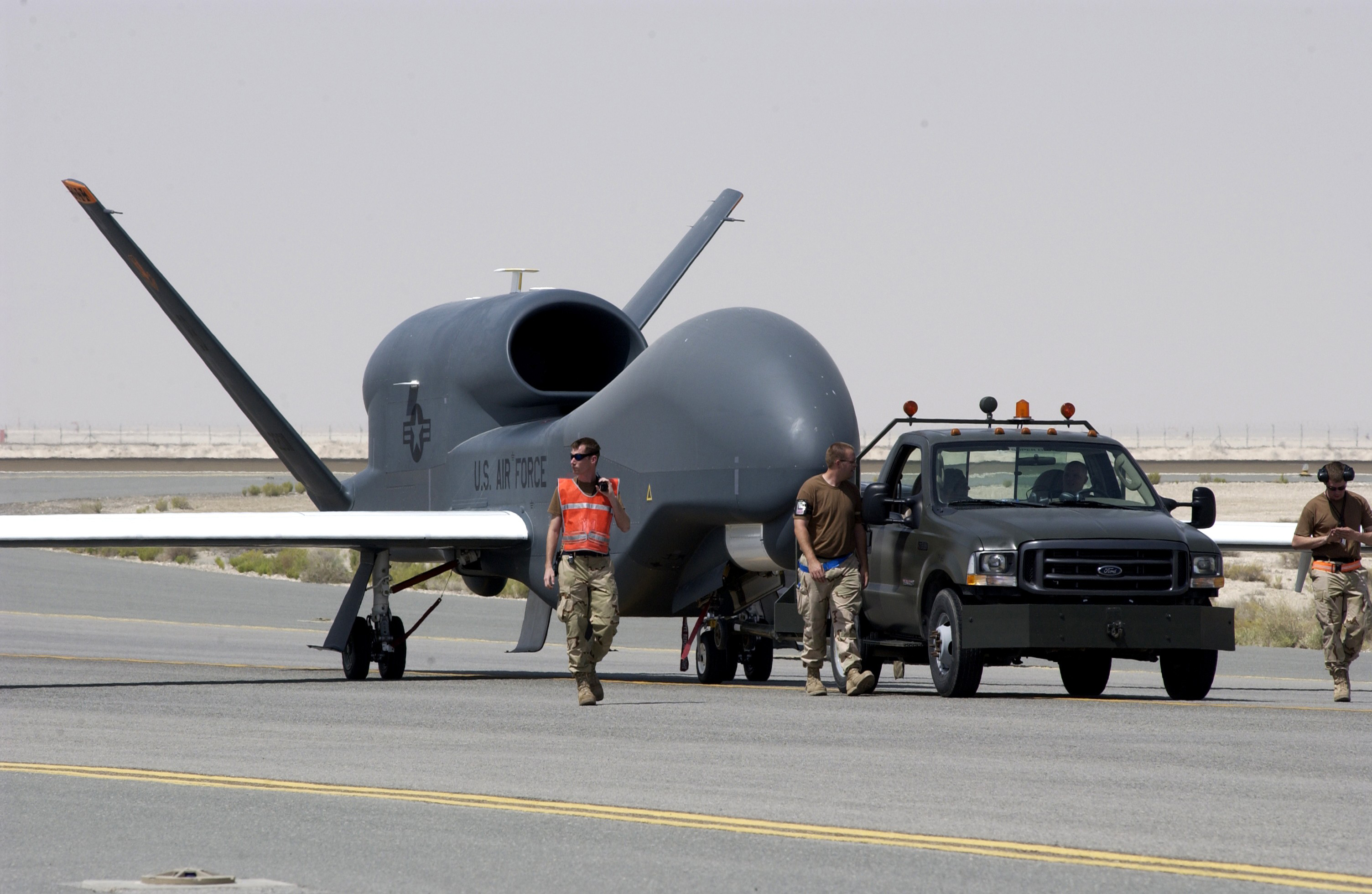
The Global Hawk has previously been temporarily deployed to Yokota and Misawa. The U.S. Air Force explained in 2023 that operations at Yokota are intended to provide continuous operational support across the Indo-Pacific region. This time, it should be interpreted as a shift in the focus of operational deployment, accompanied by three aircraft and approximately 150 personnel.
The U.S. explanation takes into account the surrounding security environment and states that the transfer aims to enhance information gathering and surveillance around Japan, considering operational efficiency and responsiveness comprehensively. Diplomatically, this is a restrained expression. However, from the perspective of maritime traffic routes, this arrangement differentiates Guam as a rear area base and the Japanese mainland as a forward ISR (Intelligence, Surveillance, Reconnaissance) base.
The RQ-4B's Capabilities are Suited for Continuous Surveillance of Maritime and Air Domains
According to the Japan Air Self-Defense Force's equipment documentation, the RQ-4B has a wingspan of 39.9 meters, a length of 14.5 meters, an endurance of approximately 36 hours, a maximum altitude of about 60,000 feet, and a maximum speed of around 310 knots. It is not an aircraft that can immediately dive into the field like a fighter jet. Rather, it is designed to observe vast maritime and air domains for extended periods, complementing information from patrol aircraft, early warning aircraft, ground radar, and naval vessels.
This characteristic aligns well with the defense of the Nansei Islands. In the line connecting the Miyako Strait, Bashi Channel, and the eastern waters of Taiwan, activities of Chinese naval vessels, bombers, drones, and electronic warfare aircraft intermittently overlap. According to the Joint Staff's FY2025 scramble data, out of a total of 595 scrambles, 366 were against Chinese aircraft and 214 against Russian aircraft. While the numbers have decreased from 1,004 in FY2021, the significance of these activities has not diminished. Even a small number of distant and complex threats can increase the burden of surveillance.
The Advantages and Disadvantages of Yokota as a Location
Yokota is a base that houses the U.S. Forces Japan Command and the 5th Air Force Command, and the Japan Air Self-Defense Force Air Defense Command is also located at the same base. Therefore, the organizational advantage is greater than the geographical one when it comes to connecting the gathered information to the U.S.-Japan command systems. This is not merely a matter of range; it is about who can use the information and in what timeframe.
On the other hand, placing high-altitude unmanned aircraft and personnel at a base in the metropolitan area can create political friction. The Ministry of Defense has explained that this is a relatively low-noise model and will request the U.S. side to minimize the impact on surrounding residents. The author believes this point should not be underestimated. ISR capabilities are valuable when quietly enhanced, but if local explanations are delayed, the alliance's operations may become unnecessarily visible.
Deterrence is Not Solely About Missiles
Recent discussions in Japan have tended to focus on strike capabilities such as Tomahawks, the upgraded Type 12 surface-to-ship guided missile, HIMARS, and Typhoon. However, long-range weapons are difficult to use politically and militarily without target identification, tracking, and damage assessment. The transfer of the Global Hawks to Yokota should be viewed as a measure to strengthen the prerequisites for integrating strike capabilities into the alliance's operational framework, rather than as a direct enhancement of strike power.
Limiting considerations to a Taiwan contingency is too narrow. North Korea's short-range ballistic missiles, Russian aircraft flying near Japan, and the Chinese Navy's expansion into the Pacific could coincide in the same week. The 36-hour endurance capability will serve as a glue to connect such multi-faceted surveillance.
The Remaining Challenge is the Speed of Information Sharing
This transfer will undoubtedly enhance the surveillance capabilities of the U.S.-Japan alliance. However, simply positioning equipment does not complete the defense of the First Island Chain. If the Japan Air Self-Defense Force, Japan Maritime Self-Defense Force, U.S. 7th Fleet, and ground missile units cannot understand what the Global Hawks observe on the same timeline, the value of long-endurance flight will be halved.
During the Cold War, the Japan Maritime Self-Defense Force struggled as much with how far to share the information they found as with finding submarines. The issues in 2026 are fundamentally similar. The true challenge lies not in placing three aircraft at Yokota, but in how quickly the information generated by those three aircraft can be processed by U.S.-Japan political decision-making.
Sources
The U.S. Air Force will relocate three RQ-4 Global Hawk drones from Guam to Yokota Air Base in Tokyo by summer 2026 to enhance intelligence, surveillance, and reconnaissance (ISR) capabilities in the region. This move involves approximately 150 personnel and aims to improve operational efficiency and responsiveness in response to the surrounding security environment.
- Three RQ-4 Global Hawk drones will be relocated from Guam to Yokota Air Base in Tokyo by summer 2026.
- The move aims to enhance ISR capabilities in the region.
- Approximately 150 personnel will accompany the drones during the relocation.