
The 42% Drop in Rostec's Profit Limits the Production of Iskanders and T-90M in 2026
 Dmitri Volkov
The 42% Drop in Rostec's Profit Limits the Production of Iskanders and T-90Ms in 2026
Rostec's net profit fell by 42% in the very year when the Russian state defense order was supposed, according to official logic, to turn the corporation into the main industrial winner of the war. Revenue in 2025 increased by 25%, but profit shrank to 76.4 billion rubles, or approximately 986 million dollars; Sergey Chemezov acknowledged in a meeting with Mikhail Mishustin that there were few own funds left for new investment projects (Militarnyi, August 2, 2026; The Moscow Times, July 15, 2026). For a corporation that unites more than 800 organizations and, according to Russian estimates, produces about 80% of the weapons and military equipment used in the war against Ukraine, this is not a trivial accounting matter. It is a symptom that the military mobilization of industry has already passed the phase of light growth and is entering a phase of expensive maintenance of pace.
The State Defense Order Grows, Margins Disappear
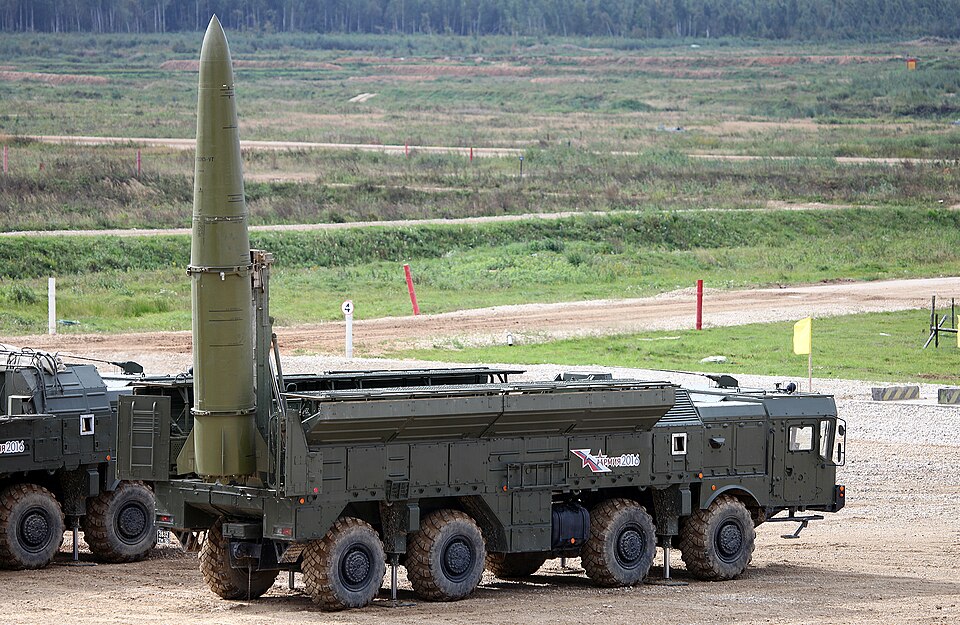
The main contradiction is evident in one pair of figures: plus 25% in revenue and minus 42% in profit. In a normal industrial company, such a combination would indicate either a sharp increase in production costs, forced pricing, or debts. Rostec has all three factors present. As early as 2024, Chemezov explained to Putin that the profitability of contracts under the state defense order is about 2%, and military acceptance does not always recognize overhead costs (Vedomosti, July 2024). In a peacetime economy, 2% is not an industrial margin but an accounting error. In a wartime economy with a shortage of machines, electronics, skilled workers, and high-interest loans, this turns into a mechanism for accumulating hidden losses.
The Soviet defense system addressed a similar problem differently: it did not consider profit the main indicator because it lived within a planned resource allocation. Modern Russia wants to simultaneously have Soviet supply discipline and capitalist accountability. This results in a rather strange structure: the factory is obliged to deliver T-90M tanks, BMP-3s, Iskander-M missiles, Pantsir-S1 systems, aviation systems for Su-35S and Su-34, but a significant portion of the costs is transferred to the balance sheet of the enterprise itself. The paperwork reports an increase in output. The balance sheet shows who pays for that growth.
Where Financial Pressure Becomes a Military Factor
The financial problems of subsidiary structures have already ceased to be an abstraction. KamAZ, controlled by Rostec, reported a net loss of 43 billion rubles after truck sales fell by more than 20%. Uralvagonzavod, the largest Russian tank manufacturer, cut 10% of its workforce and moved its civilian division to a four-day workweek. Russian Helicopters reduced profits by 2.6 times, while the United Engine Corporation reported a loss of 63 billion rubles and a debt of nearly 1 trillion rubles (The Moscow Times, July 2026). This does not mean that the production of T-90Ms or Ka-52s will stop tomorrow. The Russian system can forcibly concentrate resources. But it means that each subsequent percentage increase in output will be purchased at a higher cost than the previous one.
The connection with the missile campaign is particularly important. According to the Oko Gora project, cited by Militarnyi, in July, Russia produced about 126 ballistic missiles of various types — Iskander-M, KN-23, and S-300/S-400 in strike roles. This is the maximum for 2026: in June, there were 96, in May 86, in April 50, in March 39, in February 116, and in January 74. From a military perspective, this is a bet on the shortage of Ukrainian PAC-3s for Patriot. From an industrial perspective, this is a bet that the production of casings, engines, solid fuel, inertial systems, and microelectronics can withstand the pace of consumption. But if the parent corporation is losing profit against the backdrop of increasing orders, then the sustainability of such a pace is not proven, but only politically mandated.
There is an old phrase in Russian tradition: "the plan will be fulfilled." The problem of 2026 is that the military plan may be fulfilled at the cost of industrial wear and tear, which is not visible in the parade and is poorly reflected in the Ministry of Defense's summary.
Secrecy as an Acknowledgment of a Weakness
The March decree by Vladimir Putin allowing the financial indicators of Rostec to be classified deserves special attention. If the corporation were simply a successful beneficiary of the war, secrecy would appear as a standard protection against sanction analysis. But it emerged after reports of losses and deteriorating financial results from key enterprises. In such conditions, secrecy serves a second function: it conceals from Russian society the question of the cost of military industrialization. In 2023, Rostec still publicly boasted of a 3.5-fold increase in tank production, a threefold increase in light armored vehicles, nearly a ninefold increase in tank and BMP rounds, and a tenfold increase in self-propelled artillery (Vedomosti, 2024). In 2026, what becomes more public is not growth, but the difficulty of financing the next cycle of modernization.
The export cushion has also become thinner. Before the full-scale invasion, Rostec received about 14 billion dollars a year from arms exports; estimates suggest that after 2022, exports roughly halved because factories were redirected to the Russian army and found themselves under sanction pressure. This fundamentally changes the economics of the enterprise. Export contracts previously compensated for the low margin of the state defense order, provided foreign currency, and allowed for the procurement of equipment through complex chains. When exports disappear, the factory is left with an internal customer that demands a lot, pays harshly, and does not like to hear the word "cost."
Forecast for 2026
The short conclusion is unpleasant for both sides of the propaganda dispute. Rostec is not collapsing: the state will not allow the production of Iskanders, T-90Ms, BMP-3s, Su-35Ss, Ka-52s, and electronic warfare systems to stop. But the thesis of endless Russian defense growth is becoming less and less convincing. Most likely, in 2026, the corporation will maintain priority production of ammunition, missiles, armored vehicles for repair and modernization, while simultaneously postponing new investment projects, civilian programs, and technologically risky developments. This is not a crisis of one quarter. This is a transition from extensive growth to a military economy of wear and tear, where the front receives products today, and industry pays for them tomorrow.
If the prices of the state defense order are not revised, and the credit burden remains high, the Russian defense industry will be able to produce a lot of iron for a long time, but it will struggle to update its machine park, engine manufacturing, and electronics. In other words, Russia will retain the ability to wage war, but will do so with a growing technological debt. This has happened before in Soviet history: the system fulfilled the plan until wear and tear became the most important figure that no one wanted to publish.
Rostec Corporation reported a 42% decline in net profit in 2026, limiting its production of Iskander missiles and T-90M tanks. The company, which produces around 80% of military equipment used in the Ukraine conflict, is facing significant financial challenges, impacting its ability to meet defense orders. Various subsidiaries have also reported losses, indicating a broader issue within the Russian defense industry regarding production costs and profitability.
- Rostec's net profit fell by 42% in 2026.
- Production of Iskander missiles and T-90M tanks is limited due to financial issues.
- Rostec produces about 80% of military equipment used in the Ukraine conflict.
- Financial losses are reported across various subsidiaries of Rostec.
- The Russian defense industry is facing increasing production costs and declining margins.