
The 55th Anniversary of the First Flight of KJ-1: How Has China's Early Warning Aircraft Evolved from Technological Breakthroughs to System Leadership?
In modern aerial combat, there exists a type of aircraft that does not charge, does not fire, and does not carry a single missile, yet can perceive the entire battlefield. This is the early warning aircraft, known as the "eye in the sky."
China's first early warning aircraft recently celebrated its 55th anniversary of its maiden flight. On June 10, 1971, our country's first independently developed airborne early warning command aircraft—KJ-1—successfully took to the skies. Dozens of units collaborated, and hundreds of researchers worked tirelessly, repeatedly modifying, debugging, and breaking through challenges, marking the beginning of China's early warning aircraft journey.
From the technical exploration of KJ-1 to the KJ-600 filling the gap for carrier-based fixed-wing early warning aircraft, China's early warning aircraft have started from scratch, outlining a complete genealogy of early warning aircraft. How has China's early warning aircraft evolved from technical breakthroughs to system leadership? What are the latest developments?
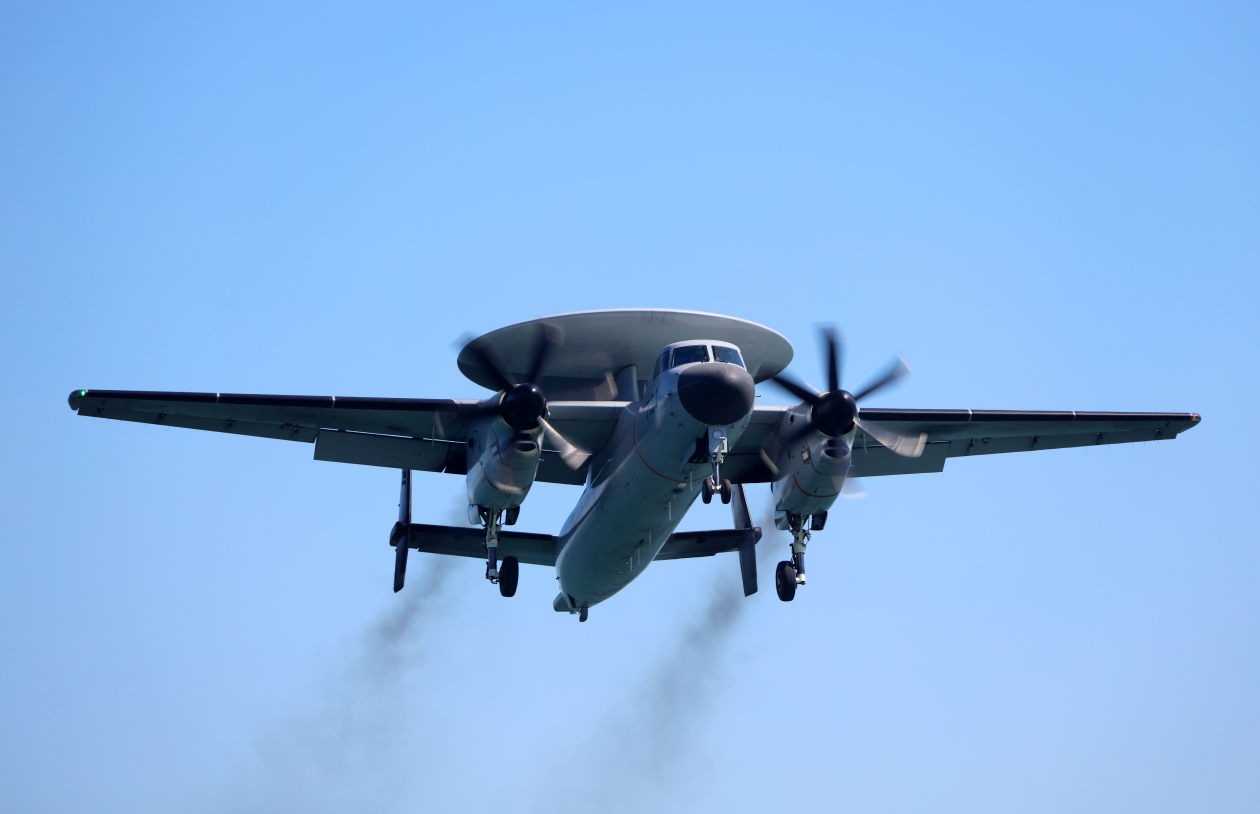
△ KJ-600 early warning aircraft
Not carrying missiles but equipped with a radar dish
Why is the early warning aircraft the "key player" in modern aerial combat?
The full name of the early warning aircraft is airborne command and early warning aircraft, which refers to an aircraft equipped with a complete set of long-range surveillance radar systems used to search and monitor aerial or maritime targets, command, and guide friendly aircraft to execute combat missions. Wang Yanan, editor-in-chief of Aviation Knowledge magazine, stated that the role of early warning aircraft is extremely important in modern warfare.
Wang Yanan: It is an information perception platform or hub that hovers in the sky. It can perceive all threatening electromagnetic radiation signals from the air and ground and classify these signals into various targets with different threat levels. Through the early warning aircraft's own communication capabilities, it can share this information and intelligence with various flight combat platforms across a wide airspace. To some extent, the side that possesses early warning aircraft or an early warning intelligence network can achieve "one-way transparency" in warfare.
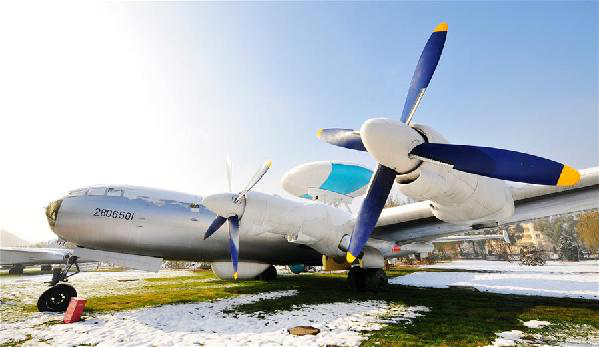
△ The first early warning aircraft developed by China—KJ-1, displayed at the China Aviation Museum
KJ-500 turns a "small size" into a "big capability"
To meet the needs of low-altitude early warning, China began developing KJ-1 in 1969. It successfully made its maiden flight in just 19 months in 1971. However, due to the high technical difficulty, development was halted in 1979. Subsequently, during the process of introducing early warning aircraft, China faced refusals from Western countries, prompting the country to begin independent research on early warning aircraft technology, successfully developing the KJ-2000 and KJ-200 large and medium-sized early warning aircraft.
Although development was completed, the miniaturization and digitization of early warning radar technology had not yet achieved breakthroughs. The Chinese Air and Naval Aviation urgently needed a new type of early warning aircraft with better performance than the KJ-200, while also being domestically produced, leading to the emergence of KJ-500. It not only carries the dish radar typically found on large early warning aircraft but also, through technological upgrades, enables the "small platform" to achieve "big early warning."
Military commentator Fu Qianshao: The key lies in the radar upgrade. Its radar consists of many TR components, each of which has a transmitting unit, a receiving unit, and a unit that controls the radar wave speed. To scan different angles as planned, a phase shifter is needed. The KJ-500's radar eliminates the phase shifter and relies entirely on digital control to adjust its scanning direction. As a result, the size of its TR components has decreased. Thus, under a relatively small radar aperture condition, the number of TR components it carries may even be slightly more.
In simple terms, the digital array radar technology equipped on the KJ-500 replaces the previously used analog devices, thereby reducing the system's weight and volume, allowing for more transceivers to be installed. This significantly enhances the detection capability of the KJ-500, even rivaling that of the KJ-2000.
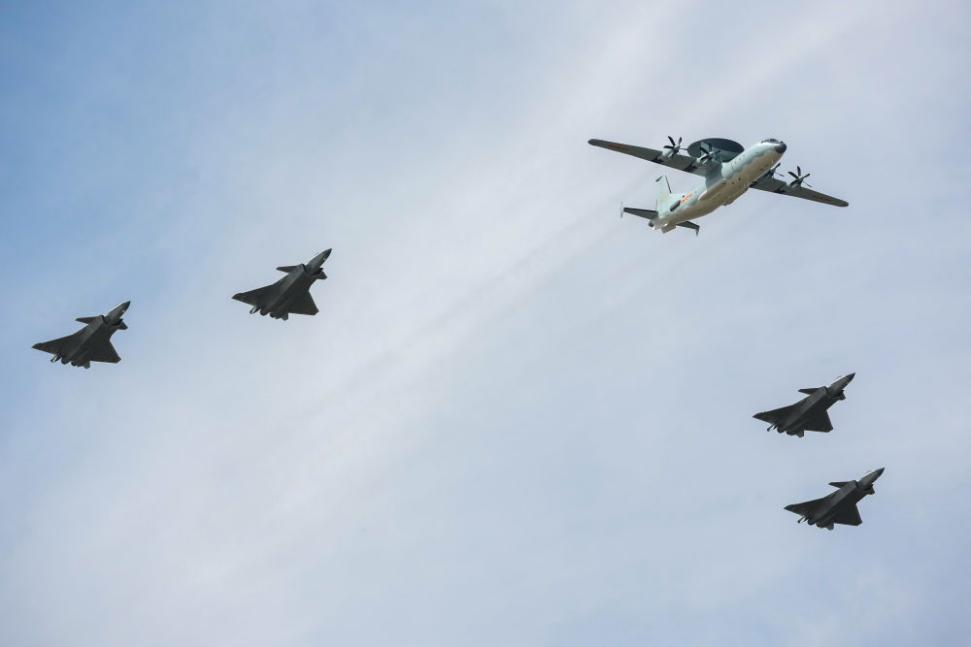
△ KJ-500 and J-20 formation at the 2025 Changchun Airshow
From 500 to 500A
Significantly increased endurance of the early warning aircraft
Having solved the radar issue, the KJ-500 also faced endurance pressure typical of medium-sized aircraft. Although China previously had refueling aircraft like the H-6, the fuel capacity was still too low for medium-sized aircraft like the KJ-500. In 2022, China launched its first large refueling aircraft, the YU-20, which allowed the KJ-500A, capable of aerial refueling, to officially debut.
Fu Qianshao: The combination of YU-20 and KJ-500A can be described as a match made in heaven, significantly increasing the loiter time of this early warning aircraft. If the KJ-500A receives multiple fuel replenishments, it can fly to more distant areas to perform aerial command and other corresponding tasks. In the past, due to shorter loiter time and range, it could not fly very far; now, if it can be refueled in the air, it can penetrate deep into the Western Pacific and South China Sea to carry out long-duration command missions, which is extremely significant.
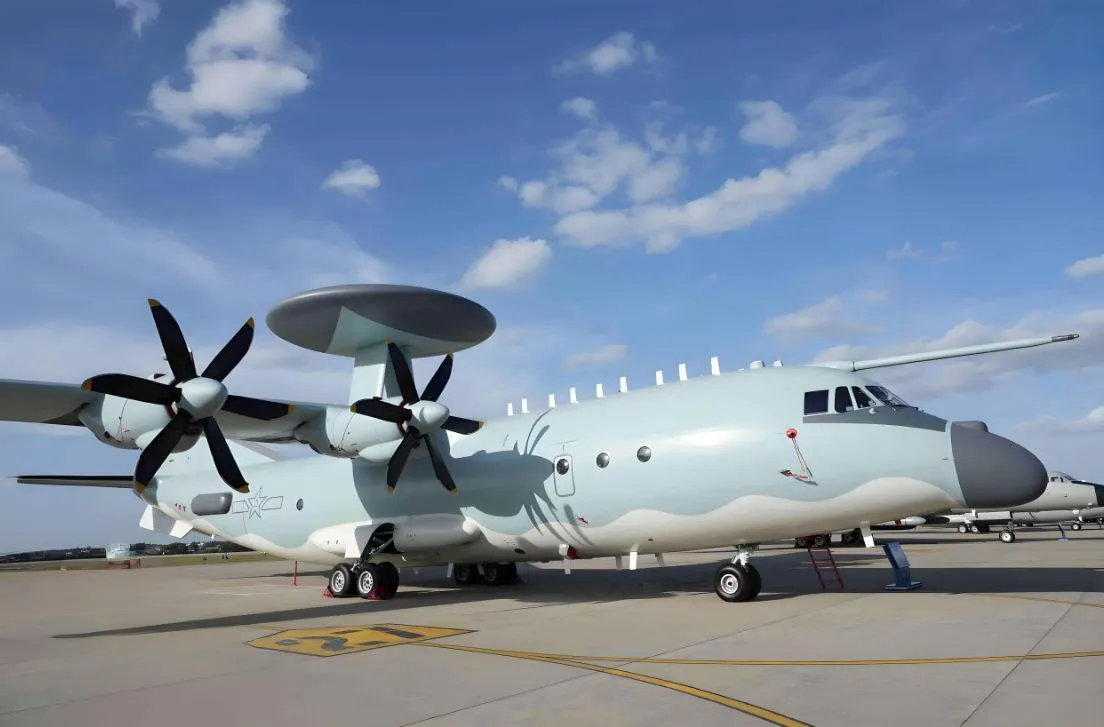
△ KJ-500A with aerial refueling capability
KJ-600 selected as part of the "Carrier Battle Group"
On May 9 of this year, a spokesperson for the Ministry of Defense responded to media reports about the "Carrier Battle Group," stating that it is an important part of forming the combat capability of carrier battle groups and a significant achievement in the People's Navy's accelerated transformation and construction. The "Carrier Battle Group" is a colloquial term used by military enthusiasts to describe the J-35 stealth carrier-based fighter, J-15T catapult carrier-based fighter, KJ-600 fixed-wing carrier-based early warning aircraft, J-15DT electronic warfare aircraft, and anti-submarine helicopters.
Among them, the KJ-600 integrates advanced radar and command systems into a small fixed-wing aircraft, allowing the entire carrier combat system to see further and providing the carrier-based aircraft force with a backbone for systematic and information-based operations. Geng Yansheng, director of the Aviation Industry First Aircraft Institute, stated in a previous interview that to meet the needs of deploying early warning aircraft on carriers, the team made improvements in many areas.
Geng Yansheng, Director of the Aviation Industry First Aircraft Institute: First, it must be able to take off and land on a ship. Compared to traditional land-based transport aircraft, its structural strength is greater, allowing it to withstand catapult launches from the deck. Another distinctive feature is the vertical tail; traditional aircraft generally have a single or double vertical tail, while the KJ-600 has four vertical tails, providing strong tail control capability.
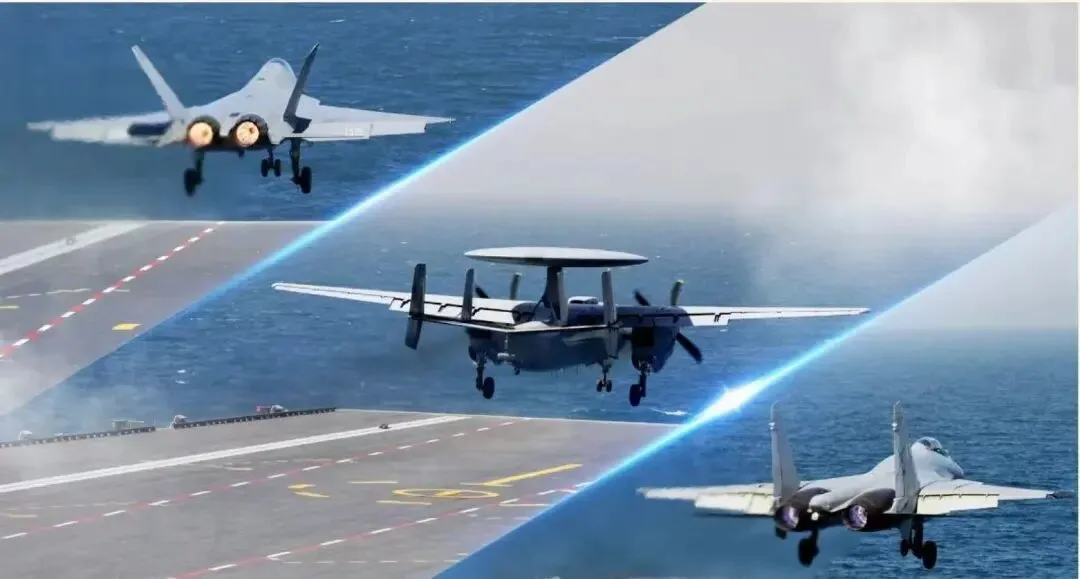
△ KJ-600 taking off from an aircraft carrier deck
In the future, no longer just a "commander"
Large drones are the direction
From KJ-1 to KJ-2000, KJ-200, and then to KJ-500 and KJ-600, the iteration of China's early warning aircraft has never stopped and is leading the Chinese Air Force to gradually establish a modern integrated air and space combat system based on strategic early warning capabilities. In the face of challenges from drone swarms and upgrades in stealth fighter technology, what will future early warning aircraft look like? Military expert Fu Qianshao told China Voice that there may be two development directions.
In the future, it is expected to be equipped with some self-defense weapons, such as laser weapons, electromagnetic pulse weapons, or air-to-air missiles mounted under the wings, to intercept threatening targets in real-time. As laser weapon technology improves, the weight of the launch device is decreasing, and the launch power is increasing, thus extending the interception range.
Another development direction is unmanned systems. If drones fly at high altitudes, it is very advantageous for detecting stealth aircraft. Because stealth fighters appear as a flat surface when viewed from above, their radar cross-section is quite large. In this context, developing large unmanned aircraft with long-range high-altitude early warning capabilities should be an important direction for the future.
Supervised by丨Wu Zhehua, Chen Yi
Reporters丨Pan Rong, Zhang Yifan
Video丨Wei Ran
China has developed and upgraded its early warning aircraft, starting with the KJ-1 in 1971. The KJ-500 features advanced radar technology, while the KJ-600 is now part of the aircraft carrier strike group. The introduction of the Yunyou-20 refueling aircraft enhances the operational range of the KJ-500A, allowing for extended missions in strategic areas.
- The first Chinese early warning aircraft, KJ-1, successfully flew in 1971.
- The KJ-500 has enhanced radar capabilities and can perform better than its predecessors.
- The KJ-600 is integrated into the aircraft carrier strike group as a key component.
- The Yunyou-20 refueling aircraft significantly increases the operational range of the KJ-500A.