
Hazelnut in 24 Hours with Kapustina Yara Shows the Limits of the Russian Threat 2026
 Dmitri Volkov
Oreshnik in 24 Hours from Kapustin Yar Shows the Limits of the Russian Threat 2026
A 24-hour warning sometimes speaks of the state of war more than the missile itself. On June 12, the Ukrainian Air Forces reported a high probability of a medium-range ballistic missile launch from the Kapustin Yar test site; ISW in its nighttime assessment expanded the risk window to 24–48 hours. If this is indeed about the Oreshnik, then we are not just witnessing another episode of missile terror. This is an attempt by Moscow to regain the language of strategic fear at a moment when the conventional operational picture has become less favorable for it.
Kapustin Yar Again Becomes a Political Platform
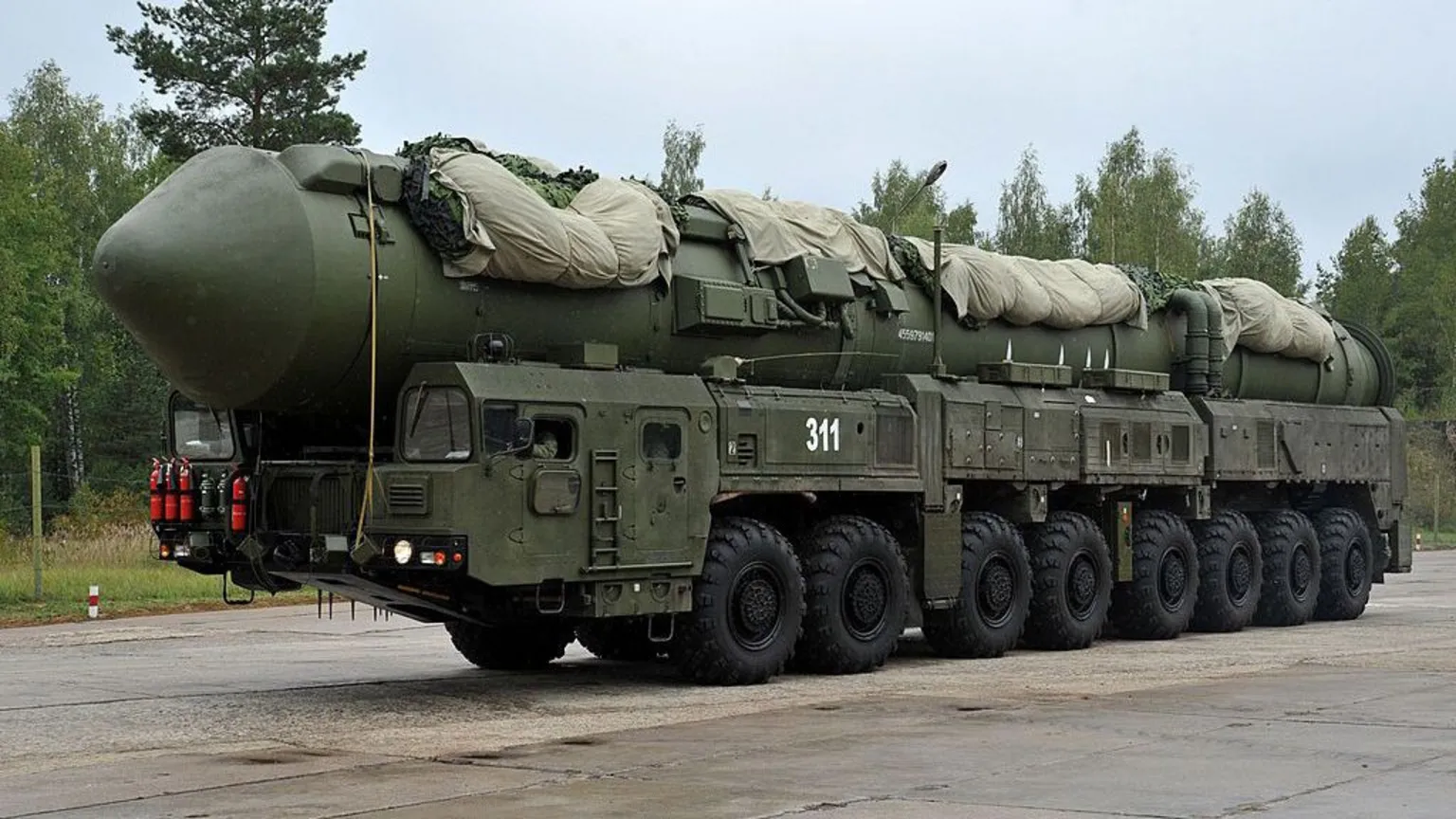
The Ukrainian warning was formulated cautiously: no specific model was named, but Kapustin Yar in the Astrakhan region was indicated. This location automatically leads analysts to the Oreshnik. According to Kyiv Independent, the missile has already been used by Russia three times during the full-scale war, with the last known launch occurring on May 24 against Bila Tserkva in the Kyiv region. Defence Express, for its part, reminded of an important detail: Putin himself has effectively described previous uses as test launches, which poorly aligns with the Russian propaganda legend of supposedly already proven combat weapons.
Here we see an old Soviet habit: when the operational result is unconvincing, the delivery system is demonstrated. In the late 1970s, such a symbol was the RSD-10 Pioneer missile, around which European missile panic and the diplomacy of the INF Treaty were built. The Oreshnik plays a similar role, but in a poorer technological and political environment. It is not a system of mass deployment with a clear organizational niche, but a weapon of signal. Its task is to make Kyiv, Washington, Berlin, and Warsaw discuss not Russia's loss of momentum on the front, but Russia's ability to strike with something that sounds almost nuclear.
Technical Logic and Propaganda Markup
The Oreshnik is usually described as a medium-range ballistic missile, likely related to the RS-26 Rubezh line. Ukrainian and Western assessments indicate a separating warhead: up to six warheads, theoretically capable of carrying several submunitions. Kyiv Independent reported the possibility of deploying up to 36 striking elements, although in previous strikes, according to Ukrainian data, inert rather than high-explosive warheads were used. This is more important than it seems. An inert payload turns the launch into a demonstration of trajectory and flight time, but not a full-fledged strike on an industrial target. In other words, the Kremlin buys political effect at the expense of a technical spectacle.
There is still a military sense to such a demonstration. A medium-range ballistic missile sharply reduces the reaction time of Ukrainian air defense and political leadership. It forces early warning systems, command posts, mobile groups, and Western missile defense suppliers to remain on high alert. Even if the target's defeat is limited, the very threat changes the country's schedule. This is the unpleasant rationality of the Oreshnik: it may be a poor tool for destroying a specific factory, but a good tool for psychological pressure and overloading civil defense procedures.
Why the Threat Emerged Right Now
The coincidence of the date would be too convenient an explanation. June 12 is Russia Day, and Putin was trying to publicly demonstrate military confidence during this period. ISW noted that he simultaneously praised Russian FPV drones, artificial intelligence in drones, tactical electronic warfare, and attempts to create a satellite alternative to Starlink, but also acknowledged that progress is not as fast as desired. This is a rare crack in the official language. The Russian president did not acknowledge the scale of the problem but was forced to recognize its existence.
Against this backdrop, the Oreshnik becomes not only a threat to Ukraine but also an internal political prop. Russia is experiencing strikes on its oil infrastructure, logistics in Crimea, facilities deep within its territory, and even on symbolic spaces around major cities. Recent Ukrainian long-range strikes on Cheboksary, Samara, Tatarstan, and Crimea have shown that Russian depth has ceased to be a rear in the Soviet sense. In such an environment, the Kremlin needs an image of reversible power: if Ukraine can reach the Volga, Russia can reach any Ukrainian city in minutes. This is not a strategy for victory. This is a strategy for compensation.
The Oreshnik Does Not Solve the Main Problem of the Russian Army
The main mistake in assessing such launches is to take rare expensive weapons as a response to a systemic crisis. The Russian army today needs not another symbolic carrier, but stable communication, protected logistics, trained infantry, normal interaction between artillery and intelligence, and the ability to turn tactical advances into operational results. ISW in the same assessment wrote about Kostiantynivka: Russian forces achieve local successes, but in the ten months since the capture of Toretsk, they have advanced about 8–10 kilometers and have not achieved a rapid breakthrough across the entire belt of fortifications. This is the real arithmetic of war, not the television trace of a ballistic missile.
Moreover, the production of such systems cannot be mass-produced at the pace of Shaheds or artillery shells. Each missile requires a complex solid-fuel base, navigation, thermal protection, testing infrastructure, and qualified personnel. After Ukrainian strikes on enterprises in the navigation and chemical chain, the Russian defense industry is forced to expend resources not only on production but also on protection. It is amusing, if one can say so about war: a state that frightened the world with high-precision wonder weapons is now sheltering factories with nets and cages, like tanks on the front line.
What a Possible Launch Means
If Russia does indeed launch the Oreshnik in the near window, it will primarily be a signal of intent to maintain the escalation initiative. The target may be military, infrastructural, or demonstrational, but the political function will be the same: to remind the West that the Russian war against Ukraine has a nuclear shadow, even when a non-nuclear warhead is used. This is why the response should be cool. Panic enhances the utility of the weapon; ignoring the threat is dangerous; accurate assessment reduces the cost of blackmail.
- Militarily, the Oreshnik complicates Ukrainian early warning and missile defense.
- Operationally, it does not replace worn-out infantry, weak logistics, and a lack of rapid breakthroughs.
- Politically, it serves as a response to the Ukrainian campaign of long-range strikes on Russian depth.
- Strategically, it brings back the language of medium-range missiles to the European war after the collapse of the INF Treaty regime.
The Oreshnik is dangerous not because it changes the balance of war with one strike. It is dangerous because Moscow is trying to turn a limited military tool into a permanent mechanism of strategic intimidation.
My forecast is simple and, unfortunately, unpleasant. Russia will use the Oreshnik rarely but loudly, linking each launch to dates, negotiations, or Ukrainian strikes on the Russian rear. This weapon will not give Moscow an operational breakthrough but will allow it to prolong the political uncertainty surrounding aid to Ukraine. The Russian army will not become stronger from one ballistic salvo. But Russian diplomacy of threats will gain another sound that the Kremlin will reproduce every time the front line fails to support its statements.
On June 12, the Ukrainian Air Force reported a high probability of a medium-range ballistic missile launch from Kapustin Yar, likely involving the Oreshnik missile. This missile has been previously used by Russia and is viewed as a political tool to exert psychological pressure amid military challenges. The situation reflects Russia's attempt to maintain an escalation initiative in the conflict.
- Ukrainian Air Force reported a high probability of a missile launch from Kapustin Yar on June 12.
- The missile in question is likely the Oreshnik, a medium-range ballistic missile.
- This missile has been used by Russia three times during the full-scale war, with the last launch on May 24.
- The launch is seen as a political signal amid ongoing military pressures on Russia.
- The Oreshnik missile is associated with psychological pressure rather than effective military strikes.