
Iran Tests the Strait of Hormuz with Drones and CENTCOM Responds with Tomahawks and Hellfires in June 2026
 Ahmed Al-Rashid
Iran Tests the Strait of Hormuz with Drones and CENTCOM Responds with Tomahawks and Hellfires in June 2026
On June 12, 2026, U.S. forces shot down two Iranian one-way attack drones after an attempt to strike commercial vessels transiting the Strait of Hormuz. This is not an isolated incident, but a new chapter in a pattern that emerged during the first week of June: drones targeting navigation, ballistic missiles towards Kuwait and Bahrain, and U.S. strikes on coastal radars and communication and air defense sites in Qeshm, Gork, and Sirik. Militarily, this is a form of warfare when neither side wants to declare a full-scale war but both want to adjust the terms of negotiation through fire.
The Recent Incident is Not Just a Tactical Interception
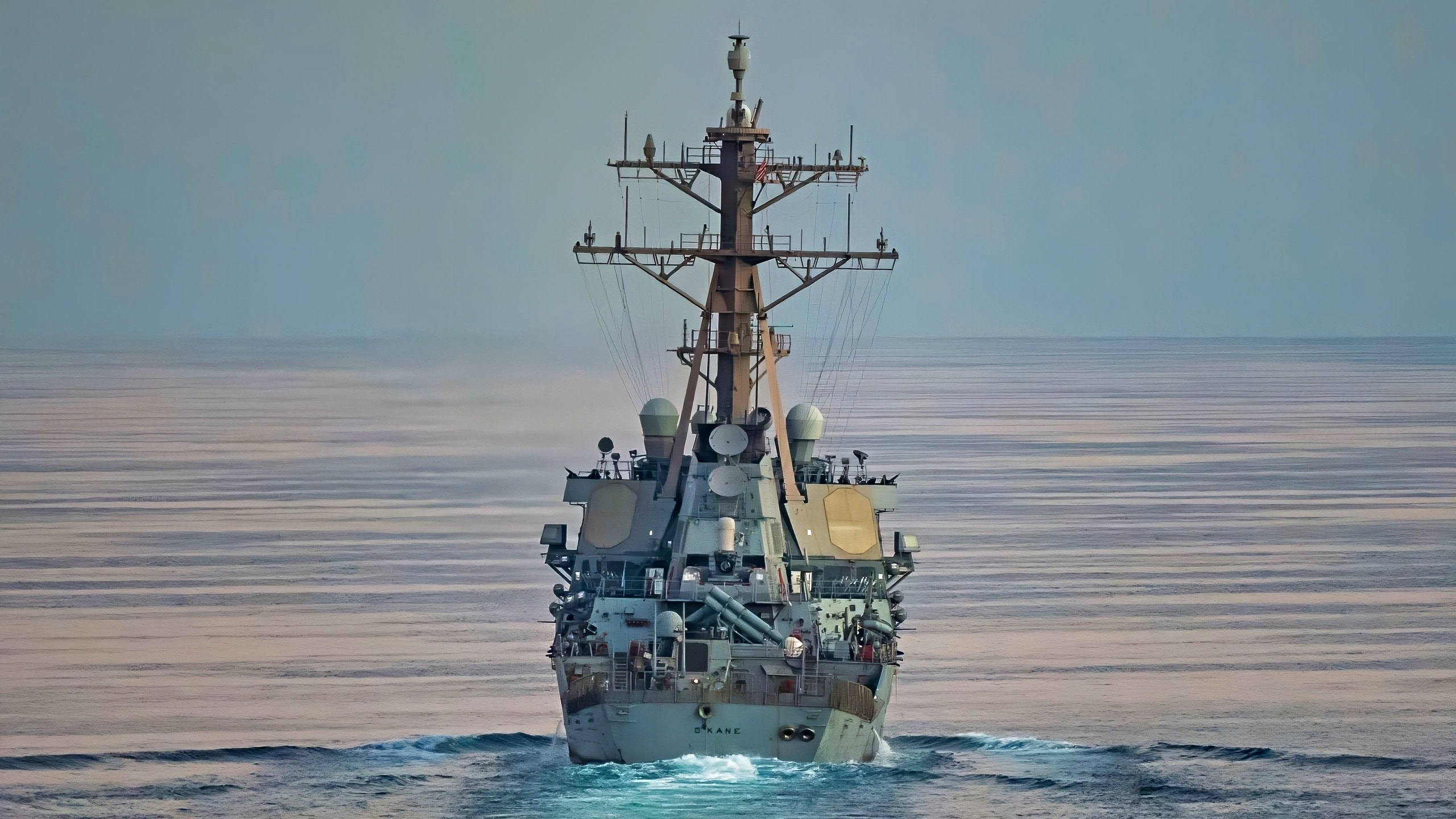
The significance of shooting down the two drones on June 12 does not lie in the number. Two drones do not change the naval balance of power between Iran and the United States. The importance lies in the target: transiting commercial vessels, not warships. When Tehran chooses this type of pressure, it is not seeking a classic naval victory, but rather raising the cost of passage and convincing insurance companies and ship owners that the political decision in Washington is not enough to make the strait safe.
On June 5, U.S. Central Command stated that Iran launched four attack drones towards the Strait of Hormuz, followed by seven ballistic missiles towards Kuwait and Bahrain. According to the U.S. statement, six missiles were intercepted, and the seventh failed to reach its target, after which U.S. forces struck Iranian coastal radar sites in Gork and Qeshm Island. On June 10, CENTCOM announced additional strikes against Iranian surveillance, communication, and air defense capabilities. This sequence illustrates that the engagement is no longer limited to intercepting a missile or drone, but has become a battle for the eyes of the Iranian coast.
Maritime Deterrence Has Turned into Managing a Narrow Passage
Any military personnel who has served in the region knows that the Strait of Hormuz does not need to be completely closed to become an effective pressure point. It is enough for a ship's captain to feel that the safe route changes every day, that drones may appear from the coast or islands, and that U.S. radars, warships, and aircraft are moving in the background. Before the war, dozens of ships passed daily through the strait. Recent commercial reports indicate a significantly lower passage rate than normal, even if the flow continues thanks to U.S. guidance and monitoring.
Here an important paradox emerges. Washington claims it does not officially escort ships, but provides advice, monitoring, and awareness of the maritime domain. In practice, this is more of a legal distinction than a military one. The commercial vessel that crosses while relying on U.S. radars, reconnaissance aircraft, and recommended routes from CENTCOM knows it is not passing alone. Iran knows this too, which is why it targets the gray area between official military escort and normal freedom of navigation.
Iran Uses Cheap Weapons Against an Expensive Defense System
The technical equation is harsh on Gulf states and the United States. The Iranian suicide drone, whether from the Shahed family or a locally directed maritime version, is relatively cheap and can be launched from scattered coastal points. Intercepting it requires layers of surveillance, fighter jets or helicopters or air defense missiles, and sometimes an immediate political decision because the target is civilian. There is no honor in spending an expensive missile to intercept a cheap drone, but it becomes necessary when an oil tanker or container ship is behind the drone.
The more dangerous aspect is that this equation reveals the limitations of Gulf spending on equipment alone. Saudi Arabia, the UAE, Kuwait, and Bahrain possess Patriot systems to varying degrees, and the UAE and Saudi Arabia have THAAD, while some countries have introduced Korean or European anti-aircraft and drone systems. However, true capability is not measured by the number of batteries in military parades, but by the speed of exchanging aerial and maritime imagery, and by the ability of officers to make a joint interception decision without waiting for a political signal from three capitals. Here our old saying returns: a sword without a steady hand is just polished iron.
U.S. Strikes on Qeshm and Gork Are a Message to the Gulf as Well
When the United States strikes radars in Qeshm or communication sites and the coast in Iran, it is not addressing Tehran alone. The message is directed at Gulf capitals that have been asking since February: Can Washington protect the passages if every crossing becomes a test? The current U.S. answer is yes, but at an increasing political and military cost. More than 200 U.S. aircraft and ships participated in the blockade and monitoring mission according to previous data, and dozens of vessels linked to Iranian ports have been diverted or disabled. This is a tremendous force, but it is not a sustainable model for regional security.
Practically, the longer this situation persists, the more the Gulf needs a joint maritime and aerial defense system, not separate deals purchased by each state to reassure itself. The sea does not recognize customs borders. A drone launched near Qeshm may threaten a tanker heading to the UAE, Kuwait, or Qatar, and a missile passing over Gulf waters does not ask whether the interception area is American or Bahraini. The problem is that Gulf politics is still slower than the speed of the aerial target.
What Does Tehran Really Want?
Tehran does not need to win an open naval battle. It wants to say that the Strait of Hormuz does not open solely by American decision, and that any agreement regarding sanctions, oil, or the nuclear program cannot be separated from practical control over the passage. Therefore, the attacks seem small but calculated. Two drones here, four there, missiles towards U.S. bases or Gulf neighbors, followed by denial or threats or talk of sovereignty. It is a language of pressure, not a language of resolution.
In contrast, Washington is trying to establish a counter equation: navigation continues, attacks are intercepted, and Iranian sensing sources are struck as needed. But this equation relies on the density of U.S. presence that no U.S. administration can maintain indefinitely. And if the Gulf wants to reduce dependence on external forces, this is the moment to ask about leadership, control, and joint training before inquiring about the next deal.
Conclusion
The incident on June 12 may seem small in daily news, but it reveals a greater danger: the Strait of Hormuz is transforming from a commercial passage into a daily testing ground between a cheap drone and an expensive defense system. Iran is betting on nerves and markets, while the United States is betting on technical superiority and rapid response, and the Gulf states stand between the two, possessing many assets but still lacking a single regional defense institution capable of managing the crisis on its own. Here lies the knot that cannot be solved by an additional Patriot battery or a new political statement.
Sources
- U.S. Central Command, CENTCOM Forces Defeat Missiles, Drones Launched by Iran, June 5, 2026.
- U.S. Central Command, U.S. Forces Complete Latest Strikes in Iran, June 10, 2026.
- U.S. Central Command, U.S. Forces Disable 3rd Oil Tanker Violating Blockade in Gulf of Oman, June 11, 2026.
- Iran International, US downs Iranian drones after attempted attack on ships in Hormuz, June 12, 2026.
- Air and Space Forces Magazine, Iran Fires Missiles, Drones After US Strikes Blockade-Busting Ship, June 2, 2026.
On June 12, 2026, U.S. Central Command shot down two Iranian one-way attack drones in the Hormuz Strait while they attempted to target commercial shipping. This incident follows a series of Iranian drone and missile launches aimed at regional targets, highlighting ongoing military tensions in the area.
- U.S. forces shot down two Iranian one-way attack drones on June 12, 2026.
- Iran launched four drones and seven ballistic missiles towards Kuwait and Bahrain on June 5, 2026.
- U.S. conducted strikes on Iranian radar and communication sites in Qeshm and Gork.
- Commercial shipping through the Hormuz Strait has decreased due to Iranian threats.
- The U.S. maintains a significant naval presence in the region.