
The New Focus of Japan-U.S.-Australia-India Naval Cooperation Shown by Malabar 2026
 Tanaka Takashi
New Focus of Japan-U.S.-Australia-India Naval Cooperation as Demonstrated by Malabar 2026
From November 5 to 12, Malabar 2026 is being conducted in the waters south of Kanto. According to the U.S. Naval Institute (USNI News), this is an annual exercise involving the navies of the United States, Japan, India, and Australia. The significance of this year lies in the fact that the exercise is taking place in waters close to the Japanese archipelago, rather than in the South China Sea or the Indian Ocean.
Confirming Maritime Traffic Routes in Southern Kanto
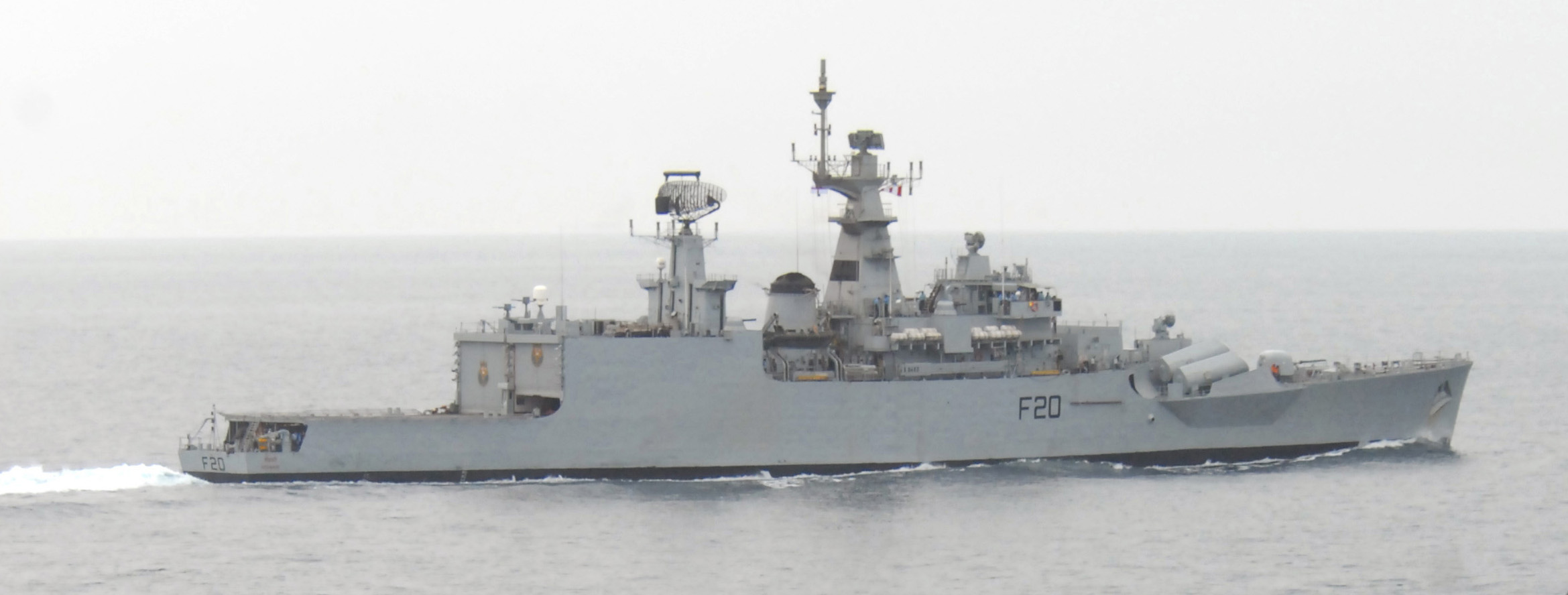
The INS Godavari (F20) shown in the photo is an older vessel and does not represent the ships participating in 2026. However, it serves as a suitable reference to understand that the essence of Malabar is not a competition of new versus old vessels, but rather the connection of situational awareness among different navies operating in the same waters. This aligns with recent training trends indicated by the Japan Maritime Self-Defense Force, suggesting that it serves as a venue to confirm anti-submarine warfare, anti-surface warfare, communications, and logistics as a continuous operation.
Separating Capability and Intent
For the Japan-U.S. alliance, the participation of India and Australia sends a political message. However, the gathering of vessels from four countries in the same waters does not mean the establishment of an integrated command like NATO. The rules of engagement, scope of information sharing, and logistics standards differ among the countries. Therefore, the success of the exercise should be measured not by the number of participating vessels, but by how quickly contact information is shared and to what extent commanders can view the same operational picture.
Japan's advantage lies in its ability to experience the operational procedures of the Indian Navy and the cooperative guidelines of the Royal Australian Navy in a broad area that includes the SLOC (Sea Lines of Communication) on the Pacific side, rather than focusing solely on the southwestern islands. The deterrent effect against the Chinese Navy arises more from the predictability that peacetime communications, logistics, and maintenance can be maintained during emergencies than from the exercise itself.
Overlooked Weaknesses
On the other hand, cooperation among the four countries over long distances increases the time needed for coordination as the number of participating nations grows. Particularly in submarine searches and merchant ship escorts, the challenge lies in how much sensitive data can be shared. In my view, the true test this time is not flashy shooting, but whether a joint situational picture can be reconstructed after bad weather or communication disruptions. The maritime cooperation among Japan, the U.S., Australia, and India is transitioning from the stage of merely displaying flags to connecting information in silent waters.
Main Sources of Information
The U.S. Navy, Japan Maritime Self-Defense Force, Indian Navy, and Royal Australian Navy are conducting the Malabar 2026 naval exercise in the Kanto South Sea from November 5 to 12, 2026. This exercise emphasizes anti-submarine and surface warfare, as well as logistics coordination among the four nations. The involvement of India and Australia highlights the political significance of their military cooperation in the region.
- Malabar 2026 is being conducted from November 5 to 12, 2026.
- The exercise involves the U.S., Japan, India, and Australia.
- The location is in the Kanto South Sea, near Japan.
- The exercise focuses on anti-submarine warfare, surface warfare, and logistics.
- The participation of India and Australia sends a political message regarding military cooperation.