
The ADF kills 17 civilians in Mambasa in 2026 — the Islamic State pushes towards the mines of Haut-Uele
 Marie Dubois
ADF kill 17 civilians in Mambasa in 2026 — Islamic State pushes towards the mines of Haut-Uele
On May 19, in Alima, in the territory of Mambasa, at least 17 civilians were killed in an attack attributed to the Allied Democratic Forces (ADF). The assailants reportedly then passed through Peleki, Manyama, and the surrounding areas, setting houses on fire before dispersing into two groups. This is not just another massacre in Ituri. It is a marker of movement.
Since the beginning of the year, the ADF are no longer just surviving between Beni, Irumu, and Mambasa. They are seeking escape routes to the north and west, where the Congolese army and the Ugandan army, engaged in Operation Shujaa since 2021, have more difficulty maintaining constant pressure. In this type of forested terrain, a light unit does not need to control a town to change the equation. It just needs to cross a road, cut a market axis, capture porters, and force civilians to empty the villages.
Alima and RN44 become a warning signal
Local testimonies cited after the attack indicate that the fighters crossed National Road 44 on the Biakato-Mambasa axis, near Alima, before separating. This precision matters. RN44 is not an abstract line on a map; it is a corridor for motorcycles, supplies, small trade, and civilian intelligence. When the ADF can pass through it, even briefly, they demonstrate that the Mambasa area is not only being hit from its margins. It is being penetrated.
On May 8, local and security sources were already reporting at least 36 deaths in ADF attacks between North Kivu and Ituri, including 15 in Biakato. On May 19, Alima adds a new layer to this sequence. The figures remain provisional, and it must be said clearly: in these villages, the actual toll often arrives several days late, when families emerge from the fields or when local leaders manage to count the missing.
The operational logic is known. The ADF avoid frontal combat when they can. They strike civilians, small axes, markets, weak convoys. They take hostages, burn houses, and force the population to move. This movement produces two military effects. It creates intelligence through fear, as everyone must negotiate their passage. It also overloads the FARDC and their Ugandan partners, who must protect scattered points instead of concentrating their resources.
Haut-Uele is no longer a comfortable periphery
On April 30, the FARDC announced that they had repelled an ADF incursion at Suka na Mboka, in the territory of Watsa, Haut-Uele province. According to Congolese press, the fighting displaced residents to nearby localities. ACLED notes that this violence in Suka na Mboka is about 50 kilometers north of the border with Ituri and that the ADF had not conducted actions this far north in 15 years.
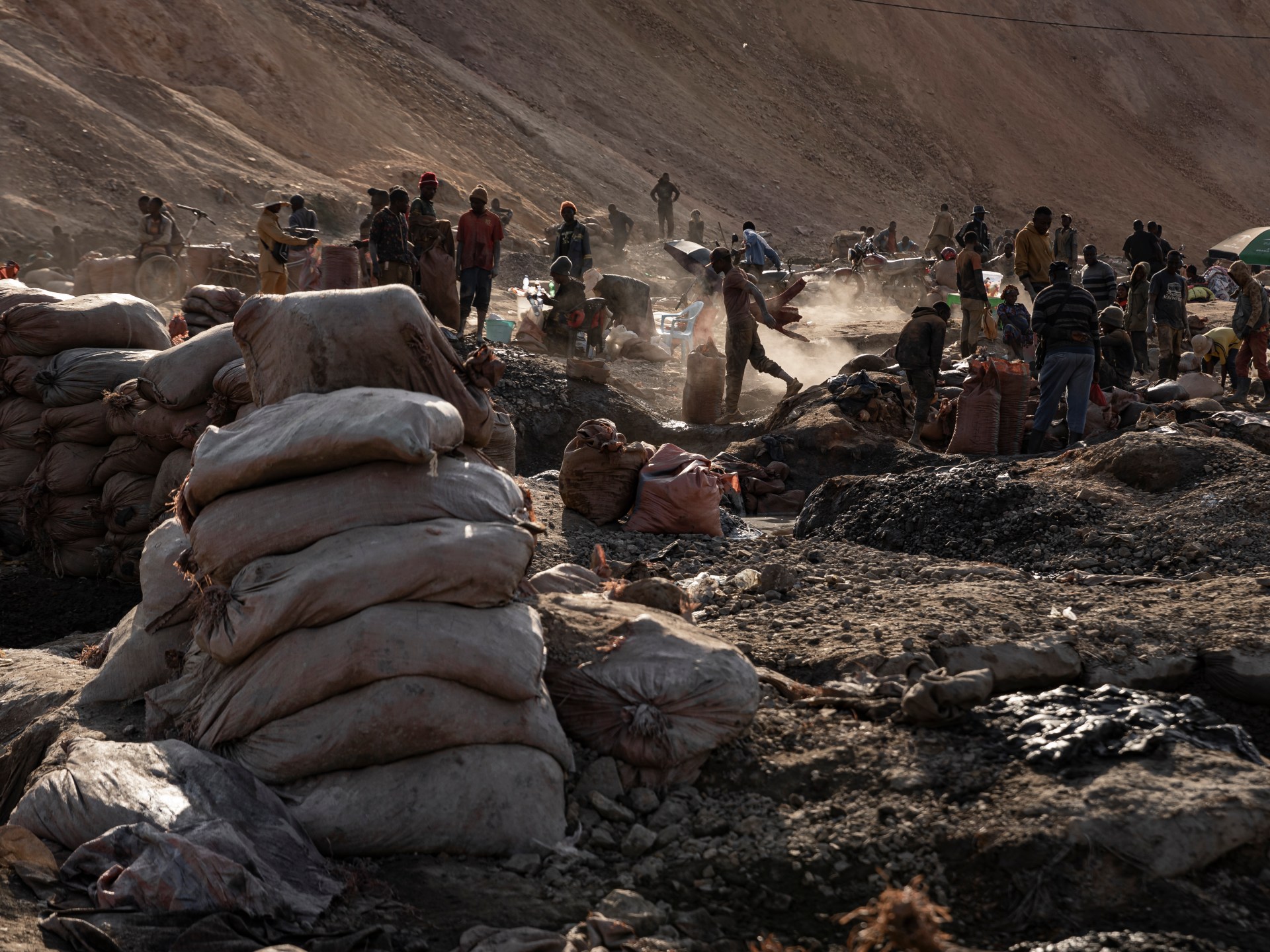
This detail changes the strategic reading. Haut-Uele is often viewed as a calmer rear area than Ituri or North Kivu. However, it contains useful roads, deep forest areas, and above all, the Kibali gold sector, one of the largest gold mines in Africa. On the ground, an industrial mine is never just a fence and a security post. It is a chain of subcontractors, workers, transporters, small counters, fuel, and food. Each link is easier to intimidate than the main site.
Reuters reported on May 19 that Barrick had strengthened Ebola controls at Kibali after an outbreak appeared in neighboring Ituri, with no cases reported among workers. Health information is not separate from the security problem. The mines and markets of eastern Congo thrive on mobility. When an epidemic requires movement control and an insurgency forces civilians to flee, the two crises reinforce each other. It is a very bad combination.
Operation Shujaa pushes the ADF but does not fix them
Operation Shujaa has achieved real tactical results since 2021. Camps have been struck, axes have been swept, and pressure has prevented the ADF from turning certain areas into quiet sanctuaries. But there is a difference between pushing a group and fixing it. In the Mambasa forest, a dispersed adversary can lose a depot and retain its capacity for nuisance if its commanders maintain guides, caches, recruiters, and hostages.
Ebuteli and the Kivu Security Barometer have documented a sharp increase in kidnappings in March 2026, with over 400 civilians abducted by the ADF in the territory of Mambasa. Some hostages have been released, others held for ransom. This system is not ancillary. It finances mobility, provides porters, and punishes communities that cooperate with the state. In a bush war, kidnapping often replaces regular logistics.
The ADF's affiliation with the Islamic State since 2019 gives this dynamic a broader scope. Amaq has presented the activity towards Haut-Uele as an operational extension. One must remain cautious with jihadist propaganda: it often inflates successes and simplifies local realities. But when a claim overlaps with movements observed by local actors, it deserves to be taken seriously. Here, the signal is coherent.
The immediate risk lies on secondary roads
The temptation for Kinshasa will be to first look at the big names: M23, Goma, Bukavu, Rubaya, Kibali. This is understandable. But the ADF rarely win through a spectacular clash against a symbolic target. They win when secondary roads become too dangerous for farmers, motorcyclists, nurses, mining agents, and tax collectors. Then the state remains present on paper but absent in everyday life.
The point to watch in the coming weeks is therefore not just a direct attack on Kibali. That would be possible but costly for the ADF. The more likely scenario is a gradual pressure around the Mambasa-Biakato, Mambasa-Isiro axes, and the paths leading up to Watsa. Ambushes, kidnappings, fake roadblocks, village burnings. Nothing very spectacular from afar. Very effective from the ground.
If the FARDC and the UPDF want to prevent this expansion, they will need to do more than retake villages after the assailants have passed. They will need to hold the crossroads, protect weekly markets, restore a night presence, and maintain contact with local leaders without exposing them. It is slow, thankless, and does not produce beautiful press releases. But from experience, this is where this type of war is lost or stabilized.
The danger is not that the ADF will take Haut-Uele tomorrow morning. The danger is that they will make the roads around Mambasa and Watsa impassable long enough to transform a previously peripheral province into a new zone of predation.
Sources
- HumAngle, report from May 21, 2026, on the Alima and Manyama attack in the territory of Mambasa.
- ACLED, Africa Overview May 2026, on the ADF's movement towards Haut-Uele and Suka na Mboka.
- Ebuteli/Kivu Security Tracker, April 2026 report on record kidnappings and progress towards Haut-Uele.
- 7sur7.cd, report from May 1, 2026, on the repelled incursion at Watsa.
- Reuters via MarketScreener, May 19, 2026, on Ebola measures at Kibali Gold Mine.
On May 19, 2026, the Allied Democratic Forces (ADF) killed at least 17 civilians in an attack in Alima, Mambasa. The assailants subsequently moved through Peleki and Manyama, setting homes ablaze. This incident marks a significant escalation in ADF activities, as they seek to establish escape routes in the region, indicating a shift in their operational strategy.
- 17 civilians killed in an ADF attack in Alima on May 19, 2026.
- ADF fighters moved through Peleki and Manyama, burning homes and dispersing into two groups.
- The ADF is seeking escape routes to the north and west, avoiding direct confrontation.
- Local testimonies confirm ADF crossing National Road 44, indicating operational penetration into Mambasa.
- The ADF has been linked to increased kidnappings and violence in the region.