
The American Economic Downturn Against Iran Drives the UAE to Cut Financial Ties with Tehran, and 374 Million Barrels Reveal the Depth of Exchange
 Ahmed Al-Rashid
The American Economic Assault Against Iran Forces the UAE to Cut Financial Ties with Tehran, and 374 Million Barrels Reveal the Depth of Exchange
On Wednesday, August 19, U.S. President Donald Trump announced what he described as "the toughest economic operation ever" against Iran, threatening to punish any country that provides a "lifeline" to Tehran. This came just hours after the UAE announced the suspension of all financial relations with Iran, accusing it of launching two ballistic missiles towards its territorial waters — an accusation that Tehran denied, calling it a "false science operation." In his message on the "Truth Social" platform, Trump wrote: "Oil smuggling, swap lines, cash transfers, currency exchange companies, ship records, and shell companies — all of this must stop now. You know who you are. This will be a day of economic landing."
374 Million Barrels in the Sixty-Day Window
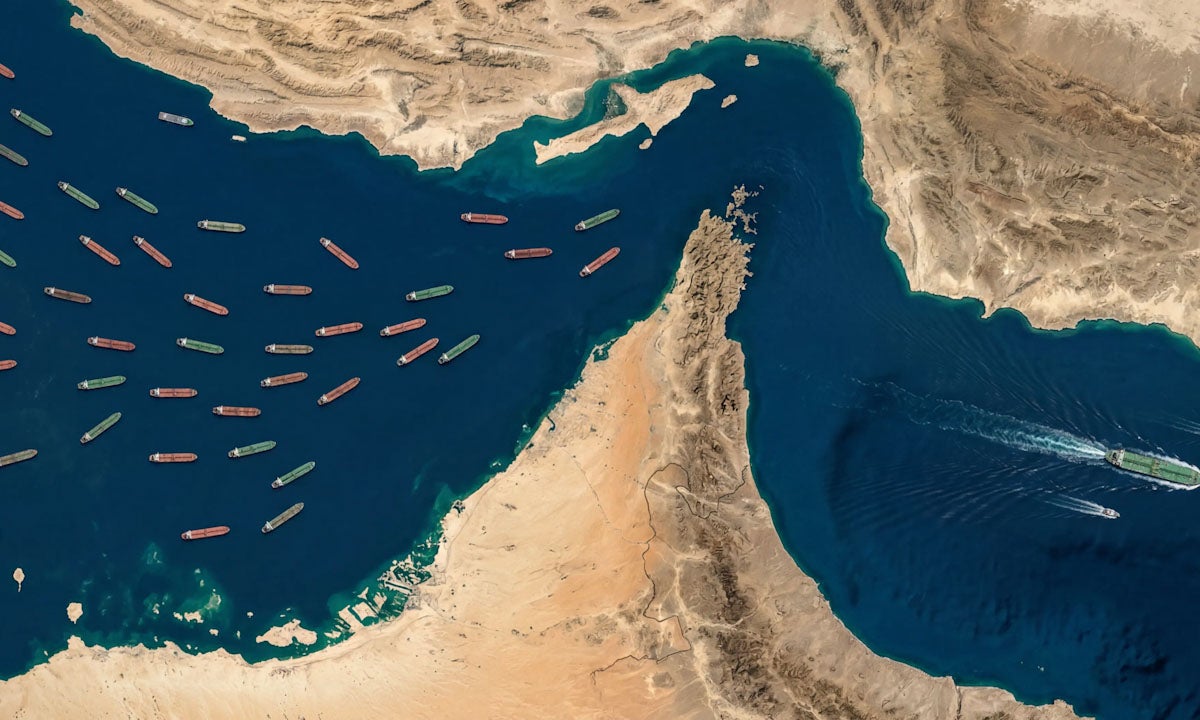
The figures published by "Kpler," an oil movement analysis company, on Thursday, August 20, put things into their real context. During the period of the U.S.-Iranian memorandum of understanding, which ended on Monday without a peace agreement, approximately 374 million barrels left the Gulf, equivalent to 6.1 million barrels per day, compared to 2.3 million barrels per day before the memorandum was signed on June 17. While these quantities do not exceed 40 percent of the approximately 15 million barrels that crossed the Strait of Hormuz daily in 2025, the number proves one thing: everyone was trading. Emmanuel Belostreino from Kpler states that more than half of the shipments occurred in the first three weeks of the agreement, and "by the end of the period, the flow was thinner and darker, accumulating again behind the choke point." The phrase "darker" is not a literary metaphor — it is a technical description of shipments evading U.S. scrutiny through blending and loading at sea.
Abu Dhabi's Decision Was Financial, Not Military
The UAE, Iran's primary trading partner in the Gulf, was one of the main targets of Trump's message. Nader Habibi, an economics professor at Brandeis University, says that Washington "encouraged or strongly urged" the UAE to impose the trade blockade, referring to a phone call on Tuesday between Secretary of State Marco Rubio and UAE National Security Advisor Sheikh Tahnoun bin Zayed. The key difference here is that the announced coalition of fifteen maritime nations led by Saudi Arabia remains largely a paper agreement, while cutting financial ties between Dubai and Tehran is an actual executive decision affecting a commercial structure built over four decades. Dubai was Iran's commercial window to the world: a large Iranian business community, currency exchange companies, and re-export networks. Practically, the value of this decision is not measured in missiles but in the thousands of companies that will now have to rearrange their routes.
Who’s Next? China, Iraq, and Turkey
Trump's threat includes "any country that allows its financial institutions, companies, airports, or government entities to provide any type of lifeline to Iran." The targeted names are well-known: China, where independent "tea" refineries still buy Iranian oil, and Iraq and Turkey. However, Habibi acknowledges that Washington will find it difficult to tighten control over land trade with Turkey, Iraq, and Central Asia. Brett Erikson from Obsidian Risk believes that sanctions against Chinese banks are "the most dangerous lever Trump can pull," but he reminds that "the most effective restrictions are those that have not yet been used, as their use involves significant risks," and the most important constraint is time: "The economic war on Iran needs not just results, but quick results."
A Military Reading of an Economic Decision
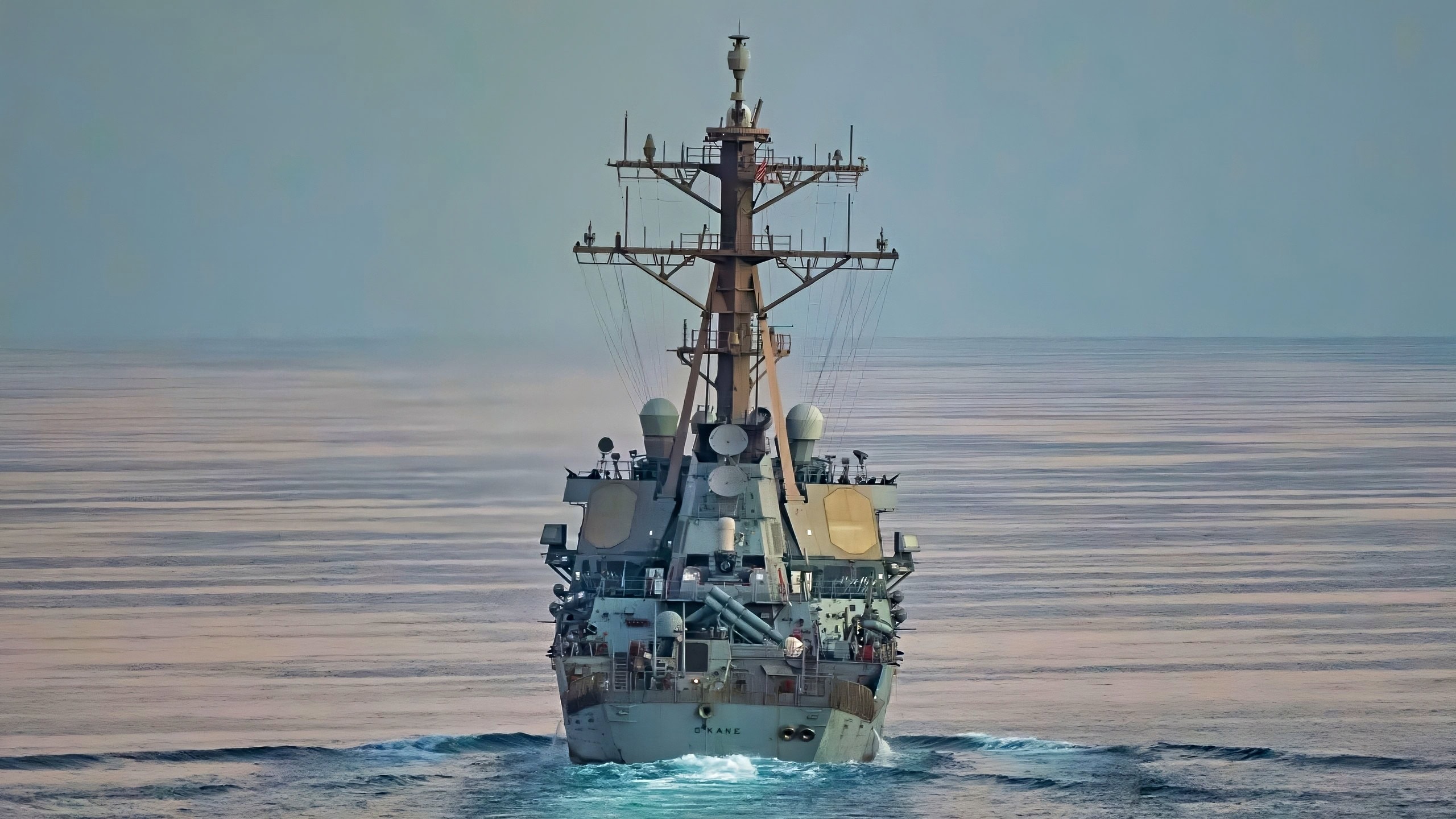
Any officer who has served in the region knows that wars do not end where they began. Since February, Washington has been waging a campaign of "economic wrath" — sanctions on Iranian oil, shipping, and financial sectors, and a maritime blockade on ports — but the most important economic front was not in the Gulf but in Dubai. Gulf countries have spent tens of billions on Patriot and THAAD systems, only to discover that the weakest point in their security was not in the sky but in the trade balance. This is my old problem with the triangle of power: equipment × training × institutions. The Gulf bought the first leg lavishly, neglecting the second and third, and today it is paying the price in the form of decisions imposed by Washington rather than made by itself. As military personnel say: amateurs study tactics, professionals study logistics — and this entire war is logistics.
Tehran, for its part, pretends to be unfazed. Foreign Minister Abbas Araghchi described the campaign as "a diversion from America's internal crisis: unprecedented debt and rising interest costs," and stated that "U.S. economic terrorism threatens the global economy and the sovereignty of nations." The Tasnim agency reported that the announcement "is not a new development" and that Tehran "has learned how to circumvent these restrictions and has become very skilled at it." In my estimation, this is partially true — Tehran has four decades of experience in evading sanctions. But the problem is not Iran's ability to adapt; rather, a decision like the UAE's closes an entire channel, and every closed channel raises the cost of evasion and shortens the lifespan of any new arrangement.
The Gulf Paradox
On the ground, the cost of war continues. Five commercial ships were attacked in the Strait last week, and at least one sailor was killed — the first confirmed death since July — aboard the Liberian-flagged cargo ship "Minwan Dineti," while at least 18 sailors have been killed in attacks on commercial vessels since the war began in late February, according to the International Maritime Organization. The number of ship crossings dropped from 91 to 73 between August 10 and 16, and Brent crude rose to about $92 per barrel. The market, in short, is not convinced that the Strait of Hormuz is safe.
The dilemma facing the Gulf can no longer be postponed: the American protection contract cannot be reconciled with Iranian trade calculations. Washington no longer accepts the gray area that has been the basis of Gulf stability for forty years.
The most dangerous phrase in Trump's message is "You know who you are" — directed at those who were trading with Tehran during the memorandum period under the guise of a "truce." Kpler's figures have shown that flows tripled in sixty days, meaning that a large part of the Gulf-Iranian trade system was operating under Washington's watch, and now Washington says the page has turned. Practically, this means that the Gulf faces a choice it can no longer afford to postpone: either it builds real economic alternatives to its relationship with Tehran, or it accepts that its economic security is hostage to decisions made in Washington and Beijing.
The final paradox is that the war on Iran, which began with fleets and missiles in February, has reached a stage where it is being decided by checks, ship records, and currency exchange numbers. Gulf countries that thought they had bought security with weapons are discovering that the final bill for this war is being paid in boardrooms, not in operations rooms. And the question that no one has yet answered: Can the Gulf disentangle its economic ties from Iran faster than Tehran can build new smuggling channels?
On August 19, 2023, the U.S. imposed severe economic sanctions on Iran, prompting the UAE to sever financial ties with Tehran. The sanctions are described as the toughest ever, with the UAE accusing Iran of launching ballistic missiles. During the sanctions period, 374 million barrels of oil were reported to have left the Gulf, indicating significant trade activity despite the restrictions.
- The U.S. announced the toughest economic sanctions against Iran on August 19, 2023.
- The UAE suspended all financial relations with Iran, accusing it of launching ballistic missiles.
- 374 million barrels of oil were reported to have left the Gulf during the sanctions period.
- The sanctions are part of a broader economic campaign against Iran, affecting its trade relationships.