
The Army wants an unmanned ground vehicle to evacuate wounded and resupply the front line
Source: Task & Purpose
Loading...Strong SignalCredibility: 81%
Report Content
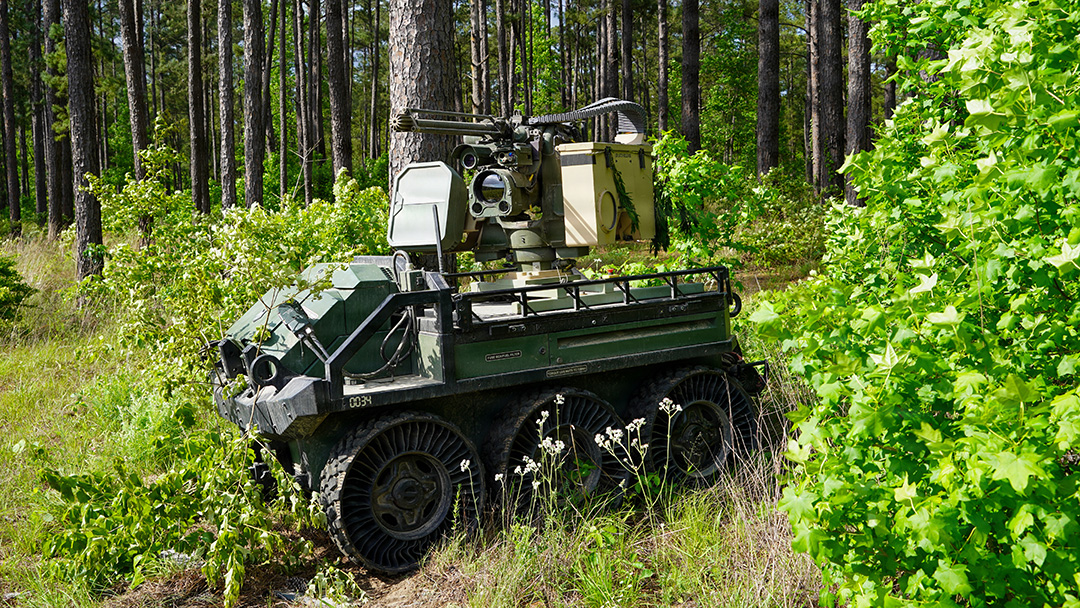
The Army wants to get a new ground drone that can both resupply forward-deployed infantry and help carry wounded soldiers off the front lines and to medical treatment.
The Army is seeking the new vehicle to help navigate what it calls the “last tactical mile,” the last part of terrain leading to the front lines, where any transport or personnel moving to resupply troops are under the greatest threat. “This phase is often the most dangerous and logistically complex, requiring innovative solutions to ensure mission success and force protection,” the Army wrote. Now, the Army is hoping that a modular UGV can fill that role in a way that reduces the risk to soldiers, according to a new solicitation on sam.gov posted on Thursday.
The new ask, from the Army’s Capability Program Executive for Mission Autonomy, calls for a dual-purpose vehicle that can safely bring needed supplies across that and be reconfigured by soldiers on the ground to transport at least two wounded soldiers. Defense Scoop first spotted and reported on the solicitation.
Top Stories This Week
“The modern battlefield is characterized by persistent enemy surveillance and rapid application of lethal effects at and behind the forward line of troops (FLOT), making any movement to and from the FLOT highly vulnerable,” the Army wrote in the solicitation. “This environment challenges commanders’ ability to resupply units and evacuate casualties.”
According to the Army, this new drone would support a dismounted rifle platoon or a company headquarters “for extended operations.” It must also be big enough to move at least two wounded soldiers from the front lines to a casualty collection point.
It should also be able to navigate on- and off-road, with minimal emissions and other signals that can be picked up by enemy forces. On the supply side of its dual role, the Army wants it to be able to carry cargo but also power and data connections to infantry that increasingly is using electronic devices.
The Army has tested and utilized several uncrewed ground vehicles in recent years, alongside tests of aerial drones and loitering munitions. Meanwhile the ongoing war in Ukraine, which has seen rapid advances in tactics for using and countering drones that have informed American planning around them, has also shown how those large-scale fights can devolve into static and bloody trench warfare. Alongside its wider push to adopt drones on scale for combat operations, the Army is also looking at ways to use autonomous or remote controlled vehicles to help with logistics and sustainment, including modified helicopters that do away with cockpits.
The Army has also been looking at ways to get medical supplies to field medics quickly and safely, including testing out deliveries via aerial drones. In an exercise last year, the 173rd Airborne Brigade was able to quickly transport blood supplies using drones, cutting down on time and the risk to medical personnel. A surgeon told Task & Purpose at the time that the test was also a step towards using drones to evacuate wounded to field hospitals, the kind of task the Army is now hoping to achieve.
The post The Army wants an unmanned ground vehicle to evacuate wounded and resupply the front line appeared first on Task & Purpose.
Classification
Region
North America
Analytical Domain
Operational
Primary Category / Secondary Categories
Weapons & Equipment / Logistics
Subcategory
New Weapon System
SALUTE Report
Size
Not specified
Activity
The Army is seeking a new unmanned ground vehicle (UGV) to evacuate wounded soldiers and resupply troops at the front lines.
Location
United States
Unit
U.S. Army
Time
Current
Equipment
unmanned ground vehicle (UGV)dronesaerial drones
Summary
The U.S. Army is developing a new unmanned ground vehicle (UGV) to assist in evacuating wounded soldiers and resupplying troops at the front lines. This dual-purpose vehicle aims to navigate the dangerous 'last tactical mile' and must be capable of transporting at least two wounded soldiers while minimizing emissions. The initiative reflects lessons learned from ongoing conflicts, particularly in Ukraine, regarding the use of drones in military operations.
Key Facts
- The Army is developing a dual-purpose unmanned ground vehicle (UGV) for resupply and casualty evacuation.
- The UGV must be able to transport at least two wounded soldiers.
- The vehicle should navigate on- and off-road with minimal emissions to avoid detection.
- The Army has tested various uncrewed ground vehicles and is looking to enhance logistics and sustainment operations.
- The ongoing war in Ukraine has influenced U.S. Army planning regarding drone usage.