
The Army wants more pilots to apply for its special operations helicopter regiment. Here’s why

Source: Task & Purpose
Loading...Strong SignalCredibility: 81%
Report Content
An elite Army helicopter unit reduced its eligibility requirements in order to widen the pool of pilots who can apply to join.
On Wednesday, Army Special Operations Command announced on Instagram that pilots no longer have to hit a minimum number of hours as pilot-in-command, or PC, to apply for the 160th Special Operations Aviation Regiment (SOAR). The previous minimum was 50 hours as PC and 500 total flight hours, but now all designated PCs can apply, a spokesman for the command told Task & Purpose.
“Time is no longer in your way,” the command wrote in its post. “Assessment awaits.”
While the move boosts the number of eligible applicants for the 160th Special Operations Aviation Regiment, one career Black Hawk helicopter pilot said it is also the latest symptom of a years-long decline in experience levels across Army aviation as flight hours dwindle, helicopters are divested, and the service pivots to uncrewed aircraft.
“I don’t think it’s going to cause any problems downstream yet: they [160th SOAR] are still going to make the same high-quality pilots through their training system,” said the pilot, a chief warrant officer four who spoke on the condition of anonymity. “It’s just that the pool is drying up.”
Night Stalkers
The 160th SOAR, also known as “Night Stalkers,” fly heavily-modified helicopters in support of special operations ground troops, often at night and on short notice.
The regiment reputedly has some of the best aviators in the Army and is called on when that experience is needed. That was on display in January when SOAR crews flew Delta Force commandos in and out of Caracas under fire to capture Venezuelan President Nicolás Maduro.
With high-stakes missions like that to perform, the regiment has its own two-to-three-year training pipeline to get new pilots fully mission-qualified. But just to be eligible, applicants typically had to fly a certain number of hours as designated pilot-in-command, or PC for short.
Becoming PC is itself a grueling process, often requiring hundreds of flight hours across years of service, a review board and a checkride overseen by the pilot’s commander.
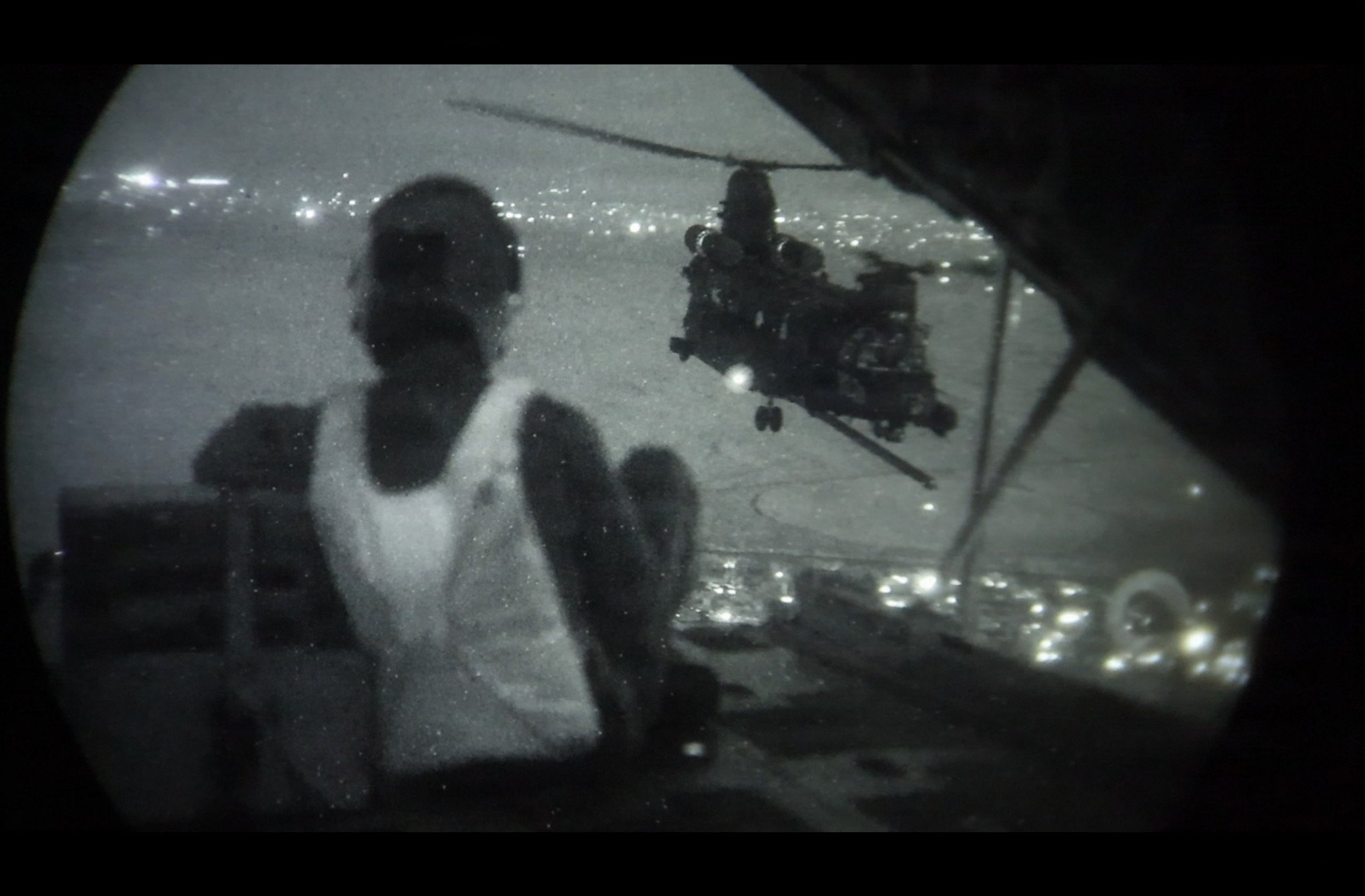 A Marine Corps KC-130J Super Hercules refuels an Army MH-47G Chinook helicopter assigned to the 160th Special Operations Aviation Regiment over Washington, Aug. 20, 2026. Marine Corps photo by Cpl. Cecilia Campbell.
Low time
In the past, a pilot might need 500 or even 1,000 PC hours to apply for the 160th SOAR, the chief warrant officer said. Such pilots were easier to find during the Global War on Terror, with Army aviators stacking hours over repeated deployments to the Middle East.
But things began to change around 2014, when a surge in airline hiring lured many experienced Army pilots with the promise of not having to deploy to a war zone every other year. The Army backfilled with a wave of new aviators, the chief warrant officer said, but that left a younger force without as many older hands to guide them.
The Army’s aerial fleet also shrank from about 5,000 manned aircraft (most of which are helicopters) in the year 2000 to about 3,900 in 2023.
The cuts accelerated in 2025, when the Army announced it would divest hundreds of helicopters and thousands of aviation jobs. Officials cited the aircraft class’ apparent vulnerability in the Russia-Ukraine war and promised swarms of unmanned drones to take their place, though experts say crewed helicopters offer a frontline decision-making advantage that drones simply can’t replace.
Top Stories This Week
Meanwhile, flight hour funding–the pot of money that covers the cost of fuel and the man-hours to fly and maintain aircraft–has also decreased year by year, the chief warrant officer said, which means more Army pilots require waivers so they don’t have to hit their annual flight hour minimums.
The end result of all these changes is that there are not enough Army aviators with the experience that the 160th SOAR used to require.
“I’ve been watching this build since 2015, 2016,” the Black Hawk pilot said. “And to finally see organizations like the 160th say ‘hey look, you just need to be a PC’ … I would call that the bare minimum.”
Impact
Despite the changes, the Black Hawk pilot we spoke with said they do not expect to see an impact on front-line performance for the 160th SOAR in the near future. Just because more pilots apply it doesn’t change the regiment’s grueling assessment and training process, he said.
But he did warn that over time, as Global War on Terror veterans retire and the number of pilots decline overall, the Army may not have enough talent to sustain a meaningful helicopter force. The Black Hawk pilot likened it to having enough water in a water tower.
“Your reservoir is getting lower and lower, and you still want that drinkable water in that water tower, but it’s going to get harder and harder to find it as that reservoir gets smaller and smaller.”
The post The Army wants more pilots to apply for its special operations helicopter regiment. Here’s why appeared first on Task & Purpose.
Classification
Region
North America
Analytical Domain
Strategic
Primary Category / Secondary Categories
Political-Military / Military Operations
SALUTE Report
Size
Not specified
Activity
The Army Special Operations Command announced reduced eligibility requirements for pilots to apply for the 160th Special Operations Aviation Regiment (SOAR).
Location
Washington
Unit
160th Special Operations Aviation Regiment (SOAR), U.S. Army
Time
Announced on Wednesday
Equipment
helicoptersuncrewed aircraft
Summary
The Army Special Operations Command announced a reduction in eligibility requirements for pilots applying to the 160th Special Operations Aviation Regiment (SOAR), allowing all designated pilots to apply regardless of flight hours. This change aims to address a decline in experienced pilots due to reduced flight hours and a shrinking aerial fleet. The 160th SOAR, known for its elite training and operational capabilities, continues to maintain rigorous assessment standards despite the increased applicant pool.
Key Facts
- The Army reduced eligibility requirements for pilots applying to the 160th SOAR.
- Pilots no longer need a minimum number of hours as pilot-in-command to apply.
- The change aims to increase the pool of eligible applicants amid declining flight hours and experience levels.
- The 160th SOAR is known for its high-quality training and operational capabilities.
- The Army's aerial fleet has decreased significantly over the years.