
The canceled Navy parade in St. Petersburg shows the cost of Ukrainian strikes at 3000 kilometers
 Dmitri Volkov
The canceled Navy Day parade in St. Petersburg shows the cost of Ukrainian strikes at 3000 kilometers
The most telling fact of the Russian Navy Day in 2026 is not which ships passed along the Neva, but that they did not pass at all. For a state where a military parade has long been part of the system of strategic messaging, the cancellation of the main St. Petersburg review for the second year in a row is not a ceremonial triviality, but a military symptom. Vladimir Putin spoke to sailors at the Admiralty, but the very geography of the celebration shrank to a controlled space, while the city, according to residents, experienced massive disruptions in mobile internet. The Soviet school would not call this a "security measure," but a forced change in the rear's operational mode under the threat of a long-range strike.
The parade as an indicator, not as decoration
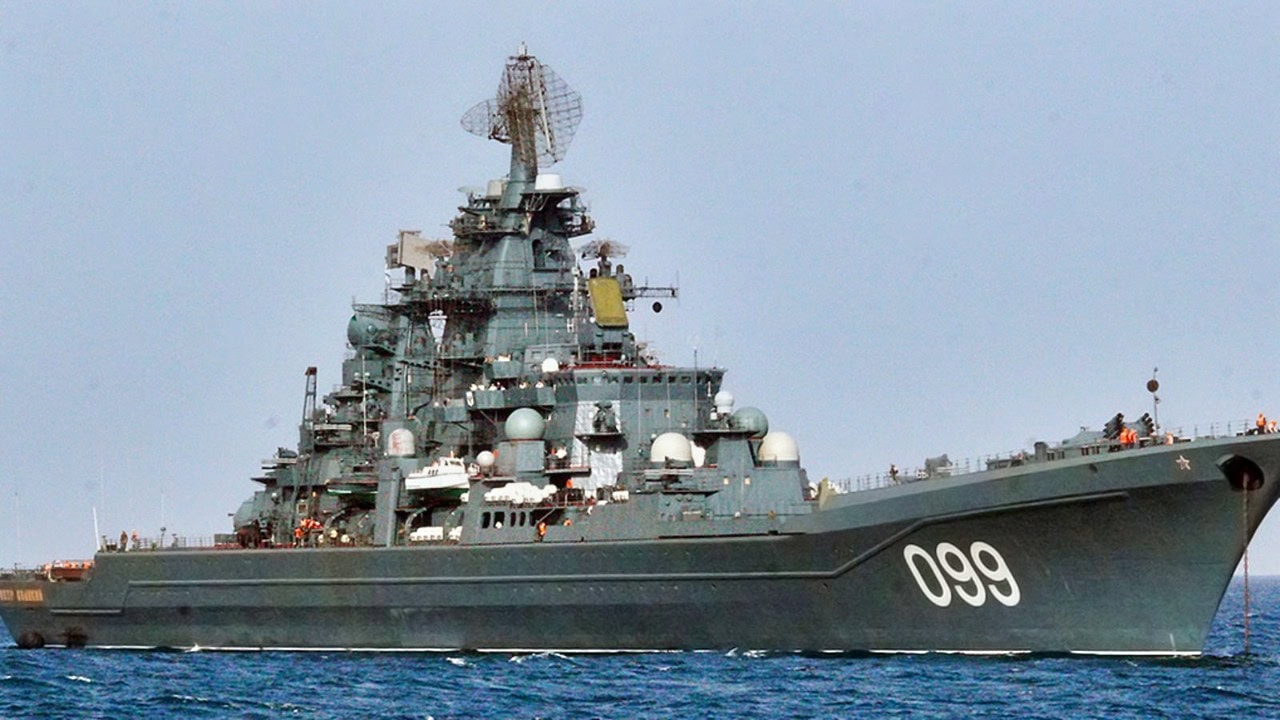
Since 2017, St. Petersburg's Navy Day has been built as the central showcase of Russia's oceanic ambitions: the Baltic, Northern, Black Sea, and Pacific fleets were to demonstrate not so much combat readiness as the political continuity of the imperial fleet. In July 2025, the parade was already canceled under the pretext of "security considerations." In 2026, the picture became even more characteristic: sources in the Russian defense ministry had previously told St. Petersburg journalists that no order for organizing the review had been received, and a fleet representative dryly noted that "now is not the time" (Fontanka, July 15; Kyiv Independent, July 27, 2026). This is a rare case where a bureaucratic phrase turned out to be more accurate than official rhetoric.
St. Petersburg is located about 1100 kilometers from the Ukrainian border. For classic Russian military geography, this is deep rear territory, protected by distance, layered air defense, the political status of the city, and the concentration of important facilities around the power residences. The Ukrainian campaign of long-range strikes breaks this assumption. On July 26, Zelensky stated that Kyiv had updated its list of priority targets for "long-range sanctions" and already had the capability to strike targets at distances over 3000 kilometers; since the beginning of the year, he claimed, more than a thousand combat missions of this type had been conducted (Kyiv Independent, July 26, 2026). Even if the Ukrainian assessment inevitably contains an element of political demonstration, the very reaction of the Russian side confirms a change in the equation.
Why air defense cannot cover the entire empire
The Russian air defense system has always been strong in protecting selected areas and significantly weaker in protecting space as such. The S-300, S-400, "Pantsirs," and radar posts form not a magical dome, but a network with a density that depends on the value of the protected object. Moscow, St. Petersburg, the Crimean Bridge, government residences, and individual bases receive priority. Oil refineries deep in the country, logistics hubs of civilian corporations, ports, and communication relays often find themselves in the gaps of this network. In Soviet times, this defect was compensated by the vast territorial air defense system of the country; in post-Soviet Russia, it was covered by the assumption that the enemy would not be able to regularly reach the Urals, Siberia, or the Baltic. This assumption no longer holds.
The last week provided several practical examples. Ukrainian drones struck Wildberries facilities in St. Petersburg, the Leningrad region, Crimea, and Yekaterinburg; the strike on St. Petersburg warehouses on July 24 was accompanied by smoke and disruptions at Pulkovo Airport. On the night of July 27, strikes hit Belgorod and Rostov-on-Don, where Russian regional authorities reported casualties, injuries, fires at warehouses, and damage to residential buildings (Moscow Times, July 27, 2026). At the same time, the Ukrainian General Staff reported strikes on the "Chornomorneftegaz" facility in Crimea, relay equipment for managing Shahed and Gerbera strike drones, a bridge in the occupied part of Donetsk region, and an oil refinery in Tyumen region with a capacity of about 7 million tons per year (Kyiv Independent, July 26, 2026).
From symbolic strikes to the economy of war
It is important not to exaggerate: the canceled parade does not mean that the Baltic Fleet has lost combat capability, and a strike on an e-commerce warehouse is not equivalent to the destruction of a military arsenal. But high-intensity warfare is rarely resolved by a single spectacular episode. It is resolved by the sum of costs. When the fleet does not send ships for a public review, authorities cut off communication, airports temporarily close, warehouses burn, port operators change schedules, and insurance and logistics risks rise, the state pays for the war not only with shells and tanks but also with managerial nervousness. The Russian system is better at concealing human losses than it is at hiding the shutdown of a major hub.
The Black Sea direction shows this particularly clearly. The Moscow Times, citing Bloomberg, reported that the Sheskharis terminal in Novorossiysk, the largest Russian Black Sea oil export hub, suspended tanker loading amid threats from Ukrainian air and sea drones. According to the data provided, the terminal exported an average of about 650,000 barrels of oil per day in the first seven months of the year, which is about one-fifth of Russia's maritime oil exports at an average level of about 3.6 million barrels per day (Moscow Times, July 25, 2026). This is no longer a propaganda jab at the parade, but pressure on foreign currency earnings, transportation, insurance, and Kazakhstan, whose exports through nearby infrastructure have also proven sensitive to risks.
A maritime power under land threat
There is a deeper irony, too Russian to be accidental. Navy Day was supposed to demonstrate Russia's ability to operate in the oceans, but it showed the dependence of a maritime power on the protection of land, warehouses, terminals, bridges, radio relay nodes, and urban communication. A cruiser at anchor looks impressive only as long as the port, fuel, communication, and political center remain out of reach. In this sense, Ukrainian long-range drones do not replace NATO aviation and do not physically destroy the Russian fleet; they change the cost of public and logistical functioning of the military machine.
For the Kremlin, the problem is not that Ukraine can now strike "everywhere." That would be a technical exaggeration. The problem is that Ukraine can force the Russian leadership to choose where it is not willing to take risks: the St. Petersburg parade, the oil terminal, the Crimean relays, a warehouse in Yekaterinburg, or another air defense battery taken from a less prestigious direction. Each such redistribution reduces freedom of maneuver. In Soviet textbooks on operational art, this was called the struggle for depth. In 2026, depth ceases to be a natural resource of Russia and becomes an expense item of war.
Forecast with limitations
In the coming months, Russia will likely intensify electronic warfare around major cities, expand temporary mobile internet shutdown zones, and more frequently cancel public military events under neutral wording. At the same time, it will attempt to shift part of the logistics to less predictable routes and accelerate the production of cheap anti-drone measures. This will mitigate some damage but will not restore the previous strategic asymmetry. The Ukrainian long-range campaign will not collapse the Russian military system in one season; it will make more expensive what Moscow has come to consider free—distance, ceremony, and the confidence of the rear.
The Russian Navy canceled the Navy Day parade in St. Petersburg in July 2026 due to security concerns stemming from Ukrainian long-range strikes. President Zelensky announced Ukraine's capability to target locations over 3000 kilometers away, prompting a reassessment of Russian military logistics and air defense. This cancellation reflects a significant shift in the operational environment, highlighting vulnerabilities in Russian defenses and the impact of Ukrainian drone operations on Russian military activities.
- The Navy Day parade in St. Petersburg was canceled for the second consecutive year due to security concerns.
- Ukrainian President Zelensky announced the capability to strike targets over 3000 kilometers away.
- Ukrainian drones targeted various locations including St. Petersburg and Crimea.
- Russian air defense systems are struggling to protect critical infrastructure from long-range strikes.
- The cancellation of the parade indicates a shift in Russian military posture and operational security.