
The cheaper PAC-3 ACE missile changes Gulf defense calculations against Iran in 2026
 Ahmed Al-Rashid
The Cheaper PAC-3 ACE Missile Changes Gulf Defense Calculations Against Iran in 2026
On July 20, 2026, Lockheed Martin announced the PAC-3 ACE at the Farnborough Airshow, a new interceptor for the Patriot system that the company claims will cost less than half the price of the PAC-3 MSE. This figure is not a small financial detail. In the Gulf, where an Iranian Shahed drone or a local version is launched at a cost of around $35,000, while an interceptor costing millions of dollars is used against it, the battle becomes a daily calculation in military economics before it is a test of radar and missile.
What Has Changed in the New Patriot Missile
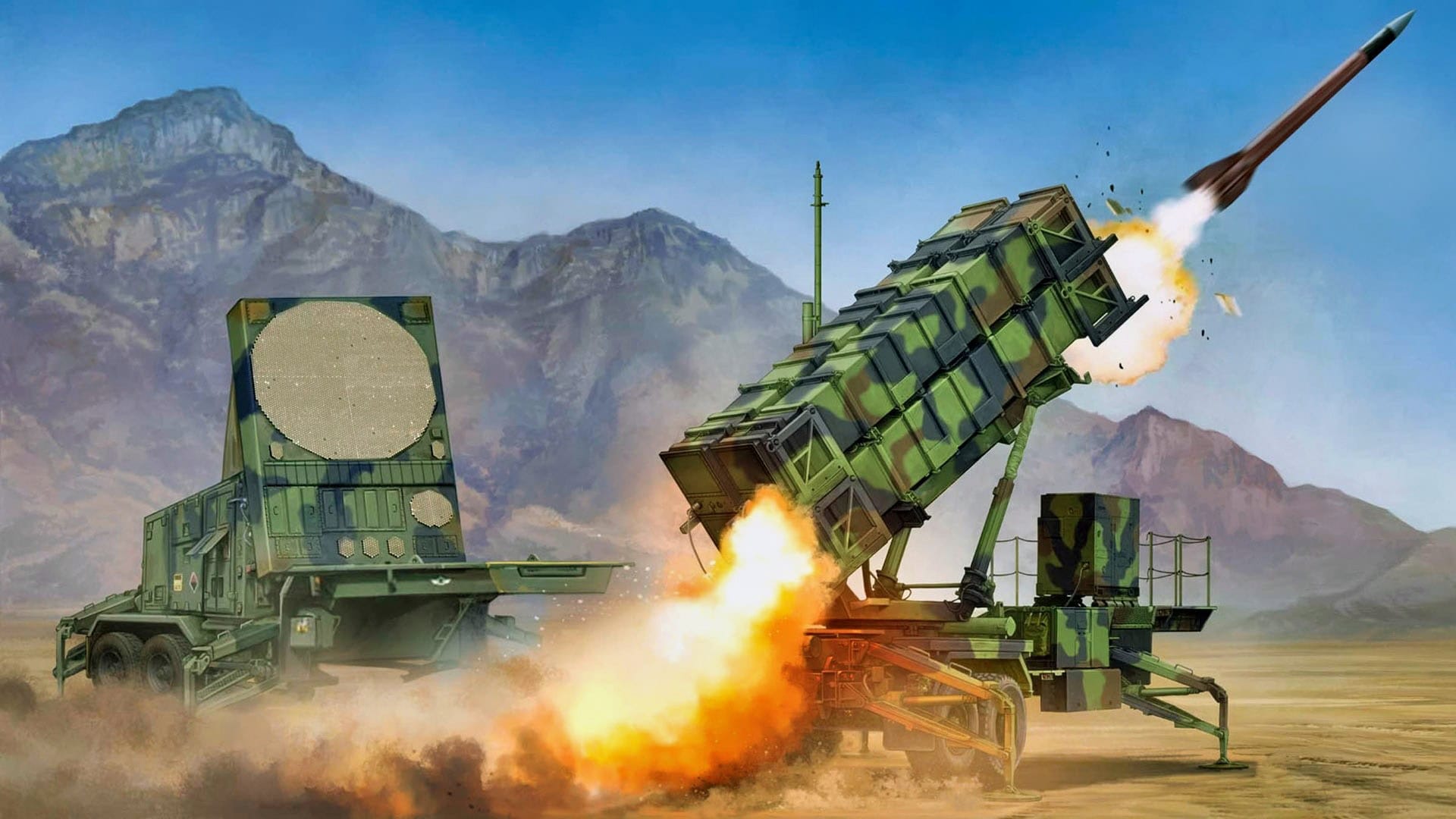
According to Defense News, the PAC-3 ACE is designed to deal with air-breathing threats, namely drones and cruise missiles, as well as short-range and close-range ballistic missiles. Most importantly, it will remain compatible with the Patriot system and the Integrated Battle Command System, meaning that current users theoretically do not need to rebuild an entire air defense network from scratch.
This point is more significant for Riyadh, Abu Dhabi, Kuwait, and Doha than for many European capitals. Gulf countries have purchased Patriot, THAAD, and American command and control systems over the past two decades, but they have found themselves in recent years facing a simple and embarrassing dilemma: the adversary launches cheap munitions in abundance, while the defender responds with precise, rare, and expensive munitions.
The Gap Between $35,000 and $4 Million
The published estimate for the price of the PAC-3 approaches $4 million per interceptor, compared to about $35,000 for a Shahed drone. One does not need a staff rank to see the flaw. If the adversary launches twenty drones and a cruise missile in one night, the defending side does not only ask how many targets were shot down, but how many missiles were consumed, how many months it will take to replenish the stock, and how many times it can repeat the same night before air defense becomes a reputation-based defense rather than a stock-based one.
Practically, reducing the interceptor's price to less than half that of the PAC-3 MSE does not solve the entire problem, but it alleviates pressure on the upper tier of defense. The ACE is not a replacement for all interceptors; it is an attempt to place a less costly munition in the right spot within the chain. Against a medium or high-risk ballistic missile, the need for MSE, THAAD, or Aegis will remain. But against a suicide drone or a relatively slow cruise missile, using a cheaper missile becomes a more prudent military decision.
The Erbil and Jordan Lesson
Recent news from Iraq and Jordan shows that the issue is not theoretical. On July 21, the U.S. Army Space and Missile Defense Command announced the death of Sergeant Michael Emmanuel Swinton while dealing with an Iranian attack drone that was shot down at Erbil Airbase on July 19. Days earlier, two American soldiers were killed in an Iranian missile and drone attack on U.S. and partner forces in Jordan, according to CENTCOM data and Military Times reports.
These incidents mean that air defense in the Middle East is no longer just static batteries around oil facilities or major bases. It is a daily operation in forward bases, air corridors, command centers, and ammunition depots. Any military personnel who has served in the region knows that the danger does not end at the moment of interception; remnants of the drone, unexploded munitions, and misjudged impact locations can turn tactical success into human loss.
The Gulf Buys Capability or Buys Assurance
Since the Aramco attacks in 2019, Gulf countries have become more convinced that air defense is not measured solely by the number of batteries. Saudi Arabia has operational or delivered Patriot and THAAD systems, the UAE has built one of the most densely packed air defense networks in the region, and Kuwait and Qatar rely on Patriot under a broader American umbrella. But all of this does not eliminate the old question: can these armies operate the systems with the same efficiency when the crisis prolongs, technical support diminishes, and American priorities are distributed between Europe, the Pacific, and the Middle East?
The PAC-3 ACE may be good news for the Gulf, but it also exposes a weakness. If the system needs a cheaper missile to make war sustainable, this is an acknowledgment that the previous model was too expensive for a drone war. The problem is not just with the Patriot; the problem lies in the mentality of purchasing defense as if it were an American insurance policy, rather than a national system that requires stockpiling, training, maintenance, and integration between radars, with clear rules of engagement.
Iran Understands the Economics of Attrition
Tehran does not need air superiority to pressure the Gulf. It is enough for it to create a constant and low-cost threat around bases, ports, and power stations. Suicide drones, cruise missiles, and short-range ballistic missiles give Iran the ability to force its adversaries to operate their radars, move their batteries, and deplete their stockpiles. In this type of war, every defensive missile launched carries a financial message as much as it carries a warhead.
That is why Lockheed Martin's move seems significant. But it is not a game-changer in the balance of deterrence. Iran and its allies will look for ways to overwhelm the cheaper layer as well: simultaneous launches, decoy targets, low trajectories, and perhaps simpler drones that force the radar to operate and confuse the duty officers. The old military adage says that the enemy votes on your plan. In the Gulf, the enemy often votes with a cheap drone at an inconvenient time in the middle of the night.
What Riyadh and Abu Dhabi Should Do
If the PAC-3 ACE enters service as quickly as Washington and its partners desire, Gulf countries should not see it as just an additional purchasing opportunity. What is needed is a redesign of defense layers. Small drones do not always warrant a Patriot missile, cruise missiles should not be left until the last moment, and ballistic missiles require a high-reliability intercept layer. Between these levels, electronic warfare, directed energy weapons, lasers where they mature, and early warning aircraft should operate.
In my view, the true value of the ACE will be in its ability to free up PAC-3 MSE and THAAD for more dangerous threats, not in its ability alone to shoot down everything. The Gulf does not just need a new missile; it needs a doctrine of use that does not treat every target as a first-class threat. Purchasing cheaper munitions without changing the rules of engagement will reproduce the same problem at a slightly lower price.
Conclusion
The PAC-3 ACE missile points to the real wound in Gulf defense: capability is not what you buy in the first contract, but what you can fund and operate in the third week of a crisis. The closer the cost of interception gets to the cost of attack, the more realistic the umbrella becomes. And as long as Gulf countries remain dependent on American decisions, American stockpiles, and American technical support, their defensive independence remains suspended between ambition and reality.
A system that shoots down a drone but cannot afford the cost of ten drones afterward is not a complete air defense; it is an expensive early warning that war has changed.
Lockheed Martin announced the PAC-3 ACE missile system on July 20, 2026, designed to enhance Gulf defense against Iranian threats. The system is intended to counter low-cost aerial threats, significantly reducing interception costs. Recent incidents involving Iranian drones in Iraq and Jordan underscore the urgency for Gulf states to adapt their air defense strategies. The PAC-3 ACE's introduction may alleviate some economic pressures on military budgets in the region.
- Lockheed Martin announced the PAC-3 ACE missile system on July 20, 2026.
- The PAC-3 ACE is designed to counter low-cost aerial threats like drones and cruise missiles.
- The system is expected to cost less than half of the PAC-3 MSE, making it more economically viable for Gulf states.
- Recent incidents in Iraq and Jordan highlight the ongoing threat from Iranian drones and missiles.
- Gulf states are reassessing their air defense strategies in light of the new missile system.