
The closure of Hormuz and the Houthis' control over Bab al-Mandab test the Gulf's ability to protect its exports in 2026.
 S.W
S.WClosure of Hormuz and Houthi Control of Bab al-Mandeb Test Gulf's Ability to Protect Its Exports in 2026
On September 18, 2026, Italy announced that it would send warships to protect its commercial vessels through Bab al-Mandeb, while South Korean President Yoon Suk-yeol reiterated that his country would not send combat troops to the Strait of Hormuz. Between these two decisions lies the reality that Gulf capitals are trying to avoid: the navigation crisis is no longer a temporary incident requiring additional patrols, but has become a simultaneous test of two maritime corridors and a complete network of energy, security, and deterrence.
Two Closed Corridors and Narrower Options
According to Al Jazeera, the effective closure of Hormuz has pushed Gulf producers towards improvised solutions, at a time when the western coast of Yemen is under Houthi control, making Bab al-Mandeb vulnerable to new attacks. Hormuz is not just a narrow channel; it is the exit for most Gulf exports to Asia. Bab al-Mandeb is the gateway connecting the Red Sea to the Suez Canal, through which historically between 12 and 15 percent of global trade passes. When both corridors are disrupted, the problem is no longer the number of available tankers, but the ability to operate any supply chain regularly.
Saudi Arabia is the country most affected by this disruption. The East-West pipeline, nearly 1,200 kilometers long, was supposed to provide Riyadh with an outlet to Yanbu away from Hormuz. However, damage from attacks attributed to the Houthis has returned Saudi oil to the sea, this time through more dangerous arrangements.
Ship-to-Ship Transfer is Not an Independent Strategy
Riyadh uses the Omani port of Sohar, and Gulf companies use areas off Fujairah, to transfer crude from one tanker to another outside the besieged corridor. The process is known in the industry as Ship-to-Ship Transfer, and it requires calm weather, intact hoses and rubber fenders, and a trained crew to monitor pressure and pumping rates. However, in wartime conditions, it sometimes occurs with automatic identification systems turned off, using older tankers, and under limited insurance coverage.
Al Jazeera reported that tracking data showed around 7.15 million barrels per day being traded in maritime transfers over fourteen days, a 56 percent increase from the previous month. The figure illustrates the scale of activity, but it does not equate to the volume of natural exports. The actual capacity depends on the availability of tankers, war risk insurance premiums, the ability of ports to receive ships, and the willingness of buyers in China, India, Japan, and South Korea to accept shipments arriving from obscure routes.
From a military perspective, this is not an ability to protect the shipping line, but a way to distribute risks. The first tanker enters the danger zone, turns off its signal, and transfers the cargo to a larger tanker waiting in safer waters. If an explosion or oil spill occurs, the producing country bears the legal, financial, and political burden. Thus, maritime sovereignty turns into an insurance calculation, and this is not a sign of strength.
Italy and South Korea Reveal the Limits of Alliances
Rome's decision to send its ships without waiting for a unified European decision carries an important implication. Italy does not want to see Bab al-Mandeb closed to its trade, but it implicitly acknowledges that collective mechanisms are slow in the face of a missile or a drone boat. Warships can escort a convoy and use their guns and sensor systems for close defense, but they cannot eliminate a broad coastal threat unless they have intelligence, air cover, logistical bases, and the will to strike the sources of the attack.
In contrast, Seoul's refusal to send troops to Hormuz indicates that American partners distinguish between protecting their ships and entering Washington's war with Tehran. South Korea will implement the minimum to protect its tankers and citizens, perhaps relying on the Cheonghae unit present in the region, but it does not want to turn the anti-piracy mission into a combat commitment. This position weakens the language of broad alliances, but it is more honest than statements of solidarity that are not followed by ships.
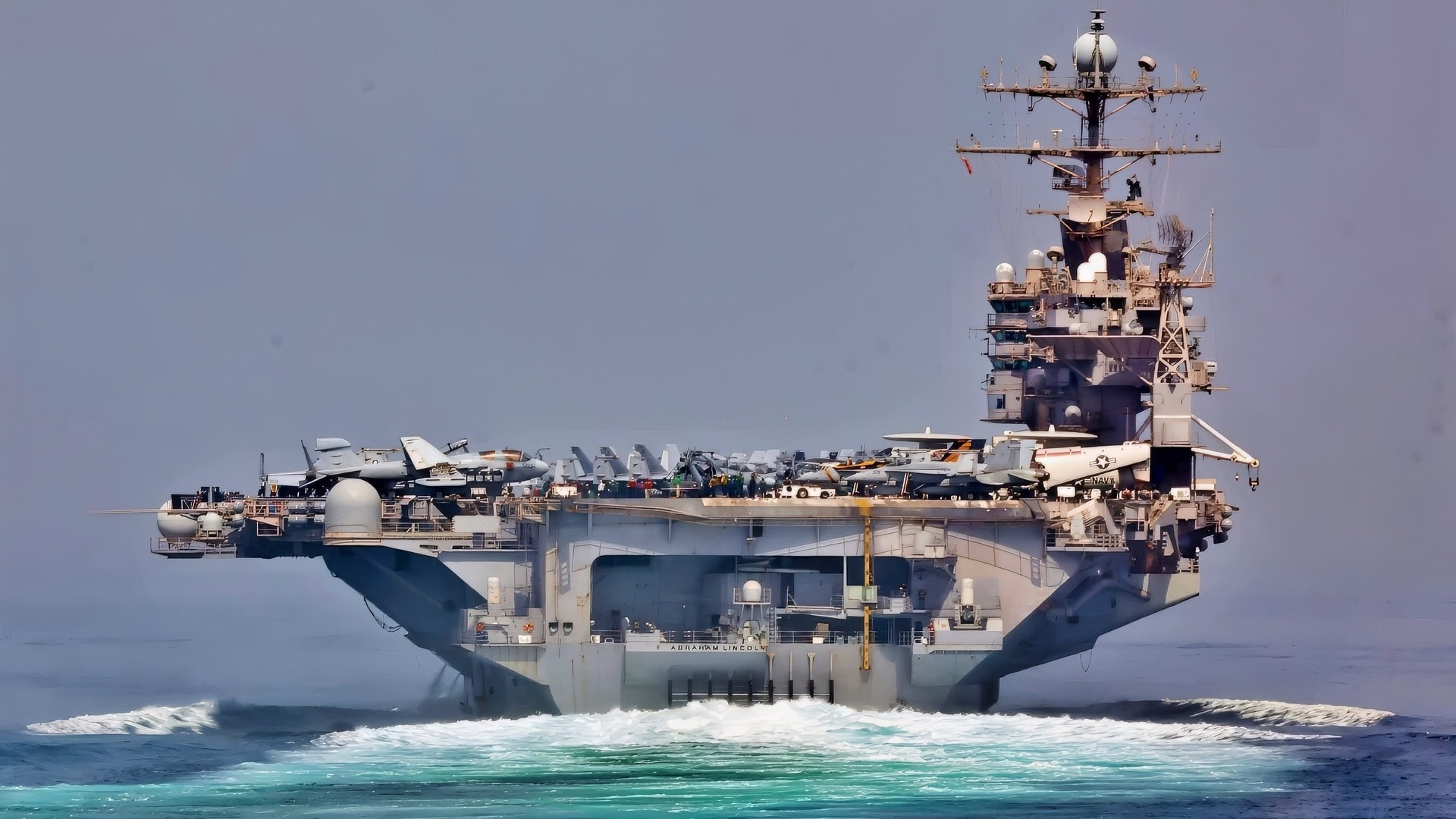
The image of the USS Abraham Lincoln aircraft carrier with its fighter jets reminds us that the United States has the best deterrent platform in the region. A Nimitz-class carrier capable of operating dozens of aircraft, and Arleigh Burke destroyers add air defense missiles and long-range strikes. However, the carrier alone cannot restore confidence to tanker owners. Deterrence requires clear rules of engagement, continuous escort, emergency corridors, and political management to prevent every maritime friction from escalating into a regional confrontation.
The Gulf Buys Platforms but Lacks a Safety Net
The triad of capability that Gulf purchases often overlook is repeated here: equipment, training, and institutions. Gulf states possess large tankers, reconnaissance aircraft, frigates, and air defense missiles, but they still lack a unified mechanism to secure the corridors, and no joint center connects port data, insurance, intelligence, and rescue. Buying an additional ship does not address the absence of a joint decision, and a pipeline does not become a safe alternative if an armed party can disrupt it with a low-cost drone.
Most dangerously, Saudi Arabia, the UAE, Qatar, and Kuwait have begun to rely on what can be termed shadow navigation, i.e., shipments moving away from normal commercial oversight. This method may succeed in keeping some oil flowing, but it raises transportation costs, increases the likelihood of pollution, and gives Iran and the Houthis a continuous means of pressure without the need for a complete closure. In my view, this is the real gain for the adversary: not the destruction of every tanker, but forcing the Gulf to pay the price of fear with every barrel.
Conclusion
The September 2026 crisis does not measure the number of naval vessels in the Gulf, but rather who can maintain a sustainable navigation system when the political structure is disrupted. Italy is moving to protect its trade, South Korea is withdrawing from the war, and Saudi Arabia is transferring its oil between ships, while the United States remains the largest military guarantor. However, relying on an external power to protect a route, and on secret arrangements to bypass another route, does not equate to independence. The dilemma that Gulf capitals will continue to face is the same: they want the freedom of decision, but they have not yet built the institutions that make that freedom defensible.
Sources
Italy announced it will send warships to protect its commercial vessels through Bab el-Mandeb on September 18, 2026, while South Korea reiterated it will not send combat troops to the Strait of Hormuz. The closure of the Strait of Hormuz and Houthi control of Bab el-Mandeb are testing the Gulf's ability to protect its exports. Saudi Arabia is resorting to ship-to-ship transfers to move oil due to threats from Houthi attacks.
- Italy will send warships to protect its commercial vessels through Bab el-Mandeb.
- South Korea will not send combat troops to the Strait of Hormuz.
- Houthi control of Bab el-Mandeb poses a threat to maritime trade.
- Saudi Arabia is using ship-to-ship transfers for oil due to Houthi attacks.
- The closure of the Strait of Hormuz and Bab el-Mandeb is testing Gulf security.