
The Debate on Japan's Nuclear Submarine and the Undersea Division of the Japan-U.S. Alliance in 2026
 Tanaka Takashi
The Debate on Japan's Nuclear Submarines and the Undersea Responsibilities of the Japan-U.S. Alliance in 2026
On November 19, Defense News discussed the emerging debate in Japan regarding the introduction of nuclear submarines, stating that it is "premature for the security of the East China Sea." The background of this discussion includes not only the operational capabilities of the Chinese Navy but also the regular activities of Chinese vessels around the southwestern islands that have become commonplace since November 2025. While this may seem like a discussion about equipment selection, it is actually a question of who will be responsible for undersea warfare and in which maritime areas under the Japan-U.S. alliance.
Are the JMSDF's Conventional Submarines Really Insufficient?
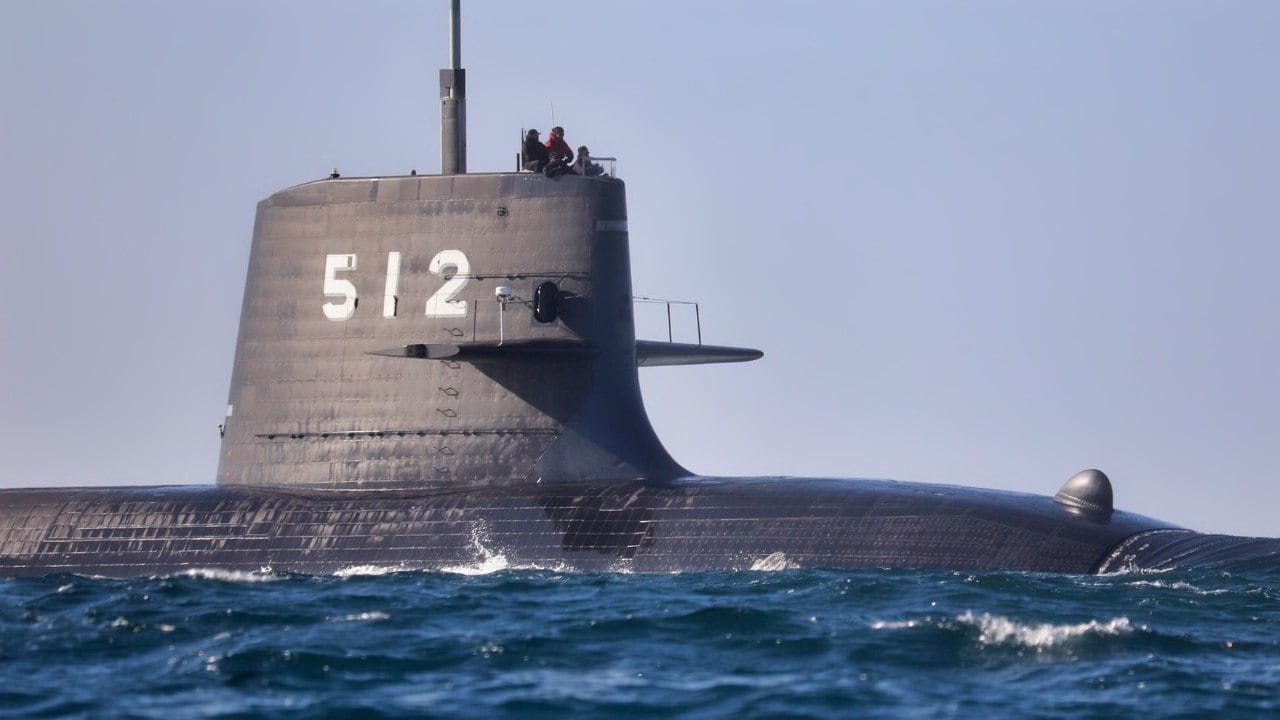
The Japan Maritime Self-Defense Force operates conventional submarines, primarily the Soryu and Taigei classes, which are suited for the narrow and shallow seabed topography of the East China Sea and the southwestern islands. The Taigei class has adopted lithium-ion batteries, improving underwater endurance and recharging operations, but it is not a vessel designed for long-term, high-speed patrols in distant maritime areas like a nuclear submarine. Conversely, in missions to ambush at chokepoints around Japan and monitor sea lines of communication (SLOC), larger nuclear submarines are not always advantageous.
The Questions Raised by Nuclear Submarine Discussions for the Japan-U.S. Alliance
The advantages of nuclear submarines lie in their range, speed, and ability to gather information over vast maritime areas. If China's aircraft carrier strike groups expand their operations beyond the first island chain, there will likely be increasing calls for Japan to undertake long-duration tracking missions, including cooperation with U.S. attack submarines. However, nuclear submarines require a comprehensive system for managing the hull, reactor, personnel, and base safety, and simply purchasing a few will not suffice. If introduced, it will be necessary to reallocate budgets from air defense, mine countermeasures, ammunition stockpiling, and base resilience.
The U.S. Congressional Research Service has pointed out that Japan's defense policy in 2026 will involve the integration of intelligence agencies, easing restrictions on arms transfers, and expanding cooperation with Australia and the Philippines. The challenge for the Japan-U.S. alliance is not merely for Japan to possess U.S.-style vessels, but to have procedures for sharing surveillance information and jointly addressing issues without escalating contacts. The scramble against Chinese military aircraft, as indicated in the Ministry of Defense's November 17 announcement, is also part of the ongoing vigilance burden that includes undersea warfare.
Defining Missions Before Capabilities
In my view, before deciding on the introduction of nuclear submarines, it is essential to clarify what is expected from JMSDF submarines. The defense of the southwestern islands, monitoring maritime blockades during a Taiwan contingency, and anti-submarine tracking in the Pacific all require different types of vessels and roles within the alliance. Just because the frequency of large Chinese vessels appearing in surrounding waters has increased does not mean that moving immediately to nuclear submarines is a prudent decision; it risks conflating capabilities with intentions. The true weakness may not be the speed of submarines, but rather the speed at which Japan and the U.S. can convert detection information into political decisions.
Main References: Defense News (November 16, 2026, November 19, 2026), U.S. Congressional Research Service "Japan’s Evolving Defense Policy and the U.S.-Japan Alliance" (2026), Ministry of Defense Joint Staff Office "Presumed Chinese aircraft activity around Japan" (November 17, 2026).
Japan is evaluating the introduction of nuclear submarines as part of its defense strategy amid increasing Chinese naval activities in the East China Sea. The U.S.-Japan alliance is focusing on clarifying roles in underwater warfare and sharing intelligence. Discussions emphasize the need for Japan to define its submarine capabilities in relation to regional security challenges.
- Japan is considering the introduction of nuclear submarines for defense purposes.
- The U.S. Congress has noted changes in Japan's defense policy for 2026.
- The report highlights the need for Japan to clarify its expectations for submarine capabilities.
- China's naval activities are influencing Japan's defense discussions.
- The integration of U.S. and Japanese military operations is a key concern.