
The Decision on Japan-U.S. Missile Defense in 2026 Approaches with the SM-3 Block IIA Production Increase
 Tanaka Takashi
Decision on Japan-U.S. Missile Defense in 2026 Approaches with SM-3 Block IIA Quadruple Production
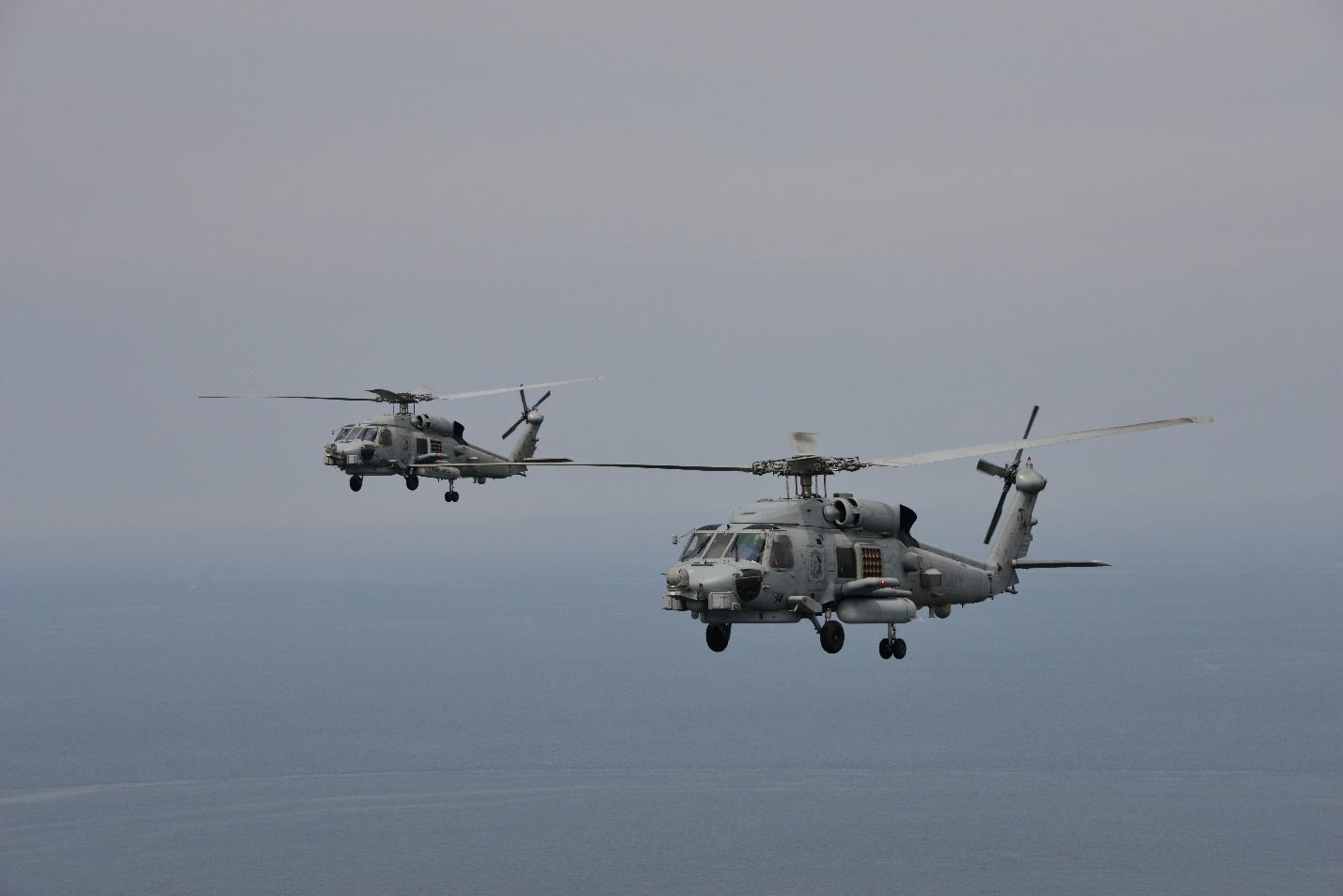
Looking at a photo of the Japan Maritime Self-Defense Force's SH-60L and the U.S. Navy's MH-60R flying side by side over Sagami Bay, I am reminded that the strength of the alliance lies not in the number of aircraft, but in how quickly we can integrate each other's sensors and judgments into a single picture. In late July, the U.S. publication Breaking Defense discussed that Japan and the U.S. have reached a point where they must finalize radar coverage and command networks in response to aerial and missile threats in the Pacific. In my view, this issue is not merely about air defense equipment. It is a test of whether the Japan-U.S. alliance in 2026 will move from the stage of increasing munitions to the stage of determining the order of engagement.
Simply Increasing Production Will Not Create a Defense Network
The key points confirmed by the Ministry of Defense during the fourth DICAS, or Japan-U.S. Defense Industrial Cooperation, Acquisition, and Sustainment Conference in April, were clear. Regarding the SM-3 Block IIA, Japan and the U.S. confirmed specific measures to increase production by about four times and agreed to explore possibilities for further acceleration and expansion. During the Japan-U.S. defense ministerial meeting in May, Minister Koizumi proposed "Operation Supercharge," outlining plans to accelerate joint development and production of missiles, including the SM-3 Block IIA and AMRAAM.
This is the right direction. The SM-3 Block IIA is a jointly developed missile designed to intercept ballistic missiles outside the atmosphere from Aegis ships and is the core of upper-tier defense against North Korea's medium-range and intermediate-range ballistic missiles. The PAC-3 MSE serves as the last line of defense in the terminal phase, while the AMRAAM supports the munitions base for air superiority against cruise missiles and aerial threats. However, even if the munitions stockpile is filled, if there are radar blind spots, delays in target identification, engagement authority, and launch priorities, the practical defense capability will not increase.
Connection Issues with the Type 12 Guided Missile and Counterattack Capability
According to the AP, the Ministry of Defense has indicated plans to deploy the domestically produced Type 12 surface-to-ship guided missile capability enhancement model at the Kumamoto-based Kengun Garrison by March 2026, one year ahead of the initial schedule. The range is said to be approximately 1,000 kilometers, which politically sensitive range encompasses the East China Sea from the southwestern islands and potentially extends to the northern waters of Taiwan.
What is often overlooked here is that air defense missiles and counterattack missiles are not separate narratives. When the enemy launches a mix of ballistic missiles, cruise missiles, drones, and aircraft, the defense side is faced not only with interception but also with the simultaneous need to make counterattack decisions to stop the next volley. The extension of the Type 12's range broadens the "distance from which we can shoot," but without integrated C2 to decide which launch platform to strike at what point while monitoring the consumption rates of the SM-3 and PAC-3, the counterattack capability may remain merely a political symbol.
The Weakness on the Japanese Side is Not Radar, but Allocation
The IISS analyzed in June that while the ambition to quadruple the production of the SM-3 Block IIA was demonstrated during the Japan-U.S. summit, challenges remain regarding coverage and responsiveness to the diversification of threats. I agree with this assessment. However, the issue is not simply about "not having enough radar." The more pressing question is who will prioritize the allocation of the Japan Maritime Self-Defense Force's Aegis ships, the Japan Air Self-Defense Force's ground radar, U.S. military sensors, and warning information from space and cyber domains, and on what timeline.
Japan's air defense during the Cold War was predicated on the assumption that there would be time to identify the approach of Soviet aircraft and scramble interceptors. The current threats are different. North Korea's solid-fuel ballistic missiles shorten the launch preparation time, and China's maritime and aerial forces create simultaneous pressure on the southwestern front. Furthermore, the activities of the Russian military in the Far East drain Japan's warning resources on the Sea of Japan side. Procedures from an era when only one front was monitored cannot handle alerts from three directions.
The Next Decision for the Japan-U.S. Alliance
What Japan and the U.S. must decide now is not the names of the equipment, but the operational boundaries. First, at what granularity will the Japan Self-Defense Forces receive target information detected by U.S. military sensors, and at what stage can it be used for engagement decisions? Second, how will they conserve the SM-3 Block IIA, PAC-3 MSE, ship-to-air missiles, and air-launched AMRAAM during a saturation attack? Third, to what extent will the counterattack decisions for the Type 12 guided missile be integrated with real-time information from interception combat?
The effectiveness of missile defense is determined not by the number of launch tubes, but by who believes what in the first three minutes.
It is natural for the Ministry of Defense and the U.S. Department of Defense to expedite joint production. However, if the success of increased production creates a false sense of political security and obscures the disorganization of C2, it could be dangerous. What is truly lacking in the southwestern islands is not necessarily the missiles themselves, but the courage to pre-determine the order in which to accept attrition within the alliance. If this remains ambiguous, both the quadrupled SM-3 and the 1,000-kilometer Type 12 will merely exist separately on the same map.
Main References
- Breaking Defense, July 2026, Analysis on the Timing of Japan-U.S. Missile Defense Cooperation Decisions
- Japan Ministry of Defense, April 2026 Fourth DICAS Announcement, Discussions on Quadrupling SM-3 Block IIA Production
- Japan Ministry of Defense, May 2026 Japan-U.S. Defense Ministerial Meeting, Proposal for Operation Supercharge
- AP, Report on the Early Deployment of the Type 12 Surface-to-Ship Guided Missile Capability Enhancement Model by March 2026
- IISS, June 2026, Evaluation of Japan's Air and Missile Defense Capabilities
Japan and the U.S. are set to quadruple the production of SM-3 Block IIA missiles by 2026, enhancing their missile defense capabilities. The first unit of the upgraded 12-type anti-ship guided missile will be deployed by March 2026 in Kumamoto Prefecture. The report highlights the importance of integrated command and control for effective missile defense operations against diverse threats in the region.
- Japan and the U.S. agreed to quadruple production of SM-3 Block IIA missiles by 2026.
- The first unit of the upgraded 12-type anti-ship guided missile will be deployed by March 2026.
- The report emphasizes the need for integrated command and control in missile defense operations.
- The focus is on operational boundaries rather than just equipment numbers.