
The depletion of Saudi Patriot missiles in 2026 after a Houthi drone near Mecca tests alliances
 S.W
S.WDepletion of Saudi Patriot Missiles in 2026 After Houthi Drone Near Mecca Tests Alliances
On September 15, 2026, Saudi air defenses intercepted a drone within the airspace of the Kingdom near Mecca, and the Joint Forces Command stated that the interception occurred before entering the restricted airspace of the holy city. The following day, Riyadh described any targeting of Mecca or its religious sites as a "red line," while the Houthis denied that they intended to target the city and Iranian media accused Saudi Arabia of exaggerating the incident. These conflicting narratives are significant, but the more important military issue is not just where the drone fell, but the number of remaining interceptors in the Kingdom and its ability to protect a vast area in a war of attrition.
The Mecca Incident Reveals the Expanding Threat Landscape
The interception coincided with early warnings issued by Saudi authorities in Mecca, Khamis Mushait, and other areas in the west of the Kingdom, along with a Houthi announcement of attacks using ballistic missiles and drones on military and oil facilities. The Houthis claimed to have targeted the Aramco refinery in Yanbu and King Khalid Air Base in Khamis Mushait, although independent evidence confirming all details of these claims is lacking. Yanbu is about 900 kilometers from the Yemeni border, so merely including it in the target bank forces Riyadh to distribute its defenses between the western coast, air bases, oil facilities, and cities.
Operationally, the interception of a single drone does not mean that the air defense network has failed, nor does an alert reaching Mecca mean that the city was the intended target. However, it shows that the Houthis can compel Saudi Arabia to activate its sensors and interceptors on a deep front, while the Kingdom's aircraft remain occupied supporting anti-Houthi forces in Yemen. Air defense does not measure success solely by the number of targets shot down, but by the system's ability to continue providing protection on day thirty and day sixty.
Ammunition Crisis Before Technology Crisis
According to regional officials quoted by the Los Angeles Times, Saudi Arabia has begun to suffer a shortage of interceptor missiles and has requested defensive assistance from France, Britain, Pakistan, and Egypt, at a time when the United States itself is facing depletion of interceptor stocks after months of war with Iran. Riyadh has not publicly confirmed these details, and London has stated that it is linked to a close defense partnership with the Kingdom without announcing a British deployment. Therefore, the request for assistance should be treated as an unconfirmed report, not a declared decision.
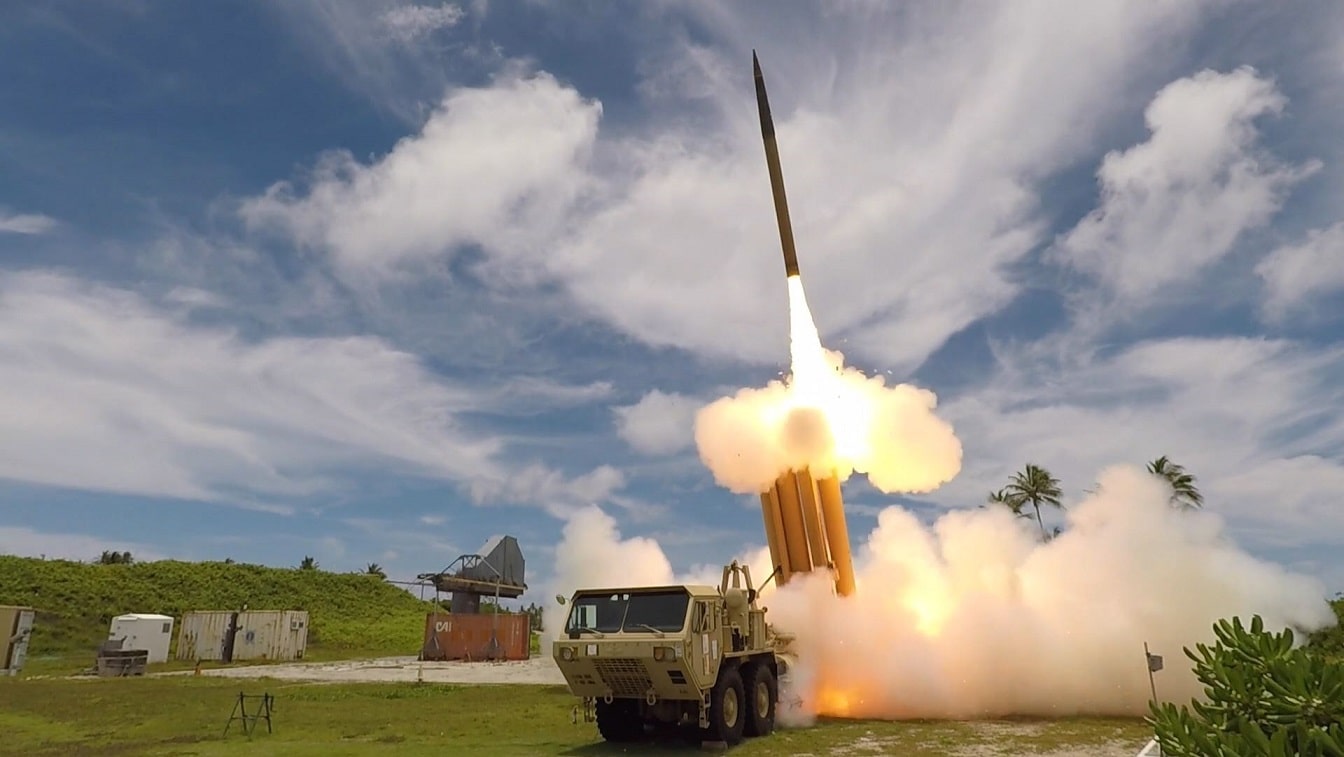
The implication is clear, however. The Patriot and THAAD systems do not function as a magic shield; each engagement requires a functioning radar, a quick engagement decision, and a missile suitable for the target. Cheap drones sometimes necessitate the use of much more expensive ammunition, while ballistic missiles require different layers of interception. If the defender is forced to fire more than one missile at a single target due to uncertainty, technical superiority turns into a stockpile calculation. Gulf states have purchased excellent equipment, but they cannot buy the time needed to reproduce interceptions during war.
A report from the Congressional Budget Office on September 15 indicated that the United States may have used between half and two-thirds of its missile defense stockpile since June 2025. The number cannot be automatically applied to the Saudi stockpile, but reliance on the American supplier makes the problem a shared one. When ammunition levels drop in Washington, Saudi Arabia does not suddenly become less exposed to attack; rather, the priority for resupply becomes a political issue across multiple fronts.
The New Alliance Faces a Real Test
The current attacks are the first practical test of the defense agreement that brought together Saudi Arabia, Turkey, and Pakistan. Political statements from Islamabad and Ankara have been strong, with Pakistan declaring its support for the Kingdom and Turkey affirming its solidarity, but officials from both countries have said they did not receive a Saudi request for assistance in this round. Here, the gap between a deterrent treaty on paper and a force capable of operating air defense batteries within hours, securing them logistically, and connecting them to the Saudi command network becomes apparent.
Egypt, France, and Britain have different experience, but transferring batteries and operational and maintenance teams is not a symbolic decision. It requires bases, ammunition, data sharing, rules of engagement, and a willingness to accept the risk of injuring foreign personnel. The United States has kept its support at the level of information sharing and planning, avoiding direct involvement in the Saudi-Houthi fighting. This leaves Riyadh with a harsh equation: allies are willing to condemn, but condemnation does not intercept a missile.
Yanbu, Khamis Mushait, and the Red Sea
The Institute for the Study of War assessment suggests that the Houthis want to keep the fighting limited to wear down Saudi resolve, using advances on the Yemeni coast to pressure navigation in the future. Between September 9 and 11, according to the same assessment, the Houthis seized ports, coastal areas, and islands in the southern Red Sea, including Hanish and Perim, a claim that requires independent verification but explains the sensitivity of Yanbu. Proximity to Bab el-Mandeb gives the group the option to threaten ships, even if they temporarily declare they are not targeting international navigation.
The closure of the Saudi east-west pipeline following an attack attributed to Iran-backed militias in Iraq increases the pressure. Riyadh is not only defending its bases but also oil facilities, an alternative export line, and ports on the Red Sea. An Associated Press report indicates that oil flows through Hormuz have partially recovered to about 5 to 7 million barrels per day, which is less than half of pre-war levels. When the Hormuz front coincides with Yemen and Iraq, every interception missile becomes part of global energy security.
What Can Saudi Arabia Do Practically?
The logical response is not to purchase a new system and announce another contract. The priority is to manage the stockpile: separating targets that warrant an expensive missile from those that can be addressed with guns, electronic warfare means, or less costly short-range missiles. The Kingdom also needs to distribute sensors, fortify command centers, improve passive defense of facilities, and train multinational crews on a unified air picture. These are tedious tasks, but they enhance readiness more than a signing ceremony.
Riyadh can also turn the trilateral agreement with Turkey and Pakistan into a specific operational mechanism, rather than a political declaration. What is needed are ready lists of available batteries, regional ammunition stocks, exercises on command and communication transfer, and defining what each country will do if a Saudi facility is attacked. Without these details, the agreement will remain a moral deterrent tool, and while morale may be important, it does not compensate for the shortage of Patriot missiles.
Conclusion
The drone incident near Mecca provided Saudi Arabia with a strong political reason to raise the cost of any Houthi attack, but it did not resolve the issue of depletion. In fact, the declaration of a "red line" may push Riyadh to protect a wider airspace with stricter rules of engagement, increasing ammunition consumption. In my view, the paradox lies in the Kingdom trying to build defensive independence by purchasing more foreign equipment while relying, in a moment of war, on a stockpile, decision-making, and maintenance chains that it does not fully own. As any military personnel who has served in the region knows, the battle does not end when the system reaches the base; that is when the real test of training, institution, and sustainability begins.
Sources
Saudi air defenses intercepted a Houthi drone near Mecca on September 15, 2026, highlighting concerns over the depletion of Patriot missile stocks amid ongoing threats. Houthi forces claimed attacks on military and oil facilities, prompting Saudi Arabia to seek defensive assistance from multiple countries. The incident underscores the challenges faced by Saudi Arabia in maintaining air defense capabilities against Houthi aggression.
- Saudi air defenses intercepted a Houthi drone near Mecca on September 15, 2026.
- Saudi Arabia is experiencing a depletion of Patriot missile stocks.
- Houthi forces claimed to have targeted military and oil facilities in Saudi Arabia.
- Saudi Arabia requested defensive assistance from France, Britain, Pakistan, and Egypt.
- The incident near Mecca has raised concerns about the effectiveness of Saudi air defenses.