
The Deployment of Typhoon in Kanoya: The Beginning of Permanent US-China Mid-Range Missile Presence
 Tanaka Takashi
Deployment of Typhon in Kanoya Marks the Beginning of Permanent U.S. Mid-Range Missile Presence
Images released by the Chinese satellite imagery analysis company Mizar Vision captured the scene at Kanoya Air Base in southern Kyushu, where the U.S. Army's Typhon mid-range capability system launchers and operational centers are lined up. This marks the second deployment to Japan in less than a year.
What is Typhon?
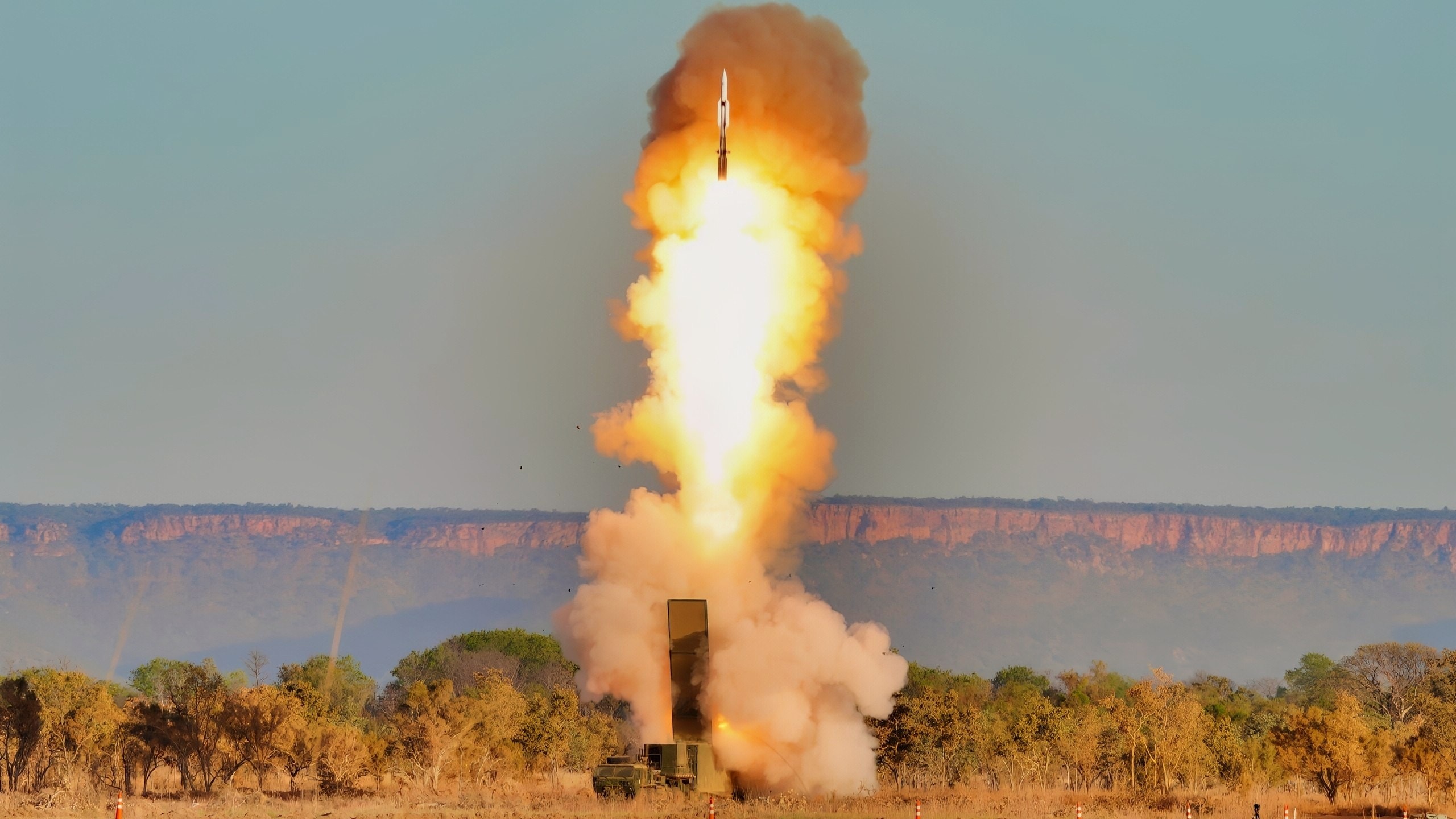
Typhon is a mobile system that houses the Navy's Mk41 vertical launch system in a 40-foot container-type ground launcher, capable of firing Tomahawk cruise missiles with a range of approximately 1,600 kilometers and SM-6 missiles exceeding 320 kilometers. From Kanoya, it is said to be able to reach the coastal areas of Shanghai, Fujian Province, and Zhejiang Province, and even Beijing.
From Iwakuni to Kanoya: The Significance of Southward Movement
While the previous deployment in Iwakuni in September 2025 was part of the Resolute Dragon exercise, this time, the U.S. Army's 3rd Multi-Domain Task Force is deploying in conjunction with the Variant Shield exercise starting June 22, and will remain until the Orient Shield in September. By mid-October, they will be moved to U.S. military facilities for storage, which is tantamount to creating a "reserve" for forward deployment.
Capabilities and Intent: The Dynamics of Permanent Presence
The Ministry of Defense explains that this is "not a permanent deployment," but in the Philippines, Typhon remained after the exercise in April 2024, effectively entering a permanent state. The current deployment advancing from Iwakuni to southern Kyushu should be viewed as an intention to overlay mobile long-range firepower over critical points of the Chinese Navy's expansion into the open sea, namely the Taiwan Strait, Miyako Strait, and Bashi Channel.
From the perspective of sea lines of communication (SLOC), this means the ability to blockade sea lanes not only from naval vessels but also from land-based mobile launchers, spreading across the first island chain.
Who Pulls the "Trigger"?
It is noteworthy that while the Self-Defense Forces face high legal hurdles in exercising counterattack capabilities, only the U.S. military's strike power is stationed on Japanese soil, creating an asymmetry. A statement from a Ministry of Defense official, "The U.S. wants to have its own strike capability to decide on launches against China," succinctly illustrates this structure. Tokyo benefits from deterrence while delegating the heaviest burden of the political decision to launch to Washington.
A Self-Defense Forces executive stated, "It's a powerful asset. China will feel like a dagger is being held to its throat."
Since the U.S. withdrew from the Intermediate-Range Nuclear Forces (INF) Treaty in 2019, the development and deployment of ground-launched intermediate-range missiles have become possible. China, not being a party to the treaty, is said to possess about 2,000 intermediate-range missiles, and the U.S. positions Typhon as a means to fill this "missile gap."
Overlooked Risks
The real issue is not the range of the missiles or the question of permanence. It is the combination of the framework of "temporary deployment" and pre-stored stockpiling, which creates capabilities close to those of a permanent base without going through the political debate of establishing a permanent base. The speed of decision-making is simultaneously increasing both deterrence and the risk of accidental conflict. Who makes the launch decision, and at what speed—this question remains unanswered by both governments.
U.S. Army deployed Typhon missile systems and operational centers at Kagoshima Air Base in Kyushu, Japan, as part of military exercises starting June 2023. The Typhon system can launch Tomahawk missiles, enhancing U.S. military capabilities in the region. This deployment is seen as a strategic move to counter Chinese naval expansion, despite claims of it not being a permanent stationing.
- U.S. Army Typhon missile systems deployed at Kagoshima Air Base in Kyushu, Japan.
- Typhon can launch Tomahawk missiles with a range of approximately 1600 km.
- Deployment is part of a broader strategy to enhance military presence in response to Chinese naval activities.
- The Typhon system is not considered a permanent deployment by Japanese defense officials, despite its strategic implications.
- The U.S. aims to address the missile gap with China following the INF treaty withdrawal.