

The F-35 Will Soon Have the AIM-260 Missile: For all of the impressive capabilities of the Lockheed Martin “Skunk Works” F-35 Lightning II 5th Generation stealth fighter jet, one of its significant shortcomings—literally and figuratively—is its comparative lack of ability to “Reach Out and Touch Someone,” i.e., to strike targets at long distance.
The Lightning II and its missiles fall far short of the capabilities of legendary 4th-generation, Cold War-era jet fighter-and-missile tandems such as the F-14D and its AIM-54 Phoenix missile.
But now it appears there may be at least a partial solution to the F-35’s “long-distance dialing capabilities”: the AIM-260 Joint Advanced Tactical Missile (JATM).
The Problem: Internal Weapons Bay Limitations
But before we discuss the solution, we need to define the problem more clearly.
The irony of the F-35’s weapons-wielding weakness is a side effect of the warbird’s greatest strength and selling point: its stealth.
In other words, to avoid compromising its radar cross-section (RCS) and defeating the whole purpose of stealth, the F-35 carries all of its weapons in an internal weapons bay rather than on external pylons or hardpoints.
That internal weapons bay is 14 feet in length in the F-35A and F-35C, which are the respective Air Force and Navy variants of the stealth plane, and 12.5 to 13 feet in the F-35B Marine Corps variant; the dimensions are smaller on the “devil dogs” version of the plane to accommodate the lift fan for the STOVL capabilities.
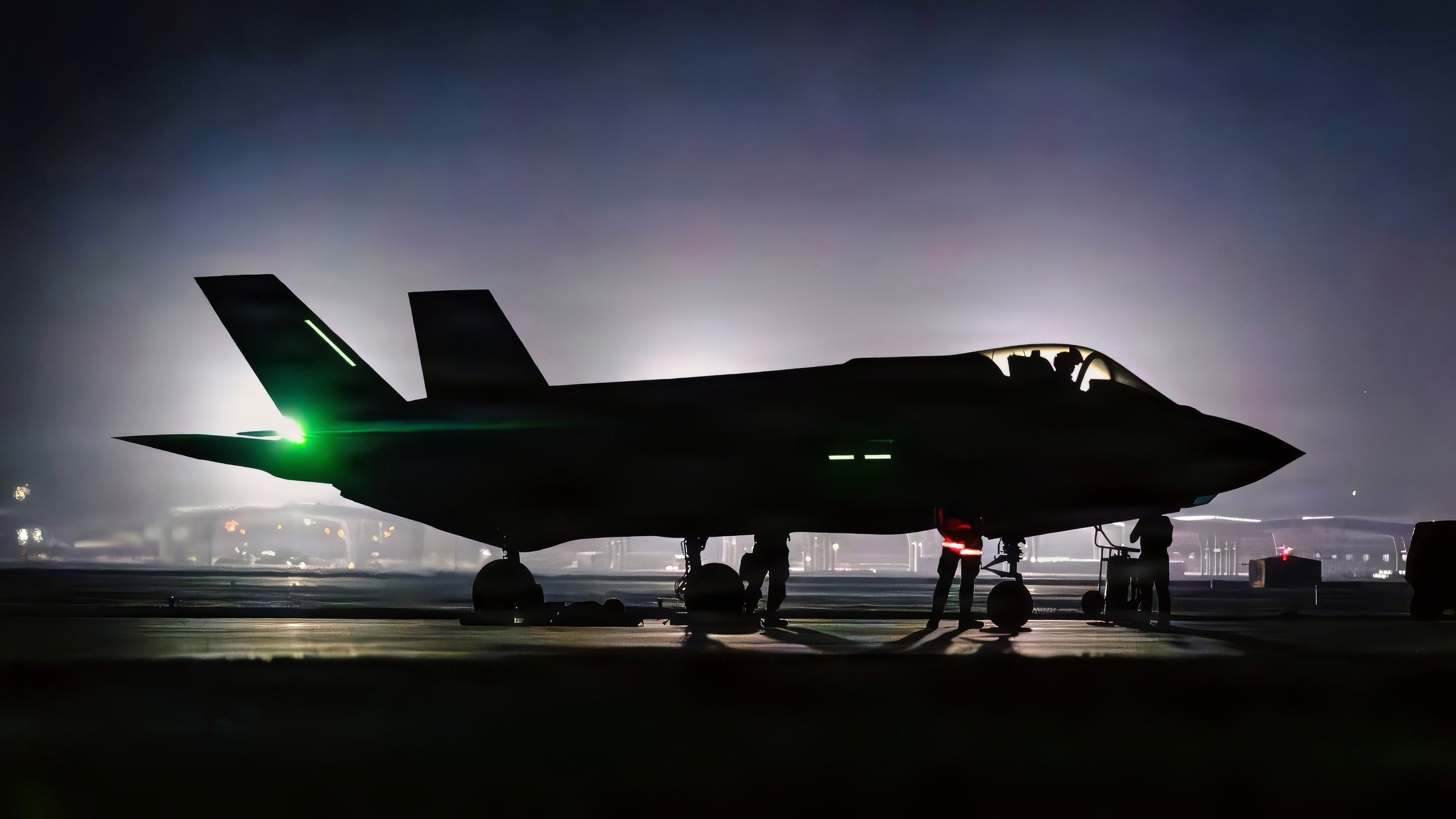
A U.S. Air Force F-35A Lightning II assigned to the 95th Fighter Squadron is parked on the flightline during exercise Noble Panther 26-4 at Tyndall Air Force Base, Florida, March 9, 2026. Airmen participated in night sorties, requiring them to perform their tasks in low-light conditions while staying watch for potential simulated attacks. These high-intensity, realistic scenarios were designed to build the confidence and muscle memory required for combat operations. (U.S. Air Force photo by Senior Airman Zeeshan Naeem)
Total carrying capacity is 5,700 lb. That includes four AIM-120 AMRAAMs (Advanced Medium-Range Air-to-Air Missiles; affectionately nicknamed the “Slammer”), which increases to six Slammers with the so-called “Sidekick” upgrade. The AMRAAM’s maximum range is 43 miles on earlier versions and an estimated 100 miles on the AIM-120D.
Exception to the Rule Sidebar: “Beast Mode”
When stealth isn’t the priority, the F-35 has the so-called “Beast Mode” option, which is not to be confused with former Super Bowl-winning Seattle Seahawks running back Marshawn Lynch.
In this so-called “Beast Mode,” the F-35A can carry an additional 22,000 lb. of munitions on external underwing pylons.
The Israeli Air Force was the first to use the “Beast Mode” F-35s in combat around March 2025, though, if you want to nitpick semantics, the Israelis call their version the F-35I Adir (“Mighty One”) rather than the F-35A Lightning II.
The Solution: Enter the JATM
Heralded as the next-generation beyond-visual-range (BVR) air-to-air missile, the AIM-260 JATM is reportedly derived from the Naval Strike Missile and designed to fit in the weapons bays of the F-35A and F-35C weapons bays.
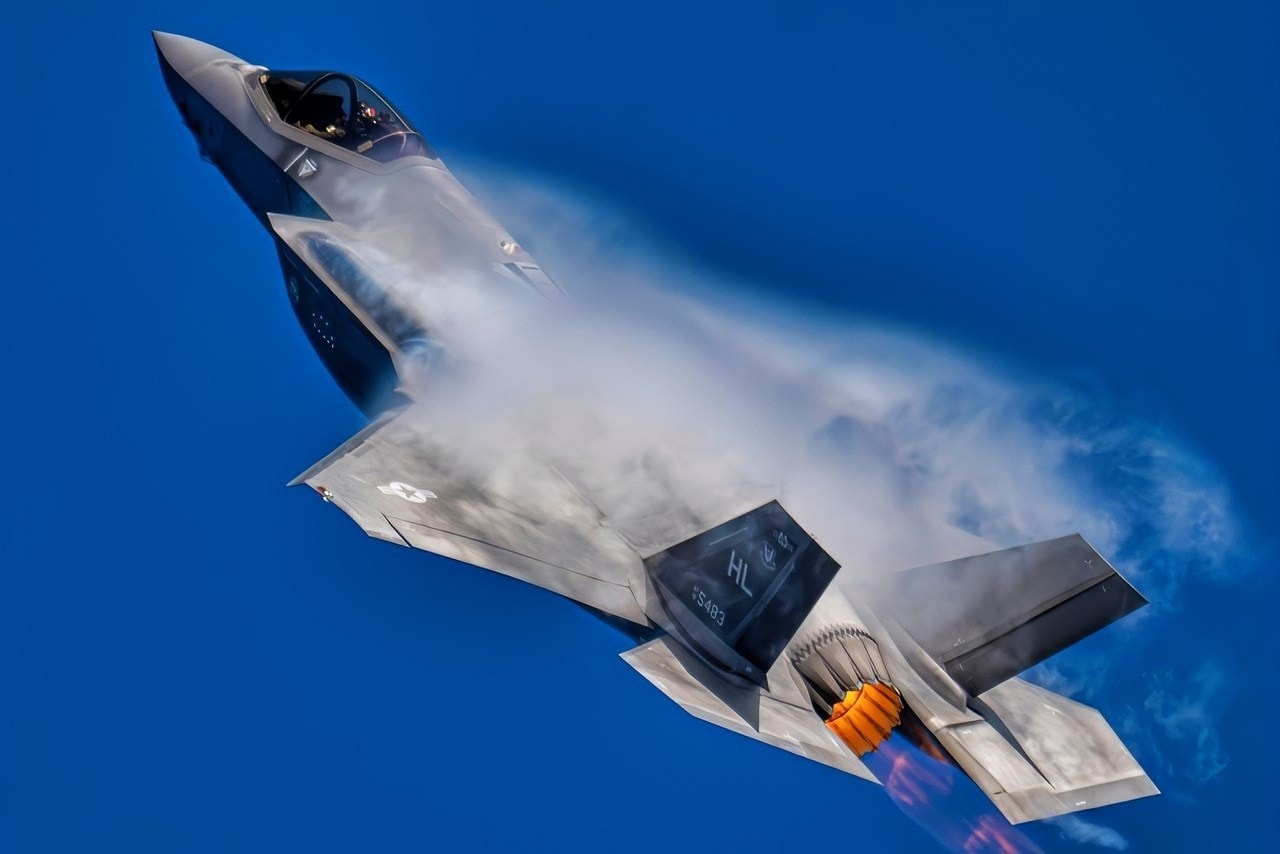
U.S. Air Force Maj. Melanie “Mach” Kluesner, pilot for the F-35A Demonstration Team, preforms high-speed aerial maneuvers during a practice demonstration at Hill Air Force Base, Utah, Jan. 6, 2026. The team practices during their off-season to ensure that they are always sharp and ready to demonstrate the capabilities of the F-35A and the U.S. Air Force. (U.S. Air Force photo by Staff Sgt. Nicholas Rupiper)
However, F-35B compatibility may still be a big question mark.
More AIM-260 Details
As reported by Aaron Spray of Simple Flying—a publication that Yours Truly used to write for—in a July 21, 2026 article: “The War Zone reported that the missile first broke cover in May 2026 on an F/A-18F Super Hornet assigned to the Air Test and Evaluation Squadron 31. Flight testing began years ago. It is expected to augment, and eventually replace, the AIM-120 AMRAAM in U.S. service. The publication wrote that, unlike the AIM-120, it has no mid-body control surfaces, or even strakes running along the sides. The JATM’s overall configuration reflects optimization for maximum speed and range.”
Appropriately enough, Lockheed Martin also manufactures the AIM-260 missile, but specific details are hard to come by because of the secrecy still surrounding it; indeed, searching “AIM-260” and “JATM” in the company’s search engine yields no useful results.
However, the JATM is believed to have a range of at least 120 miles, a 20 percent improvement over the AIM-54 and the AIM-120D.
The F-35 is known as the Joint Strike Fighter (JSF) for a reason. Accordingly, the Navy and Air Force are putting aside interservice rivalries and budgetary turf battles long enough to cooperate on the development of the AIM-260 for their beloved JSF.
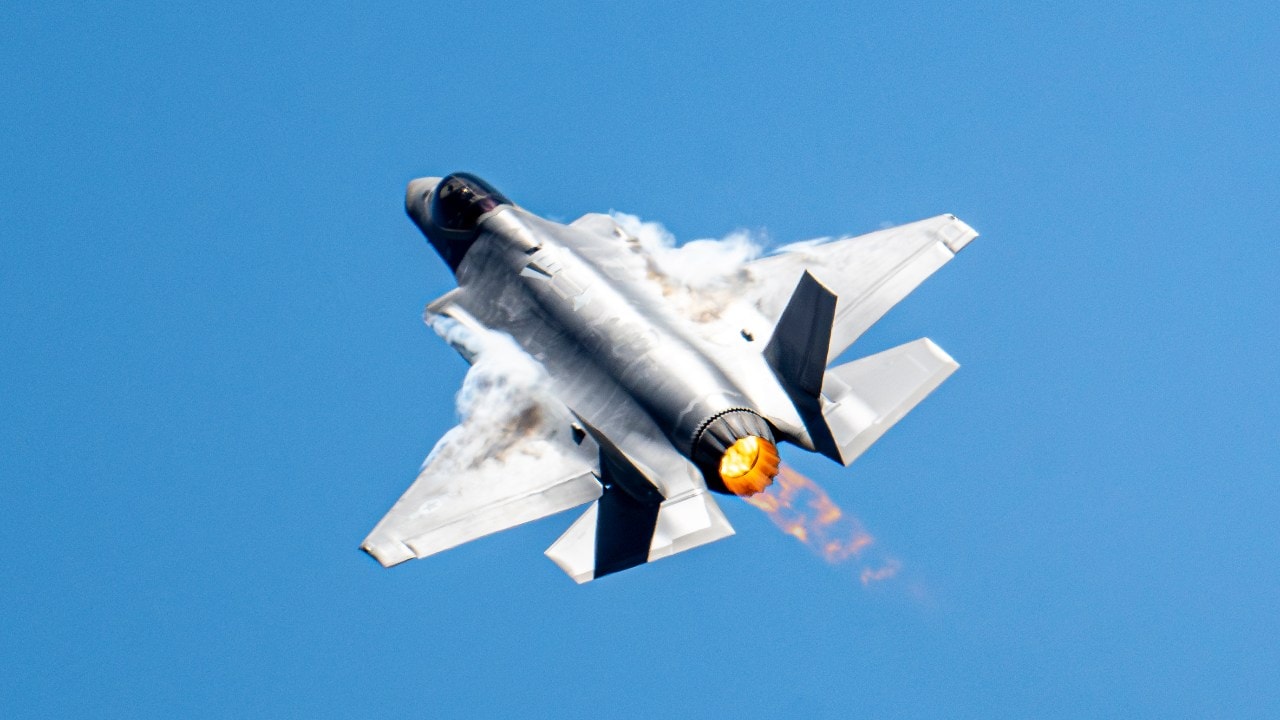
U.S. Air Force Maj. Melanie “Mach” Kluesner, pilot of the F-35A Demonstration Team, performs aerial maneuvers at the Wings and Eagles Airshow at Kingsley Field, Oregon, on July 19, 2025. The demonstration team travels across the country to showcase the power and precision of the world’s most advanced 5th-generation fighter jet. (U.S. Air Force photo by Senior Airman Nicholas Rupiper)
This interservice pragmatism stems from concerns about the growing reach of Chinese air-to-air missiles such as the PL-15 (NATO reporting name CH-AA-10 Abaddon), which reportedly has a range of 200 to 300 kilometers (124 to 186 miles).
It’s not yet known what the no-escape zone (NEZ, aka the “kill box”) of the missile will be.
The NEZ is defined as the area within which an enemy aircraft cannot evade a missile, even if it detects the launch and takes evasive maneuvers, leading to a probability of kill (Pk) in excess of 90 percent.
It’s also believed the JATM will have a max airspeed approaching Mach 5, a significant increase over the Slammer’s Mach 4.
The Way Ahead
Meanwhile, the ever-savvy Alex Hollings from Sandboxx News recently reported that a notice published by the Air Force Lifecycle Management Center reveals the service is seeking to develop an air-to-air missile able to reach targets as far as 1,000—yes, folks, that’s right, one **thousand**—nautical miles away! Stay tuned, dear readers.
About the Author: Christian D. Orr
Christian D. Orr is a Senior Defense Editor. He is a former Air Force Security Forces officer, Federal law enforcement officer, and private military contractor (with assignments worked in Iraq, the United Arab Emirates, Kosovo, Japan, Germany, and the Pentagon). Chris holds a B.A. in International Relations from the University of Southern California (USC) and an M.A. in Intelligence Studies (with a concentration in Terrorism Studies) from American Military University (AMU). He is also the author of “Five Decades of a Fabulous Firearm: Celebrating the 50th Anniversary of the Beretta 92 Pistol Series,” the second edition of which was recently published.