
The First Lesson of the New Semester: The Four Crossings of the Chishui River - A Strategic Shift from Passive to Active for the Red Army
This year marks the 105th anniversary of the founding of the Communist Party of China and the 90th anniversary of the victory of the Long March of the Chinese Workers' and Peasants' Red Army. In the more than a century of struggle by the Communist Party of China, the Long March was a great expedition of decisive significance. To understand the Long March, one must enter that period of fiery turmoil. Today, in "The First Lesson of the 2026 School Year," let us embark on "Our Long March" together to see how the Communist Party of China opened up new paths in the face of dire circumstances!
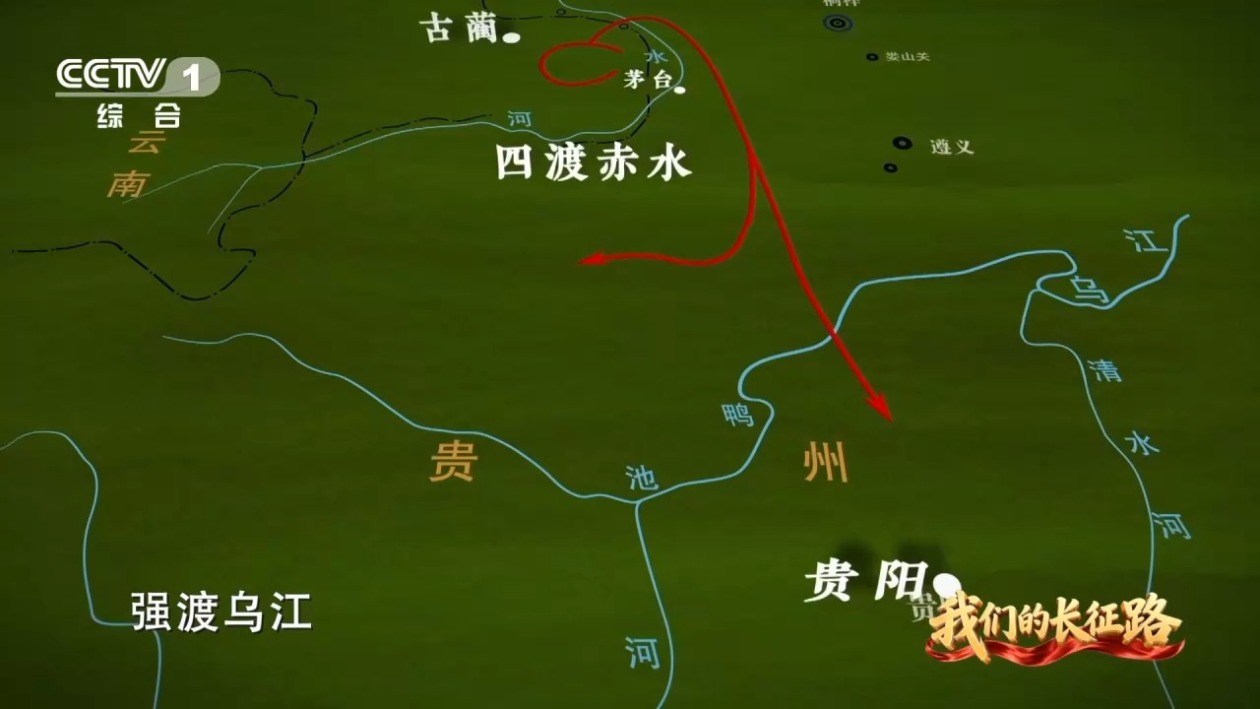
After the Red Army crossed the Chishui River for the third time, to confuse the Kuomintang army, they specifically dispatched a regiment to march ostentatiously, with radios continuously sending signals, completely exposing the movement of the troops. The Kuomintang army followed the signals from the Red Army's radios and moved entirely west of the Chishui River. Thinking victory was assured, Chiang Kai-shek flew to Guiyang, eagerly anticipating a great victory in annihilating the Red Army. However, what he saw was all that the Red Army deliberately allowed him to see—the main force of the Red Army had long since shut down their radios and hidden deep in the mountains, taking advantage of the Kuomintang army being diverted to complete the fourth crossing of the Chishui River. Subsequently, the Red Army feigned an attack on Guiyang, drew out the Yunnan Army, and made a false move, ultimately heading straight for the Jinsha River. The true wisdom of the fourth crossing of the Chishui River lies in starting from reality, achieving a strategic shift from passive to active.
The Red Army executed a strategic maneuver during the Long March, misleading Nationalist forces by sending a regiment to create a diversion. This operation involved broadcasting signals to mislead the enemy, allowing the Red Army to successfully cross the Chishui River four times. The maneuver marked a significant shift from a defensive to an offensive strategy, ultimately leading towards Guiyang.
- The Red Army executed a strategic maneuver to mislead the Nationalist forces.
- A regiment was sent to create a diversion by marching loudly and broadcasting signals.
- The Nationalist forces were misled into believing they had the upper hand.
- The Red Army successfully crossed the Chishui River four times.
- This operation marked a strategic shift from defensive to offensive tactics.