
The Fujian Ship Integrates J-35 and KJ-600 for the First Time, PLA Carrier Aviation Enters Key Assessment in 2026
 Li Minghui
The Fujian Aircraft Carrier Integrates J-35 and KJ-600 for PLA Naval Aviation's Key Assessment in 2026
What caught my attention was not the Fujian aircraft carrier going to sea again, but the simultaneous appearance of three types of aircraft in the publicly released footage: J-15T, J-35, and KJ-600. According to reports from Airdatanews and Defence Agenda based on publicly available videos from the PLA Navy, the Fujian carrier recently completed electromagnetic catapult launches, arrested landings, and deck operations during trials, which the outside world generally associates with its ninth sea trial. Focusing on a single aircraft successfully launching has limited news value; the simultaneous entry of three types of aircraft into the process indicates that the carrier's aviation system is beginning to shift from individual verification to system verification.
The Difference Between Ski-Jump and Catapult Is More Than Just Runway Shape
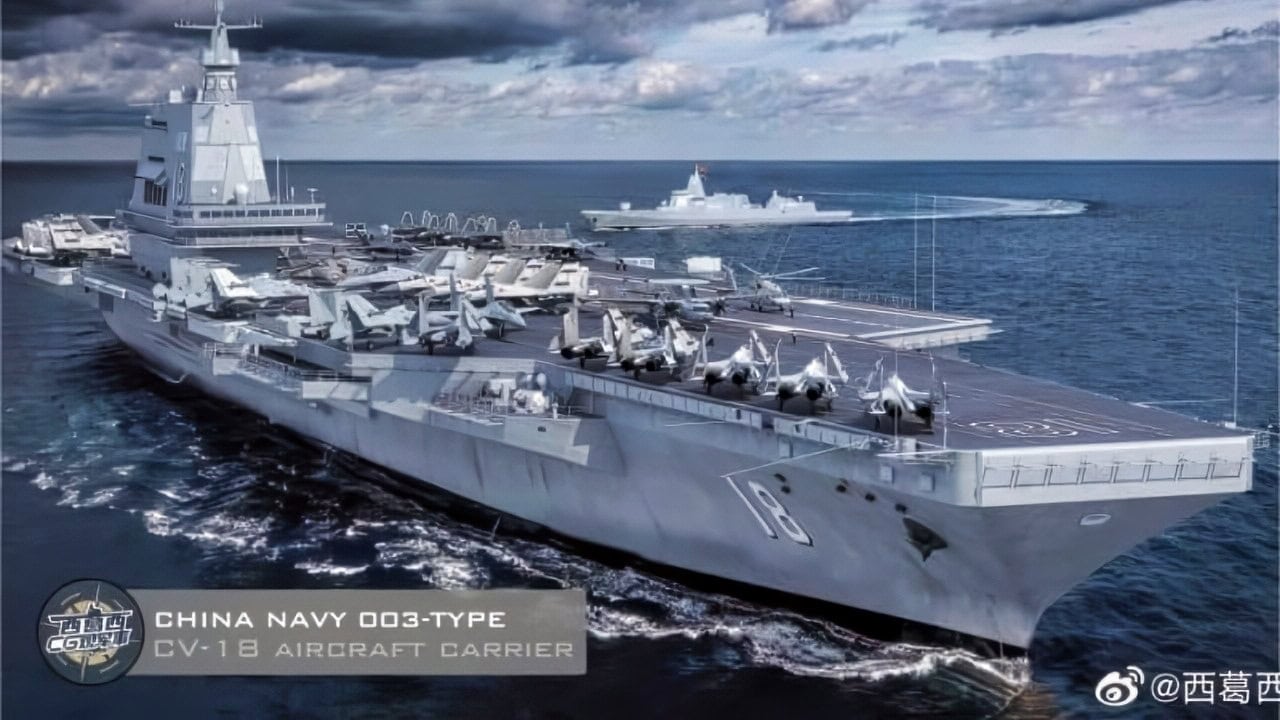
The Liaoning and Shandong carriers use ski-jump decks, allowing the J-15 to board, but the takeoff weight, payload, and the use of fixed-wing early warning aircraft are all limited. The Fujian carrier, at approximately 80,000 tons, employs electromagnetic catapults and arrested recovery, and the interesting aspect is that it can launch heavier aircraft at different speed profiles. In simple terms, the J-35 addresses low detectability and penetration issues, the J-15T is responsible for heavy payloads and serves as a mature platform, while the KJ-600 fills the gap in fleet long-range early warning and airborne command capabilities.
The Three Key Indicators to Watch in This Trial
- Can the J-35 maintain an acceptable sortie rate at sea, rather than just completing demonstration takeoffs and landings?
- Can the KJ-600 establish stable patrol routes and link data to escort ships, carrier-based aircraft, and shore-based systems?
- What is the reliability of the electromagnetic catapult system in continuous launches, under different sea conditions, and during night operations?
I believe the third point is more critical than the first. The J-35 certainly attracts attention, but the combat effectiveness of the carrier is not just about having stealth aircraft parked on the deck. The core capabilities accumulated by the U.S. Navy over decades involve processes that may not seem glamorous, such as cyclic launches, maintenance and resupply, deck safety, and damage recovery. The Fujian carrier has now crossed a threshold, but it is not the end point.
Full Operational Capability by the End of 2026 Still Needs Questioning
Reports indicate that Chinese state media has cited military analysts' judgments that the Fujian carrier may approach full combat capability by the end of 2026. This statement can be referenced, but it should not be taken as a completed fact. Full combat capability at a minimum includes a complete carrier air wing, coordination with escort vessels, submarine and comprehensive resupply support, as well as command and control in complex electromagnetic environments. Public information shows that there is still very little data on night high-intensity takeoffs and landings, training in adverse sea conditions, maintenance hours for carrier-based aircraft, and actual sortie numbers.
Another easily overlooked shortcoming is power. The Fujian carrier is conventionally powered, not nuclear-powered, and requires more detailed resupply arrangements for sustained deployments in distant seas. It can significantly enhance the PLA Navy's air coverage in the Western Pacific and South China Sea, but it cannot simply be equated with the global persistent presence capabilities of the U.S. Nimitz or Ford-class carriers. This number may not seem large; whether an early warning aircraft can maintain a continuous patrol route may impact tactical radius more than carrying two additional missiles.
Impact on the Taiwan Strait and Western Pacific
If the Fujian carrier can truly integrate the J-35 and KJ-600, the situational awareness and interception radius outside the first island chain will change. Regarding the Taiwan Strait, it may not need to approach high-threat areas but can provide mobile aerial nodes in more distant waters; for U.S.-Japan joint operations, the pressure is not just from an additional aircraft carrier but from an added mobile sensor and command platform.
What is truly worth tracking is not when the Fujian carrier will be labeled with "full combat capability," but whether the next batch of public details will show continuous night takeoffs and landings, long-duration KJ-600 patrols, and deck operations involving the J-35 with munitions.
The Fujian aircraft carrier has successfully integrated the J-35 and KJ-600 aircraft during recent trials in Fujian. This marks a significant step in the operational capabilities of the People's Liberation Army Navy, with expectations of achieving near full operational capability by the end of 2026. The trials included testing the electromagnetic catapult system and involved three types of aircraft working together.
- Fujian aircraft carrier successfully integrated J-35 and KJ-600 aircraft.
- Three types of aircraft (J-15T, J-35, KJ-600) were tested together.
- The carrier is expected to achieve near full operational capability by the end of 2026.
- The electromagnetic catapult system was tested under various conditions.
- Fujian is conventionally powered, requiring careful supply logistics.