
The gold mines of the Sahel finance JNIM in 2026 and threaten Ghana and Senegal
 Marie Dubois
The Gold Mines of the Sahel Fund the JNIM in 2026 and Threaten Ghana and Senegal
In Inata, in northern Burkina Faso, the mine closed by the junta in 2024 is no longer just an abandoned economic site. According to data cited this week by Africa Defense Forum and ACLED, the surrounding area is now under the influence of Jama'at Nusrat al-Islam wal-Muslimin, better known as JNIM or GSIM in French. This local detail matters more than a victory statement. In central Sahel, whoever controls the track, the well, the market, and the toll booth often controls the war.
The new fact is not that gold finances armed groups. For years, artisanal supply chains in Mali, Burkina Faso, and Niger have fueled criminal networks, local leaders, and jihadist factions. What changes in 2026 is the maturity of the model. JNIM and the Sahel Province of the Islamic State, or ISSP, do not always seek to take the mines head-on. They settle around, in villages, on secondary routes, and at crossing points where miners must buy fuel, sell their production, and resupply.
The Ten-Kilometer Perimeter
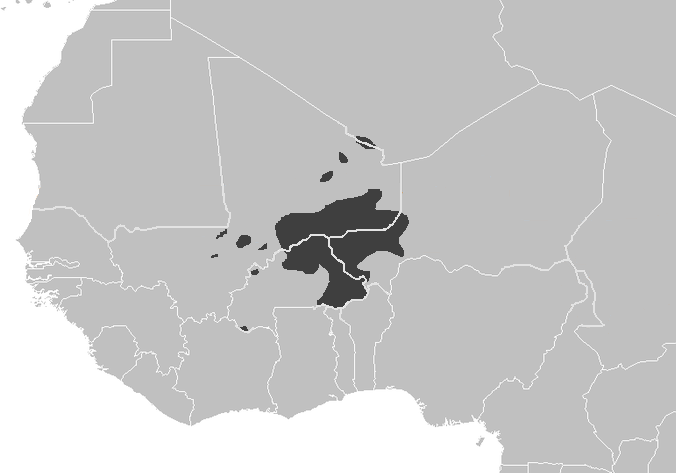
The analysis reported by ADF is based on 44 mining sites studied in the three countries of the Sahel States Alliance. The most useful figure, for a former field officer, is this: most mine-related violence occurs within a ten-kilometer radius, not necessarily within the confines of the operations themselves. Ten kilometers is nothing on a staff map. But on a lateritic track cut by rains, it is a sufficient control area to filter motorcycles, levy a tax, abduct a transporter, or intimidate a village chief.
Burkina Faso accounts for about 75% of violent events related to mines in this sample. This is not a coincidence. The country has become the center of gravity for jihadist offensives south of Liptako-Gourma, with security forces stretched between the North, East, and the approaches to the Ghanaian and Ivorian borders. Industrial mines attract attention, but artisanal and semi-formal sites are easier to penetrate. They employ young, mobile men, often poorly protected, and they generate transportable wealth. Gold hides better than a fuel truck.
A More Patient War Economy
Héni Nsaibia, West Africa analyst for ACLED, simply states the issue: armed groups are not only interested in the mines but in the ecosystem that allows mining activity to thrive. This is exactly what is observed on the ground when an insurrection ceases to be a column of fighters and becomes a parallel administration. The extraction does not always resemble looting. It can take the form of an imposed zakat, forced protection, a toll on passage, or a sanction against those who pay the state.
Lucia Bird Ruiz-Benitez de Lugo, from the Global Initiative Against Transnational Organized Crime, notes that JNIM and ISSP often extract their value indirectly. Miners must first work. Then comes the extraction, sometimes in gold, sometimes in cash. This nuance is important. A group that loots a mine once gets a cash box. A group that organizes coercion around a mining area obtains a regular income, thus a planning capacity.
In practice, this income finances three things. First, light weapons, motorcycles, and explosives needed for ambushes. Then salaries or bonuses for local recruits, especially in areas where the state no longer credibly pays anyone. Finally, the purchase of loyalties: informants, guides, traders, transporters. A successful jihadist operation in the Sahel rarely depends on pure tactical superiority. It depends on very fine local intelligence. Gold buys this intelligence.
Essakane, Samira, and the Logic of Liptako-Gourma
Liptako-Gourma remains the most sensitive area because it combines three borders, poor roads, and dense mining basins. The Essakane mine, the largest in Burkina Faso, is located in this strategic environment. On the Niger side, the Samira mine is not far away. These names do not mean that jihadists control the industrial facilities themselves. The available information does not allow us to assert that. But they show that points of wealth and insecurity corridors increasingly overlap.
From experience, an army can hold a base, escort a convoy, and announce the recapture of a locality. It has much more difficulty holding all the paths through which a local economy breathes. In northern Burkina, an armored pickup cannot be everywhere. Civilian volunteer units, often courageous but unevenly trained, do not compensate for this lack of permanence. JNIM has understood this for a long time. ISSP too, with a brutality more visible in certain sectors.
The mine then becomes less a target than a thermometer. When extractions multiply around it, it means that the armed group has already obtained a sufficient presence to impose its rules.
The Risk Descends Towards Coastal States
The most concerning point of ACLED's analysis is the possible extension of the model beyond the three countries of the AES. The borders with Ghana, Ivory Coast, Guinea, and Senegal are not walls. They are markets, families, smuggling routes, and cattle roads. ADF already reports the role of supply chains between southern Burkina Faso and Ghana, where Ghanaian miners and traders depend on cross-border processing circuits. This creates a discreet vulnerability: jihadism can enter through clandestine taxation before entering through a spectacular attack.
For Accra and Dakar, the danger is therefore not only an armed incursion from the north. It is the gradual establishment of a gray economy in which local intermediaries find it more useful to negotiate with JNIM than to wait for distant state protection. Senegal is concerned about the Kayes region in western Mali, where a major share of Malian gold is produced near its border. Ghana is concerned about Burkinabe pressure to the north and its own vulnerable mining areas.
One must remain cautious. Public data does not provide a complete map of taxes, complicities, and stocks of gold seized in jihadist bases. Part of what we know comes from analysts, testimonies, and aggregated trends, not from a judicial inventory. But the overall picture is clear enough to guide operational analysis. Sahelian groups have found in gold a resource less visible than ransoms and less risky than long-distance drug trafficking.
What the Juntas Cannot Bomb
The military regimes of Bamako, Ouagadougou, and Niamey often respond with strikes, convoys, and announcements of reconquest. These tools can kill fighters. They are not enough to reclaim an economy. As long as market roads remain dangerous, as long as miners pay to work, as long as villages near mining sites see the state only in passing, JNIM retains the most valuable advantage in a long war: presence.
The next indicator to watch is not just an attack on Essakane or Samira. That would be too obvious. One must look at the abductions of transporters, temporary market closures, taxes imposed on artisanal crushers, and population movements around sites located between northern Ghana, western Mali, and eastern Burkina Faso. If these signals increase, the Sahel war will have already crossed a new line, without needing to plant a black flag on a mine.
The Jama'at Nusrat al-Islam wal-Muslimin (JNIM) is expanding its influence over gold mining operations in the Sahel, particularly in Burkina Faso, and is threatening neighboring countries like Ghana and Senegal. In 2026, JNIM is not only controlling mining areas but also extracting resources from local miners, establishing a system of taxation and control. This evolving situation poses significant risks to regional security as jihadist groups adapt their strategies to maintain their presence and influence.
- JNIM is financing its operations through gold mining in the Sahel region.
- Burkina Faso is the center of jihadist offensives, with 75% of violent events related to mining occurring there.
- The influence of JNIM is extending towards Ghana and Senegal, creating vulnerabilities in these countries.
- The JNIM extracts resources indirectly from miners, establishing a system of control and taxation.
- The situation in the Sahel is evolving, with jihadist groups adapting their strategies to maintain influence.