
The Hazelnut over Kyiv in May 2026 Shows the Limits of the Russian Coercion Strategy
 Dmitri Volkov
The Oreshnik over Kyiv in May 2026 Shows the Limits of the Russian Coercion Strategy
The number to remember is not "Oreshnik," but 690. This is the number of air attack assets — 600 drones and 90 missiles of various classes — that the Ukrainian side recorded on the night of May 23-24. If the data from the Ukrainian Air Force is close to reality, which cannot be fully verified in wartime conditions, this is not about a one-time "retribution," but about an industrially organized air salvo, where the new missile plays the role of a political signal rather than the main instrument of destruction. Russian rhetoric about "systemic strikes" on Kyiv, repeated after the UN Security Council meeting on May 28, shows a familiar logic: when operational results on the ground become insufficient, Moscow shifts the focus to the realm of demonstrative coercion.
What the Third Launch of the Oreshnik Changed
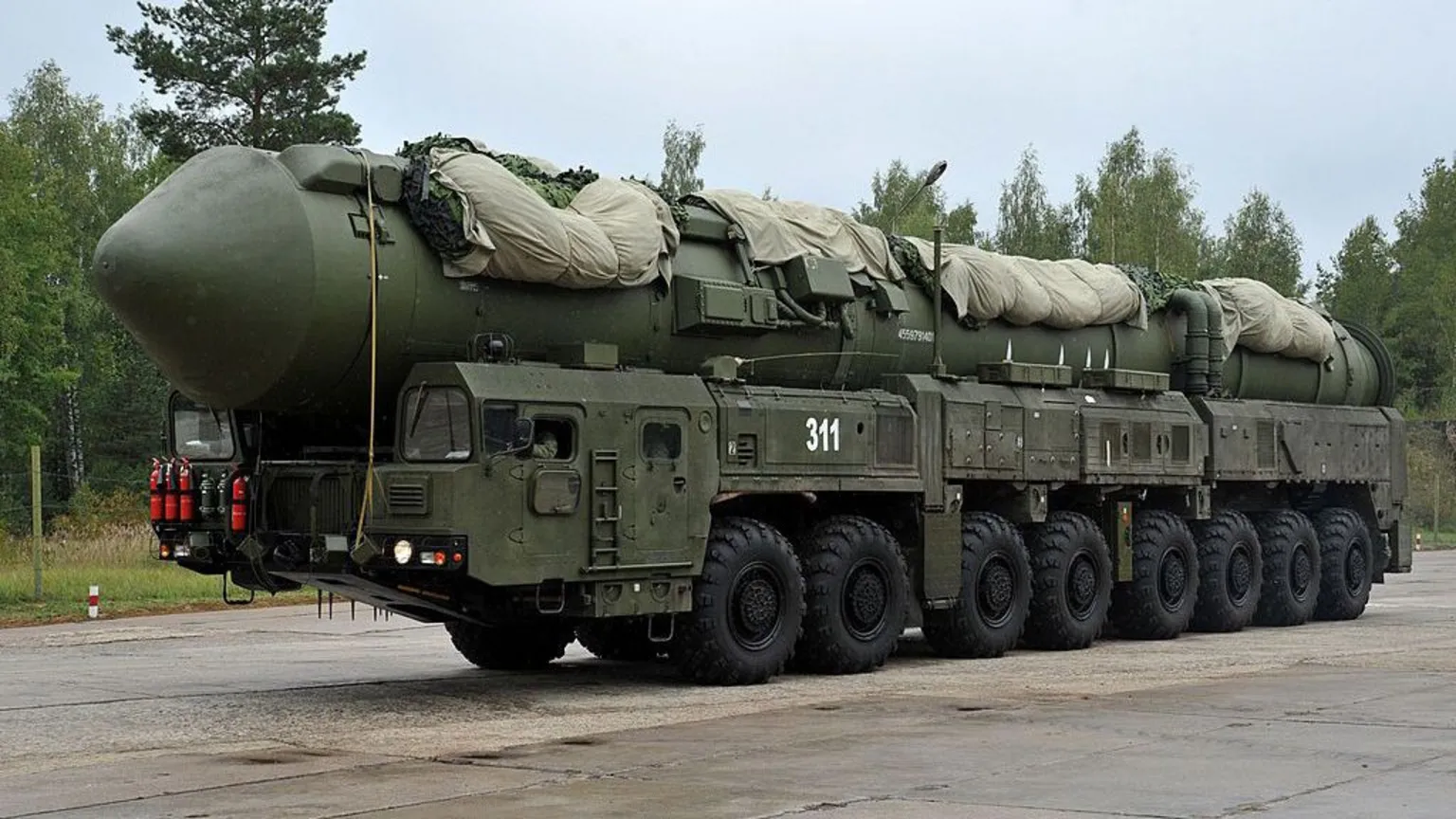
According to reports from Reuters and Al Jazeera from May 24-29, Russia confirmed the use of the "Oreshnik" in a massive strike on Kyiv and the surrounding area, while the Ukrainian side reported intercepting or suppressing 549 drones and 55 missiles; another 19 missiles, according to Ukrainian data, did not reach their targets. Even if we set aside some optimism in the Ukrainian air defense statistics, the ratio is telling: Moscow is forced to saturate the defense with hundreds of cheap and medium-cost targets to create a corridor for a limited number of expensive missiles. The "Oreshnik" in this scheme does not replace the "Iskander," "Kinzhal," "Tsirkon," or cruise missiles. It adds a nuclear-political subtext to the strike because it is a medium-range missile originally designed not for tactical combat but for demonstrating escalation capability.
From a military perspective, this is a paradox. If the Russian army truly had a reliable ability to strike Ukrainian command centers with conventional means, it would not need to loudly warn diplomats and international organizations to leave Kyiv. The warning undermines surprise. But it amplifies the political signal. In the Soviet school of strategic deterrence, this would be called not just a strike, but a "show of intent": the adversary is given advance notice that the geography of the war may expand within its capital. The difference from late Soviet practice is that then the demonstration of force usually relied on an excess of resources. Now it increasingly resembles compensation for a deficit in operational breakthroughs.
Why Moscow Talks About Systemic Strikes
The formal Russian version is built around a strike on Starobilsk in the occupied Luhansk region, which Moscow declared as the last line. But the sequence of events is more important than the justification formula. First, Russia conducts one of the largest combined strikes on Kyiv, then the Foreign Ministry warns foreign citizens and diplomatic missions, and then Permanent Representative Vasily Nebenzya at the UN reiterates the threat of strikes on "decision-making centers" and command posts. On May 29, Reuters noted that Washington directly urged Moscow to refrain from such strikes, but the Russian side rejected this call. This is no longer a typical information shell after an attack, but an attempt to create a new norm: the enemy's capital is declared a legitimate space for regular missile pressure.
One cannot overlook the internal side here. On May 29, the Associated Press linked this escalation rhetoric to the stalemate on the front and the growing fatigue of Russian society from the war. I would phrase it more harshly: the Kremlin is trying to replace measurable success on the front with television-visible long-range violence. The Russian offensive, even while maintaining local advances, does not provide a politically convenient picture of victory. Ukrainian strikes on Russian refineries, military facilities, and logistics, on the contrary, shatter the previous illusion of strategic depth. When the war returns to the Moscow region, Krasnodar Krai, or the supply routes of the occupied territories, the Russian leadership needs a response that can be presented as a restoration of control. A strike on Kyiv is better suited for this task than another hundred meters under Pokrovsk.
Ukraine's Air Defense and the Saturation Economy
Ukraine's request for additional Patriot missiles, which Zelensky mentioned on May 28 in Sweden, is explained not only by fear of the "Oreshnik." The main problem is the expenditure of ammunition. Russia is not obliged to break through all of Ukraine's air defense; it is enough for it to force Ukraine to expend scarce interceptors faster than the West can replenish stocks. Here, Moscow acts rationally and cynically at the same time. "Shaheds" and false targets create a mass, ballistic missiles force the activation of expensive defense echelons, and individual launches of the "Oreshnik" raise the political cost of under-deliveries. According to AP, Kyiv is already warning that American supplies are not keeping pace with demand, and the war in the Middle East is further diverting U.S. resources.
But this scheme has a downside. The more Russia relies on mass air strikes, the clearer the limitations of its ground strategy become. The Institute for the Study of War noted in recent assessments that Ukrainian medium-range and frontline drone campaigns are limiting Russian logistics and supply to forward units. If this is true even partially, then air escalation over Kyiv does not solve the problem of delivering personnel, ammunition, and fuel to the front line. It solves the problem of political impression. However, wars are not won by impression but by the resilience of supply systems.
The Romanian Episode and the Risk of Horizontal Expansion
The fall of a Russian drone in Galați, reported by AP on May 29, adds another layer to the picture. Romania stated that the drone was part of a nighttime attack on Ukraine, requested a faster transfer of NATO counter-drone capabilities, and called the incident a serious violation of international law. That same night, according to the Ukrainian Air Force, Russia used 232 drones and one ballistic missile, and 217 drones were shot down. Here, not only the two injured in Romania are important. The very fact that the massing of strikes creates statistically inevitable navigation errors, interception failures, and debris falling on NATO territory is significant. The higher the density of such attacks, the less likely it is that all incidents will remain diplomatically manageable.
The Russian General Staff understands this. Therefore, the current line is not mad in the literal sense; it is a calculated game on the edge of the permissible. Moscow is trying to pressure Kyiv and Western capitals without crossing the threshold of direct war with NATO. The problem is that technical systems do not always conform to political calculations. A drone intended to overload Ukrainian air defense crashes into a Romanian residential building; a missile meant for demonstration hits civilian infrastructure; a warning to diplomats, intended as a signal of control, looks like an acknowledgment of readiness to strike the capital with a known risk to foreigners.
Strategic Conclusion
The "Oreshnik" does not change the balance of the war as Russian propaganda tries to present it. It changes the language of threats. Moscow shows that it is ready to use a medium-range missile as a tool of pressure on Western decisions regarding air defense and Ukraine's long-range strikes on Russia. This is unpleasant, dangerous, and requires a serious response, but it is not evidence of a restoration of Russian initiative. On the contrary, such demonstrative escalation often appears when ordinary mechanisms of coercion yield insufficient results.
My forecast is cold and therefore perhaps unpleasant. In the coming weeks, Russia is likely to continue combined strikes on Kyiv and Ukrainian defense industry facilities, alternating mass drone waves with limited launches of ballistic and hypersonic systems. But if the Ukrainian campaign against Russian logistics and deep rear maintains its pace, these strikes will remain more a means of political pressure than a path to operational breakthrough. The Russian army knows how to destroy cities. In 2026, it is increasingly difficult for it to prove that this brings victory closer.
Sources
- Reuters, May 29, 2026 — U.S. statement and Russia's reaction to the threat of "systemic strikes" on Kyiv.
- Associated Press, May 28-29, 2026 — Ukraine's request for Patriots, the Romanian incident with the Russian drone, assessment of the Kremlin's escalation line.
- Al Jazeera / AFP / Reuters, May 24, 2026 — parameters of the massive strike on Kyiv and the use of the "Oreshnik."
- Institute for the Study of War, May 27-28, 2026 — assessments of the impact of Ukrainian drone strikes on Russian logistics.
On May 23-29, 2026, the Ukrainian Air Force reported intercepting 549 drones and 55 missiles during a massive airstrike by Russian forces on Kyiv and Luhansk Oblast. Russia confirmed the use of the 'Oreshnik' missile, indicating a shift in their military strategy towards demonstrating political pressure. The attack involved a total of 690 aerial assets, including drones and missiles, and prompted warnings to foreign diplomats in Kyiv about potential risks.
- Ukraine reported intercepting 549 drones and 55 missiles during the attack.
- Russia confirmed the use of the 'Oreshnik' missile in the airstrike.
- The attack involved a total of 690 aerial assets, including drones and missiles.
- Warnings were issued to foreign diplomats in Kyiv regarding potential strikes.
- The incident highlights the ongoing escalation in military operations between Ukraine and Russia.